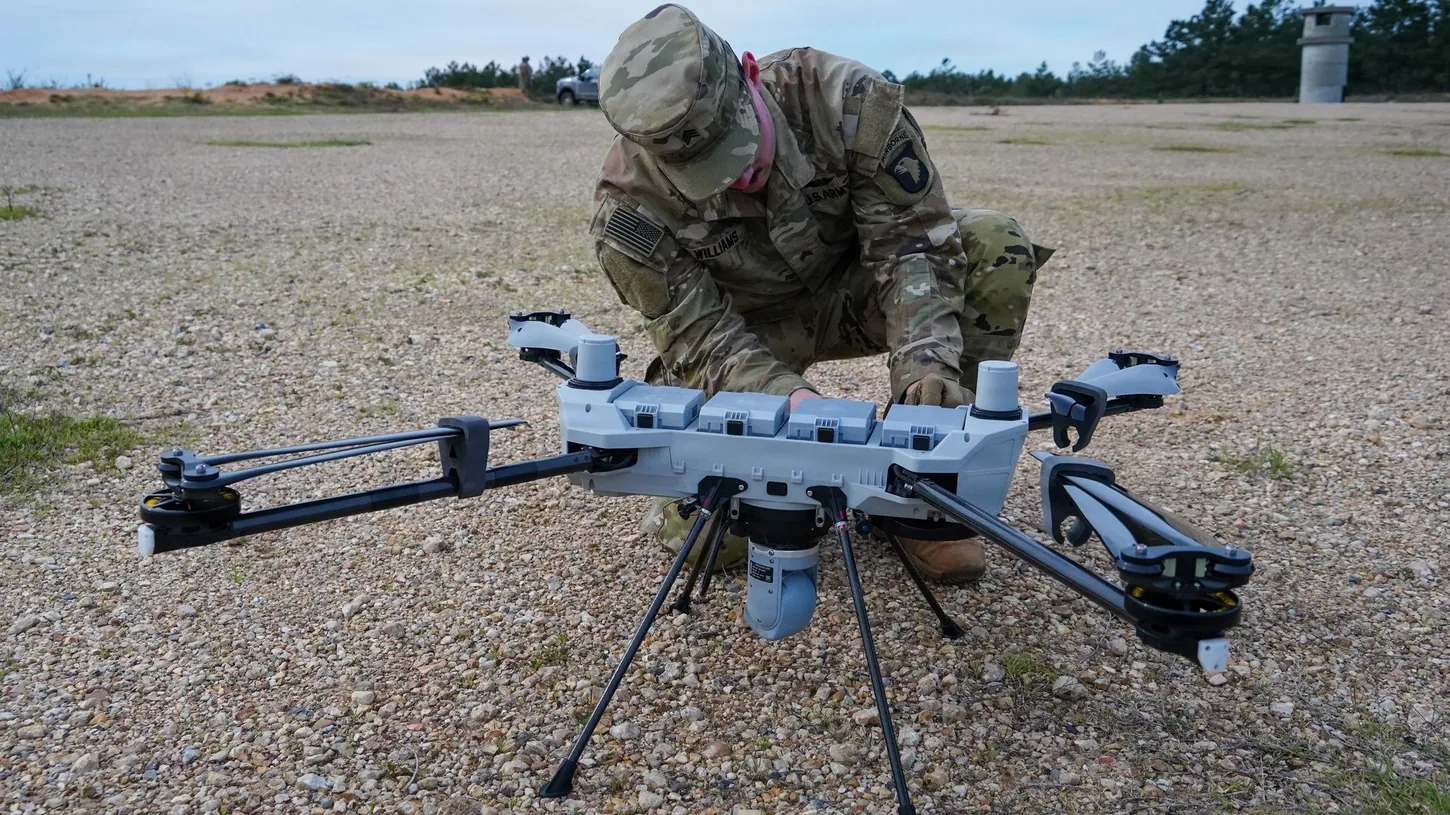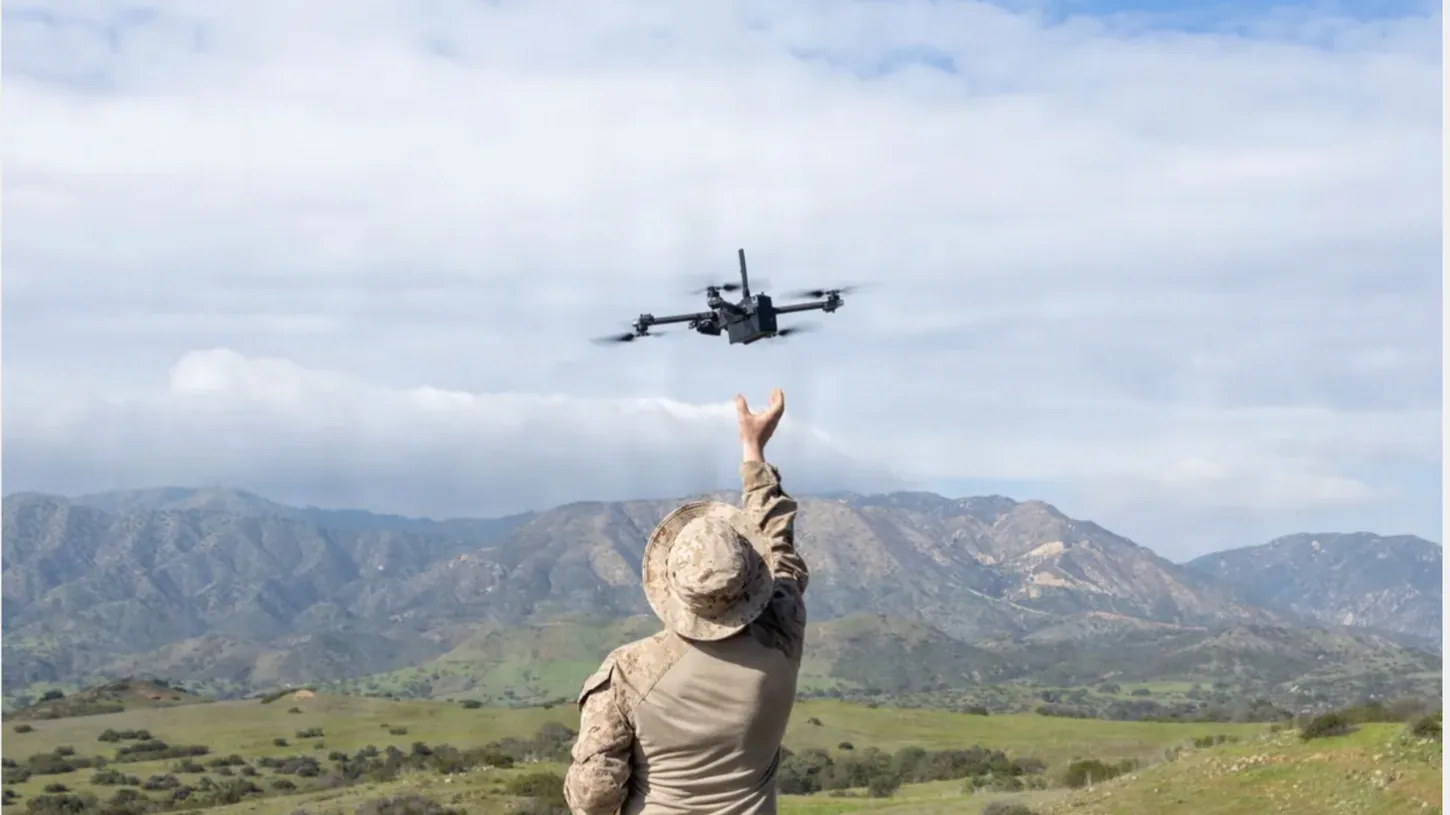
The Pentagon’s acting head of the Defense Innovation Unit says the United States is “starting from basically zero” on mass-producing cheap military drones, in a Bloomberg feature published Saturday, October 31, that tours the factories in Utah meant to fix that. Travis Metz put the Drone Dominance Program’s goal at about 250,000 drones by the end of 2027, backed by roughly $1.1 billion the Pentagon has committed to the four-stage competition that Defense Secretary Pete Hegseth launched in July 2025.
Russia is expected to build 7.3 million small expendable drones this year, according to Ukrainian intelligence. China can surge to 500,000 a month, per a Bloomberg Intelligence report from February, and Ukraine says it will make 10 million this year and plans to double that.
The company Bloomberg chose to open with, Vector Defense of Bluffdale, Utah, makes a few hundred small quadcopters a month. Its CEO, Andy Yakulis, describes the product as ammunition, “a mortar round or a bullet or a hand grenade that just happens to fly.” The Pentagon, as Bloomberg puts it, is an institution more used to buying submarines and fighter jets than cheap expendable drones, and its target for the next two years is a fraction of what Russia builds in a month.
Only Three Gauntlet I Winners Delivered Everything They Were Paid For
The first phase of Drone Dominance paid 11 companies $150 million in March for 30,000 one-way attack drones, due over five months. By mid-September only three of them had delivered every drone on the program’s public leaderboard. Pentagon officials put the average price in that round at $5,000 a drone.
DroneXL covered the Gauntlet I results when they were announced and reported in September that Neros Technologies picked up 800 drones that rivals failed to deliver on time. Neros, of Torrance, California, also won an Army contract in June worth up to $500 million for first-person-view drones, per government contracting data cited by Bloomberg, and its spokesperson Reese Hamilton says production has risen sharply since. The second round, for 60,000 drones, produced 10 winners in mid-September, Vector among them.
The Army opened an online drone marketplace in March where units order and soldiers leave reviews, and the Pentagon expanded it to the other services in August. Col. Danielle Medaglia, the Army’s uncrewed aircraft systems project manager, told Bloomberg more than $850 million has flowed through it. The Army itself has bought 450 small drones through that marketplace, from 21 vendors, and Bloomberg does not reconcile the two figures. Metz says the US has plenty of entrepreneurial drone companies and none of them with scale. Separately, the Army took delivery of 8,500 small drones through Gauntlet and service programs in fiscal 2026.
Chinese Motors And Cameras Still Sit Inside The American Supply Chain
China dominates the supply of batteries, brushless motors and propellers for small drones, and Pentagon rules bar or restrict Chinese parts in military systems. Teal Drones in South Salt Lake builds 1,000 Black Widow and 2,000 Fang FPV drones a month, and pays a premium for every compliant part.
Chris Ericson, chief operating officer of Teal’s parent Red Cat Holdings, told Bloomberg that motors and cameras, along with radios and batteries, are the most expensive parts on a drone, and that “you can buy them cheap in China.” Teal pays the premium instead. Skydio CEO Adam Bry says his company has effectively eliminated direct dependence on China. He also warns that “Anybody who says their dependence on China is purely zero is probably deluding themselves,” because suppliers sit several layers below the companies that assemble the aircraft.
The Pentagon’s answer is to pay for component plants. Huntsville-based Performance Drone Works holds $820 million in Defense Department loans, a deal DroneXL covered when it was signed in August, and aims to turn out 1 million critical components a year by the end of 2028 from a facility that today can build 10,000 complete drones annually. The Army has pivoted the same way. Its plan last year was a network of factories inside its own aging industrial base producing 10,000 drones a month with 3D printing. Jon Strzelec, Army Materiel Command’s advanced manufacturing lead for small drones, says the effort now focuses on parts, with a target of 50,000 brushless motors by the end of fiscal 2027.
Replicator Produced Hundreds, And The $55 Billion Request Rides On The Midterms
The Biden administration’s Replicator initiative promised “multiple thousands” of autonomous attack drones within 24 months of its August 2023 launch and delivered several hundred, according to a person familiar who spoke to Bloomberg. The Government Accountability Office said last year the Pentagon’s development cycles impede fielding new technology quickly.
Michael Horowitz, deputy assistant secretary of defense for force development and emerging capabilities under Biden, blames small budgets and bureaucracy, and his verdict on the current push is “We will see on implementation.” The Trump administration kept parts of Replicator, signed an executive order on domestic drone production in June 2025 and put tariffs of up to 100% on imported drones and components in August.
The money on the table is larger than anything Replicator had. The Defense Department’s proposed budget for next fiscal year, still awaiting Congress, carries about $55 billion for autonomous warfare development, roughly $17 billion of it for uncrewed systems, by Bloomberg Intelligence’s count. The private side has moved faster: more than $60 billion went into over 220 US companies from the start of 2025 through September, and more than 80 of them announced new or expanded plants totaling 15.8 million square feet, per the Association for Uncrewed Vehicle Systems International. AeroVironment is targeting 400 Switchblades a month from a new Salt Lake City plant by next year, and Anduril opened its Ohio industrial park earlier this year.
Bloomberg notes that a Democratic majority in either chamber after the midterms could put that funding at risk, and that Hegseth will likely face a bipartisan push to remove him over the Iran war. Trent Emeneker, a retired Marine aviator who helped vet drone makers for the Pentagon from 2020 until March, says that in a major combat scenario “we need to make a million a month,” and that the US needs to do it yesterday. Jan Osburg, adjunct senior engineer at Rand Corp. and lead author of a paper this year on what the US needs to do to realize the drone revolution, calls the administration’s moves several big steps in the right direction and “both a sprint and a marathon.”
DroneXL’s Take
I think the Pentagon’s buying process is a bigger brake on this than its factories are. Neros told DroneXL in August it was already building 1,200 drones a week and promised a million a year by 2028, Teal runs 3,000 a month, and Vector says it can go to thousands. The Pentagon’s entire two-year target is 250,000, and the Army has bought 450 drones through the marketplace it built so that units could order drones the way they order boots. An Army official called the Pentagon’s drone demand “artificial” only last week, and the makers in that story asked for a year of orders, not another round. Eight of the 11 Gauntlet I vendors had not delivered everything by mid-September, so the builders are not blameless. But Yakulis calls his product a round of ammunition, and the Pentagon still buys it through a tournament that pays the winners months after a war would need them.
Ukraine’s 10 million came out of three years of combat, and the Pentagon is right to refuse Chinese parts in a weapon that has to work when China is the adversary. That rule makes the component plants the whole game, and PDW’s million parts a year and the Army’s 50,000 motors by fiscal 2027 are the numbers to hold the program to, not the drone counts. Gauntlet III’s 400-drone production deadline, which DroneXL reported in September, is the next real test of whether anyone outside Neros and Teal can ship at volume, and after Gauntlet I, I would not bet on more than a handful.
Source: Bloomberg
DroneXL uses automated tools to support research and source retrieval. All reporting and editorial perspectives are by Haye Kesteloo. Read our editorial standards.