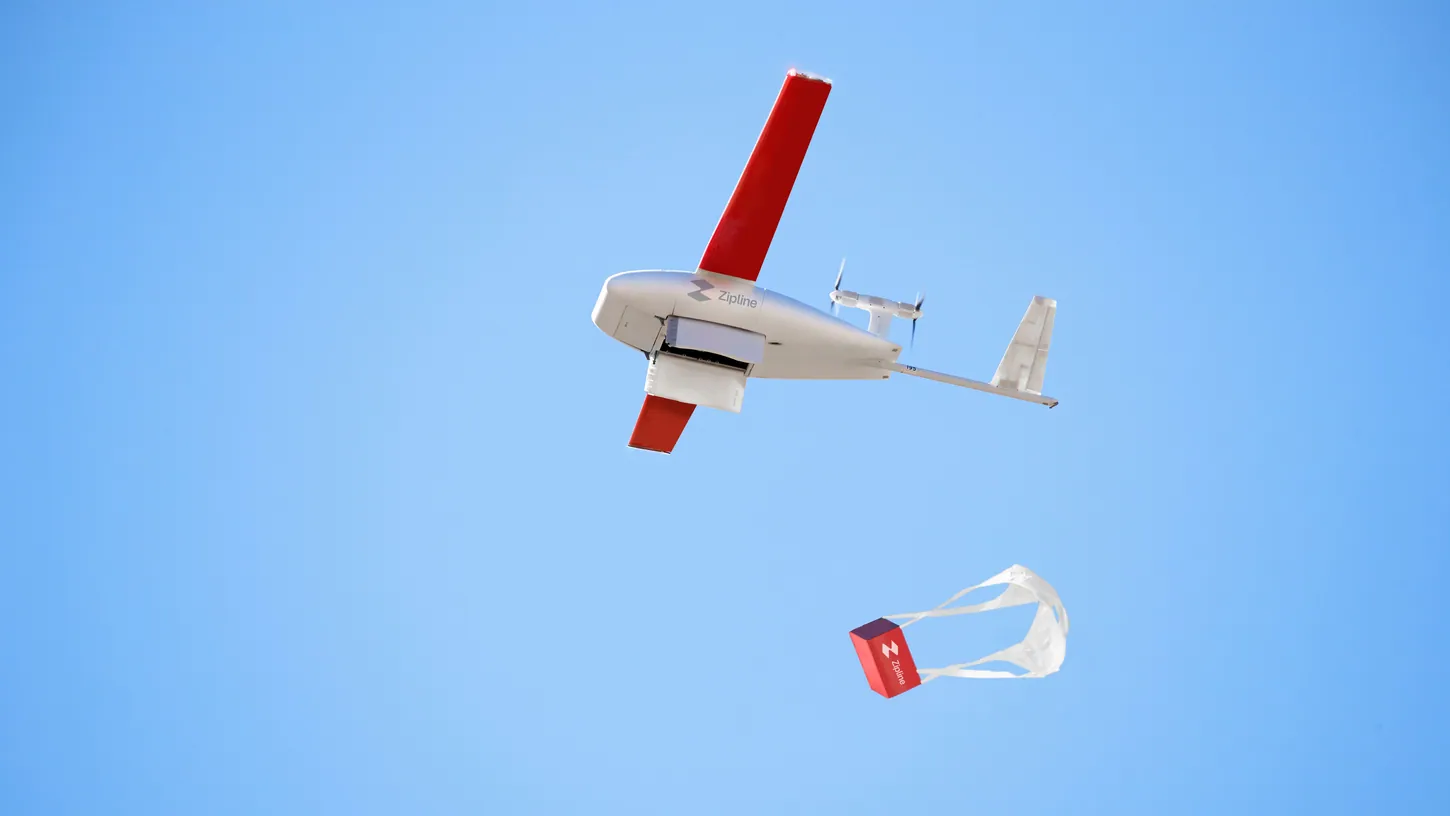
Zipline has hired Anthony le Roux, a 13-year Uber executive, as its Head of Operations for Africa from January 2027. His job is to build at least 20 new distribution centres, which Zipline calls nests, across the continent within two years. The first 10 are agreed with Côte d’Ivoire, and le Roux told TechCabal the rest depend on what other governments sign.
Every one of those nests is a government contract. Zipline’s African networks deliver blood, vaccines and medicines for national and state health systems, and governments pay for the flying.
In Ghana, the health minister told Parliament in July that the government still owed Zipline about GH¢175 million, and three of the company’s six distribution centres there have been shut since late 2025.
Le Roux Built Uber’s Africa Business Before Running Its Group Transport Arm
Le Roux opened Uber’s Cape Town operation in 2013, then ran Eastern Europe from Warsaw and the Middle East and Africa region from Dubai. In 2020 he built the high-capacity vehicle business that became Uber Group Transportation, which he leads until he moves to Zipline in January.
He told TechCabal that aviation and fixed infrastructure are new to him, and argued that hiring local teams and dealing with regulators carry over from ride-hailing. He is recruiting three senior executives for deployment, service delivery and logistics, and wants them from Africa or already working there. Caitlin Burton, CEO of Zipline Africa and Emerging Markets, said in a statement that he has “a proven track record of scaling transformative technologies in Africa and beyond.”
The hire also tightens a relationship that already runs both ways. Uber invested in the $1.5 billion round Zipline closed on November 5, and it is the customer targeting one million Zipline deliveries a day by 2029 through Uber Eats.
Côte d’Ivoire Gives Zipline 10 Hubs, With Its First Four On A 27-Month Clock
Côte d’Ivoire is the only market le Roux says is formally agreed. He put it at nine new nests, which with the existing Daloa centre makes the 10-hub network the Ivorian government approved in September. He named no other country while talks are open.
Côte d’Ivoire’s rollout schedule is already public. The Council of Ministers communiqué, as reported in September, splits the buildout into two phases, and the first, covering Daloa plus Biankouma, San Pedro and Kouto, runs 27 months. Le Roux said the Ivorian rollout schedule is agreed and that his job is to deliver it on time and on budget, though his two-year window for 20 or more nests is shorter than that first phase.
Zipline says the full program will reach more than 130 million people and 20,000 health facilities and delivery sites, and create more than 800 jobs. Zipline used the same 130 million and 800 jobs figures last November, when the US State Department awarded it up to $150 million for up to 15,000 health facilities in Côte d’Ivoire, Ghana, Kenya, Nigeria and Rwanda. The department described milestone-based payments and co-financing from partner governments, and Zipline said the money flows as governments sign contracts to pay for the deliveries. Le Roux did not disclose delivery costs, revenue targets or what any government is paying.
Ghana Owes Zipline GH¢175 Million And Has Budgeted GH¢20 Million
Ghana shows what happens when the ministry side of that bargain slips. In the 2026 budget debate on November 25, 2025, Dr. Ayew Afriye of Parliament’s health committee said Ghana owed Zipline GH¢175 million, had budgeted GH¢20 million, and that Zipline was decommissioning three centres, MyJoyOnline reported.
Eight months later the debt was still there. Health Minister Kwabena Mintah Akandoh told Parliament in July that the ministry was mobilising funds to clear the arrears, according to the Ghana News Agency. Its report says some payments had been made but money was still owed as of March 2026, and that Zipline now runs three centres, at Omenako, Mpenya and Vobsi. Akandoh also questioned what Ghana gets for the money, saying only about 10% of Zipline’s services reach hard-to-reach areas and 4% are emergency deliveries. The Ghana agreement, signed in 2018 for four centres and expanded to eight in 2020, expires in September 2027.
Nigeria has its own entry on the record. Zipline’s Kaduna State deliveries were paused in August 2025 after a change of state administration. Those deliveries have since resumed, according to The Condia, and Zipline has announced 12 more Nigerian hubs by 2028.
Le Roux named the dependency himself. Without strong government backing, he told TechCabal, “that’s just not going to be a feasible product to go and launch.” His answer to it is diversification: more countries, and once the medical network is built, using it to carry other goods and earn other revenue. He mentioned a different delivery system for grocery-style service in Rwanda but gave no rollout date.
DroneXL’s Take
Hiring an operator for this job is the right call, because Zipline’s African problem has never been the aircraft. It has always been the budget line behind the aircraft, and someone who spent 13 years getting Uber licensed, staffed and paid in Cape Town, Warsaw and Dubai knows that terrain.
But the model le Roux inherits has a weak point Ghana has already exposed. Under the new US award Washington pays to put the hubs in the ground, and the health ministry still pays for every flight after that, as Ghana’s always has. When the ministry falls behind, the hubs go quiet, as half of Ghana’s did. Twenty new nests means 20 new places where that can happen.
I’d watch Ghana before the nest count. Ghana’s contract runs out in September 2027, eight months into le Roux’s tenure. If Zipline gets Accra current and renewed, that tells every other health ministry the arrangement survives a bad budget year. If it lets Ghana lapse while it announces hubs elsewhere, the 20-nest plan is a construction program with the same payment risk built into every site.
Sources: TechCabal, The Condia, Ghana News Agency, MyJoyOnline, US Department of State.
DroneXL uses automated tools to support research and source retrieval. All reporting and editorial perspectives are by Haye Kesteloo. Read our editorial standards.