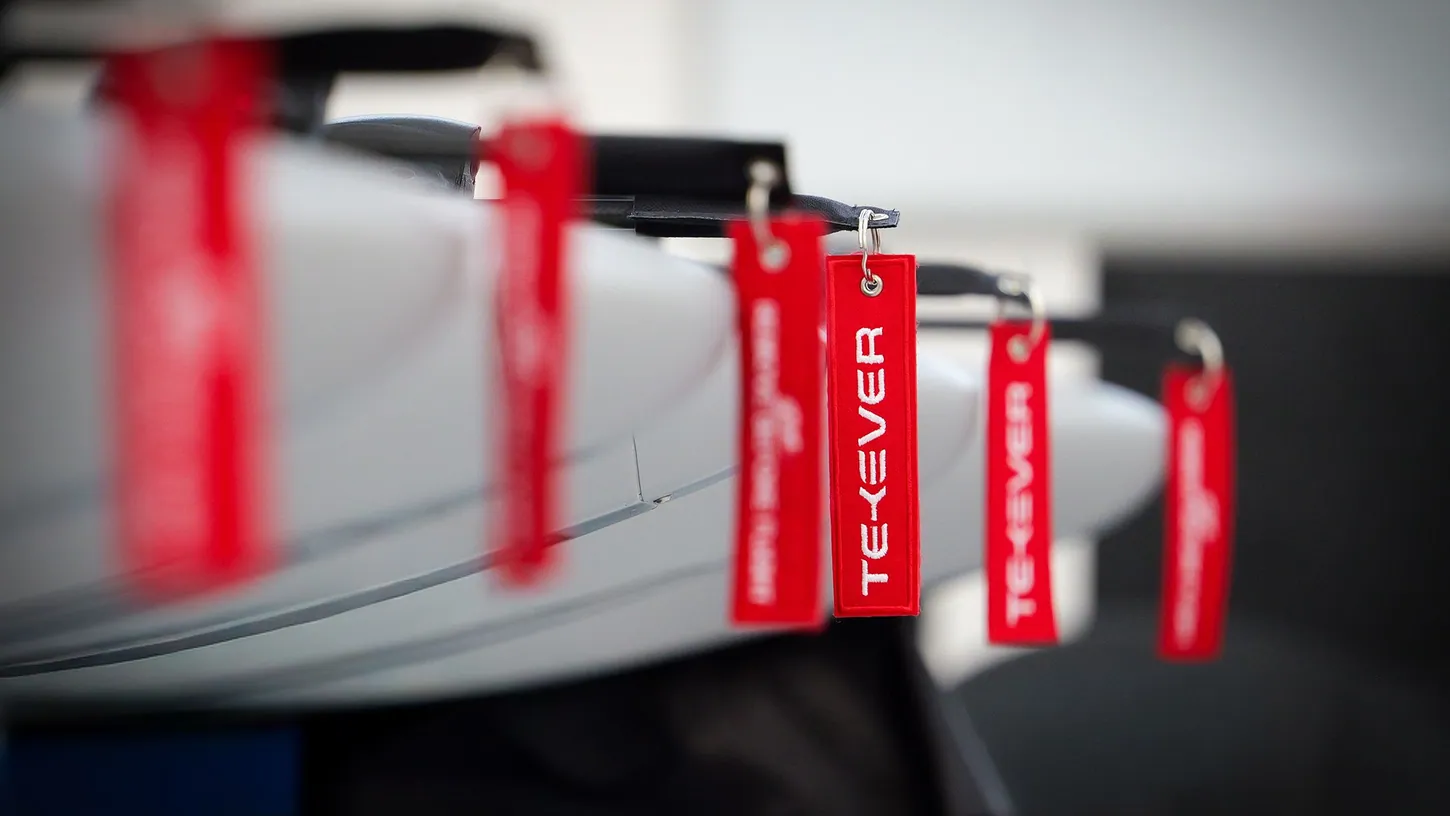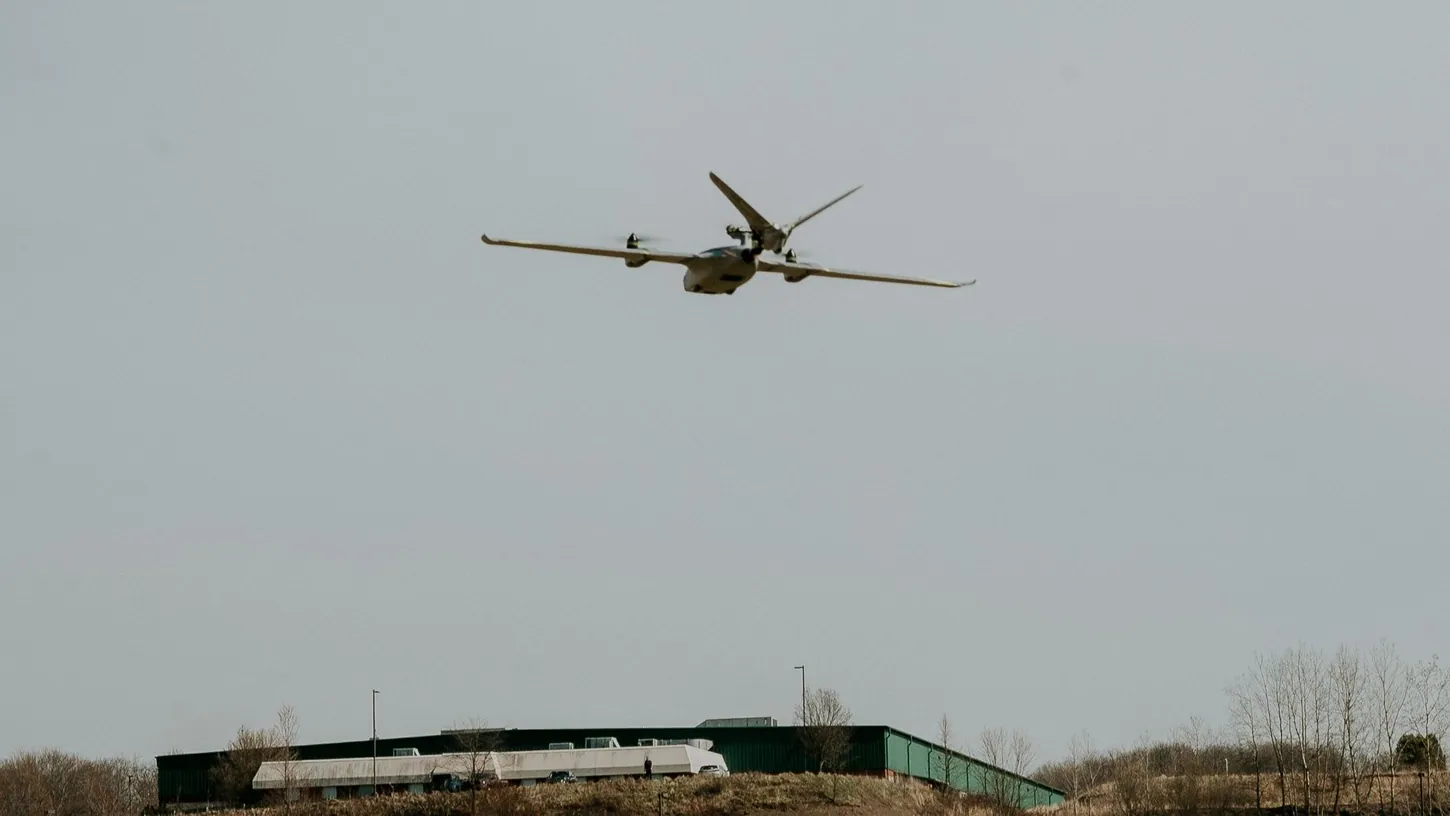
KEF Robotics, the Pittsburgh company whose Tailwind software lets drones navigate by camera when GPS is jammed, said Monday it has been accepted into U.S. Special Operations Command’s new rapid acquisition consortium, SOF RACER. KEF says it wants to bring its autonomy and navigation products to special operations units through it.
DroneXL last wrote about KEF at length in September, when Tailwind kept Orqa drones on course under GPS jamming in front of Green Berets. I met KEF’s chief operating officer, Olga Pogoda, at the company’s Pittsburgh office that same month.
Membership is free and comes with no contract. A SOCOM acquisition office told industry in May to expect no GPS in future fights. The first two opportunities SOCOM opened through SOF RACER ask for a human-performance database and a sensor-fusion platform.
SOF RACER Lets KEF Bid, and the Consortium Drew Over 1,800 Applications
SOF RACER membership makes a company eligible to bid on requirements SOCOM posts inside the consortium. It does not award work. SOCOM spokesperson Navy Cmdr. Joe Vermette told National Defense Magazine in September that the consortium had received over 1,800 membership applications.
SOCOM’s acquisition directorate, SOF AT&L, launched the consortium on Aug. 6 with GovSignals, a New York AI contracting company that runs the platform, according to the launch release. Palo Alto consultancy BMNT turns SOCOM’s needs into problems companies can bid on. Drones and robotics are two of its 12 areas of interest.
The process is short by Pentagon standards. Members answer a posted requirement with a solution brief, a short white paper, instead of a full proposal. Winners get Other Transaction Authority agreements rather than standard contracts, and a successful prototype can move to a production award without a new competition when a SOCOM customer wants to go further, BMNT president Brian Miller told National Defense Magazine. Miller said the consortium exists to reach companies that have never sold to SOCOM.
SOCOM’s First Two SOF RACER Calls Skip Navigation
The first two SOF RACER opportunities, both due October 23, sought a data system for tracking special operators’ physical performance and a sensor-fusion platform that detects people, vehicles, aircraft, drones and boats. Neither asks for navigation, according to summaries by contracting consultancy BW&CO drawn from the member-only solicitations.
The sensor-fusion call, Opportunity 0002, comes from SOCOM’s Program Executive Office for Tactical Information Systems. BW&CO says it allows up to five prototype awards with a follow-on production ceiling of $75 million. The solicitations sit behind the member login, so those summaries are the public record.
SOCOM’s Own Documents Plan for Fighting Without GPS
SOCOM has told industry more than once to plan for jammed or missing GPS. A May 2026 briefing from its fixed-wing program office lists “no expectation of GPS” among the needs driving future strike aircraft. A November 2025 request for information required medium-range drones to operate in GNSS-contested environments.
The fixed-wing slide comes from Col. Justin Bronder’s program briefing at SOF Week 2026 in Tampa. The drone request came from the office that buys SOCOM’s small drones, and it listed launch and recovery in GPS-denied environments as a desired trait.
SOCOM’s tactical information office used the same week to announce a capability assessment event for small drones at SOFWERX, its Tampa innovation hub, in the first quarter of fiscal 2027, which runs October through December 2026. The slide lists its focus area as “TBD.” The same office lists operating “in contested and denied environments” among the development areas for its drone portfolio.
The parent notice behind SOF RACER, posted on SAM.gov on Feb. 24, names assured positioning, navigation and timing as a technology area, next to one for collaborative autonomy and uncrewed systems. The navigation examples it gives are quantum sensors, magnetic anomaly navigation and celestial navigation. Camera-based navigation is not among them, though the list is illustrative.
KEF’s Federal Contracts Come From the Air Force and Army
KEF’s About page names SOCOM among the Defense Department groups it supports, but its 11 prime awards on USAspending since 2019, which leave out subcontracts, came from the Air Force, the Army and NASA. The newest is a $1.25 million Air Force SBIR Phase II that started June 1, 2026.
That award funds navigation for “any Air Force sUAS,” according to USAspending. KEF’s About page lists DTRA, the Army and the Air Force next to SOCOM, and its LinkedIn announcement did not say which SOF RACER calls it plans to answer.
The closest public link is the August demonstration at Fort McClellan, Alabama. Personnel from the Army’s 1st Special Forces Command, part of SOCOM’s Army component, watched Orqa drones fly under jamming while Tailwind fed the autopilot position from the onboard cameras in the same format a GPS receiver uses. DroneXL first wrote about KEF in 2022, when the Army gave it $1.5 million for vision-based flight.
KEF will have company if SOCOM posts a navigation call. Theseus, which sells camera-based positioning software, carries a testimonial on its website from a USSOCOM captain who tested its system for a week. Vermeer, the New York and Kyiv company DroneXL covered in May, lists the Army and the Air Force among its customers.
DroneXL’s Take
SOF RACER is the right door for a company like KEF. I’d still hold the applause until SOCOM posts a requirement that camera-based navigation can answer. The consortium is a place to bid, and getting in does not put a single KEF drone in a special operator’s hands.
My read is that it will, and the open question is what SOCOM asks for. The GPS alternatives in its own notice sound built for aircraft and ships. A small quadcopter carried by a team on foot needs something lighter and cheaper, and camera-based navigation is already flying that job. KEF showed it under jamming in Alabama. DroneXL covered two other attempts at the same problem last week, with ESA paying Norway’s Rift Dynamics to keep drones flying 10 minutes without GPS and Rantizo pairing GPS with LORAN, a system the US shut off in 2010.
Watch the SOFWERX small-drone assessment SOCOM scheduled for this quarter. If its focus area lands on GPS-denied navigation, KEF’s membership becomes a real shot at a SOCOM prototype agreement.
Sources: KEF Robotics on LinkedIn, National Defense Magazine, USSOCOM SOF Week 2026 briefings (PEO Fixed Wing, PEO Tactical Information Systems), SAM.gov, BW&CO, USAspending, GovSignals launch release.
DroneXL uses automated tools to support research and source retrieval. All reporting and editorial perspectives are by Haye Kesteloo. Read our editorial standards.