
Seven Students Expose Russia’s Drone Motherships After Intel Agencies Failed

Check out the Best Deals on Amazon for DJI Drones today!
We’ve been covering Europe’s drone crisis for months, from military reconnaissance drones shutting down Munich Airport to the EU’s scramble to build a multi-billion-euro “drone wall.” But while European intelligence agencies stumbled through bureaucratic fog, seven journalism students just delivered the most comprehensive investigation yet into who’s actually behind Germany’s mysterious drone swarms.
Their answer: Russian-crewed freighters operating as mobile drone launch platforms, sailing openly in European waters while authorities watch helplessly.
The students from Germany’s Axel Springer Academy of Journalism & Technology, working under renowned Dutch OSINT specialist Henk van Ess, tracked three suspect vessels using publicly available ship-tracking tools. They identified 19 correlations between the ships’ positions and documented drone incidents over German military bases, airports, and critical infrastructure.
Then they did something intelligence agencies never managed: they flew their own drone over one of the suspect ships to verify the crew composition.
“Wir haben zurück-gedrohnt,” they told their audience during a presentation of the project. We droned back.

The Numbers Germany Didn’t Want Public
The team obtained classified reports from Germany’s Federal Criminal Police Office (BKA) that paint a disturbing picture of systematic aerial reconnaissance.
| Metric | Figure |
|---|---|
| Total drone incidents (2025, through Nov 19) | 1,072 incidents involving 1,955 drones |
| Incidents occurring in evening hours | 45% |
| Cases where drone pilots were identified | 29 of 498 (6%) |
| Cases where authorities couldn’t identify drone type | 88% |
| Munich Airport passengers disrupted (Oct 2-3) | ~10,000 |
| Munich Airport economic damage | 6-8 million euros ($6.4-8.5M USD) |
The BKA’s own assessment stated that “individual incidents indicate complex operations drawing on larger financial and logistical resources.”
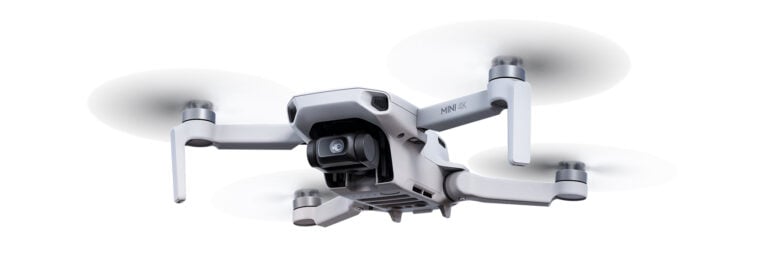
Translation: this isn’t hobbyists with DJI Minis.
The Drone Pattern Over Military Installations
The leaked BKA documents revealed systematic surveillance operations, often during sensitive military activities.
April 15, 2025: A drone overflew Werratalkaserne military base at 9 PM, precisely when combat vehicles were being delivered for transport to Ukraine.
May 17-21, 2025: During the Bundeswehr exercise “Gelber Merkur” across four German states, more than 80 drone sightings occurred over military sites and defense contractors, almost exclusively in evening hours.
January 28-29, 2025: Multiple drones spotted over Schwesing airfield while Ukrainian soldiers were being trained there.
Q1 2025: Persistent overflights of US Air Base Ramstein.
May 4, 2025: A drone flew over Biblis nuclear power plant for five to ten minutes. An unknown vehicle drove up to the facility gate. Search unsuccessful.
Authorities concluded about one chemical plant incident: “Coincidence is excluded.”
How Students Beat Intelligence Agencies
The team started with official channels. What they found was instructive: all German state interior ministries had been instructed to give uniform responses to questions about drone sightings. Coordinated stonewalling.
“We were trapped in a bureaucratic maze,” student Michèle Borcherding told the audience. “The answers we got were nearly identical. That everyone blocked us like that triggered the thought: something’s there.”
So they turned to publicly available data. Using Global Fishing Watch and MarineTraffic, they analyzed tens of thousands of ship movements in the North Sea and Baltic Sea, looking for anomalies.
What they found defied commercial logic. Cargo ships should move efficiently from point A to point B. Instead, certain vessels exhibited bizarre movement patterns: loops, circles, and ten days of aimless wandering in Kiel Bay instead of clean transit lines. The tracking data looked so absurd that the audience laughed when they saw it.
Shipping experts confirmed: absolutely not normal for coastal freighters supposed to be making money delivering cargo.
The Three Suspect Ships
HAV Dolphin (Flag: Antigua & Barbuda, Owner: HAV Shipping AS, Norway)
From late March to late April 2025, the HAV Dolphin spent nearly a month at the Pregol Shipyard in Kaliningrad, a facility with documented ties to the Russian military and Rosatom. Then it sailed to Kiel Bay and sat there for nine days, exhibiting chaotic movement patterns. During exactly this period, drones were spotted on three separate days over defense shipyards 25 kilometers (15.5 miles) away.
The crew? Entirely Russian.
German and Dutch authorities inspected the HAV Dolphin three times. Each inspection was “superficial” and “symbolic in nature,” according to security sources. Not all containers were opened.
HAV Snapper (Flag: Bahamas, Owner: HAV Shipping AS, same company as the Dolphin)
On May 16, the HAV Snapper sailed to a position off the Dutch island of Schiermonnikoog. Two hours later, seven drones appeared over the Russian freighter Lauga being escorted by German police through the North Sea.
Distance from the incident: 115 kilometers (71 miles). Well within drone range.
The HAV Snapper had previously been serviced at the same Pregol Shipyard in Kaliningrad.
Lauga (Flag: Russia, Owner: Idan Shipping Company, St. Petersburg, Former name: “Ivan Shchepetov”)
Summer 2024: the Lauga called at Tartus, Syria, Russia’s only naval base in the Mediterranean. After the Belgian search following the May 16 incident, it sailed to St. Petersburg and docked at a terminal 49% owned by Rosatom, Russia’s state nuclear corporation.
The Rosatom Connection
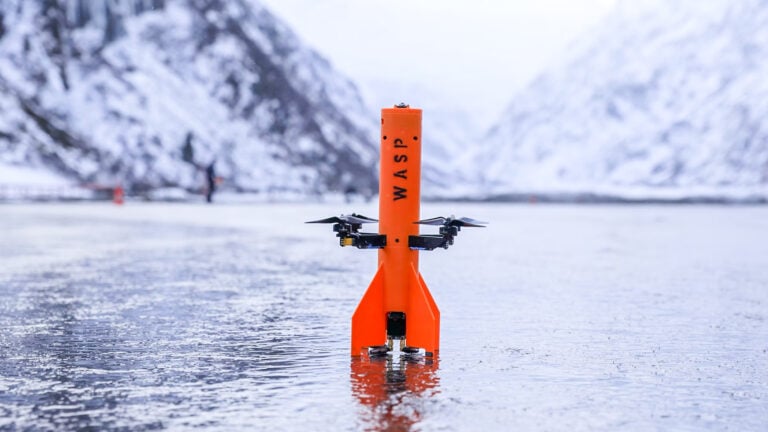
Multiple threads led to Rosatom, Russia’s state nuclear corporation responsible for nuclear weapons and the submarine program. The team found a 2024 Rosatom presentation showing drones designed for ship-based operations.
Rosatom drone specifications:
- Speed: 87 mph (140 km/h)
- Range: at least 124 miles (200 kilometers)
- Maximum altitude: 1.55 miles (2.5 kilometers)
- Equipment: video cameras, thermal imaging
- Can launch and land on ships
The HAV Dolphin was 15.5 miles (25 km) from the Kiel drone sightings. The HAV Snapper was 71 miles (115 km) from the Lauga incident. All well within Rosatom drone range.
The 2,500-Kilometer Chase
Digital evidence wasn’t enough. The students wanted physical verification.
They tracked the HAV Dolphin to a French Atlantic port. Called the harbor authority. Got confirmation the ship would stay until 7 PM the next day.
They flew to Paris. Rented a car. Drove five hours to the coast.
The ship was gone.
What followed was a 1,553-mile (2,500-kilometer) pursuit from France through the Netherlands to Belgium. The HAV Dolphin was unpredictable, leaving ports early, changing speeds, deleting its destination data entirely.
It parked on a sandbank off the Belgian coast near Ostende, then started circling 15.5 miles (25 kilometers) offshore, directly in front of a Belgian military base.
The team finally caught up. They flew their own consumer drone over the HAV Dolphin. The footage confirmed what security sources had told them: the crew was exclusively Russian sailors.
What Intelligence Agencies Say Now
European intelligence services assess the three documented ships as operating “with high confidence” on behalf of Russian interests. Their movement profiles are “very conspicuous” and show “little evidence of commercial activity.”
The German Interior Ministry’s official response: “Involvement of foreign state entities in a non-quantifiable portion of drone overflights is to be presumed.”
That’s intelligence-speak for: we know it’s happening, we can’t prove exactly how much, but we’re not going to say that publicly.
Track The Ships Yourself
The ships are still sailing. The AIS data is still updating. You can track them right now.
HAV Snapper tracking identifiers:
- IMO: 9001813
- MMSI: 311014800
- Call sign: C6XN4
- Flag: Bahamas
Free tracking tools:
- MarineTraffic.com – Search by vessel name or IMO number
- VesselFinder.com – Good for cross-referencing
- Global Fishing Watch – What the students used for historical analysis
The IMO number is key. It’s the ship’s unique identifier that doesn’t change even if the vessel changes names, flags, or owners.
DroneXL’s Take
This investigation validates everything we’ve been reporting for months.
When France seized a shadow fleet tanker suspected of launching drones that shut down Copenhagen Airport, we connected the dots to Russia’s growing maritime drone operations. When Germany created a new federal police drone unit, we noted it came after citizen journalism exposed what official agencies missed.
Now seven students with laptops and free ship-tracking tools have produced a more coherent picture of Germany’s drone mystery than months of official hand-wringing and coordinated stonewalling.
The contrast with America’s drone security theater couldn’t be sharper. While U.S. agencies refuse to conduct the security audit Congress mandated on DJI, actual Russian military drones fly reconnaissance missions over NATO installations launched from ships sailing in plain sight. While politicians chase New Jersey “mystery drones” that turned out to be aircraft and planets, European students expose real state-sponsored hybrid warfare using publicly available data.
The real threat isn’t consumer quadcopters with Chinese firmware. It’s military-grade reconnaissance platforms operated by Russian sailors on ships that European authorities have inspected multiple times and found “nothing.”
The students didn’t find a smoking gun. They didn’t catch a drone launching from a ship deck. But they established a pattern that European intelligence services now assess “with high confidence” points to Russian operations. They proved that motivated citizens with OSINT tools can fill gaps that billion-dollar agencies leave open.
That’s both inspiring and terrifying. Inspiring because it shows what determined journalists can accomplish. Terrifying because it shows how far behind our defenses actually are.
What do you think about student journalists outperforming European intelligence agencies? Share your thoughts in the comments below.
Discover more from DroneXL.co
Subscribe to get the latest posts sent to your email.
Check out our Classic Line of T-Shirts, Polos, Hoodies and more in our new store today!

MAKE YOUR VOICE HEARD
Proposed legislation threatens your ability to use drones for fun, work, and safety. The Drone Advocacy Alliance is fighting to ensure your voice is heard in these critical policy discussions.Join us and tell your elected officials to protect your right to fly.

Get your Part 107 Certificate
Pass the Part 107 test and take to the skies with the Pilot Institute. We have helped thousands of people become airplane and commercial drone pilots. Our courses are designed by industry experts to help you pass FAA tests and achieve your dreams.

Copyright © DroneXL.co 2026. All rights reserved. The content, images, and intellectual property on this website are protected by copyright law. Reproduction or distribution of any material without prior written permission from DroneXL.co is strictly prohibited. For permissions and inquiries, please contact us first. DroneXL.co is a proud partner of the Drone Advocacy Alliance. Be sure to check out DroneXL's sister site, EVXL.co, for all the latest news on electric vehicles.
FTC: DroneXL.co is an Amazon Associate and uses affiliate links that can generate income from qualifying purchases. We do not sell, share, rent out, or spam your email.









Sounds like a load of b s to me. Lots of Russian shadow ships in the region for various reasons and some may even have drones of the type they use in Ukraine. However, as far as is publicly known, why has not a single one of the brightly lit drones plaguing the UK and Europe never crashed and been retrieved, none have been brought down by EW or air intercepts, with some evading and outrunning jet fighters, and why can’t their exact course to their origin be determined? If the Russians had anything like this they would be using them in Ukraine!