FAA NOTAM Creates Mobile No-Fly Zones That Could Affect Drone Pilots Nationwide

Check out the Best Deals on Amazon for DJI Drones today!
Welcome to your weekly UAS news update. I have four stories for you this week. An FAA NOTAM is creating mobile no-fly zones, and it’s a bit of an issue. The FAA has reopened the comment period for BVLOS rulemaking under Part 108. SkyBrowse launches a new AI feature that improves 3D models at crash scenes. And a drone helped save a 96-year-old woman from a fire in Texas. Let’s get to it.

FAA NOTAM creating mobile no-fly zones
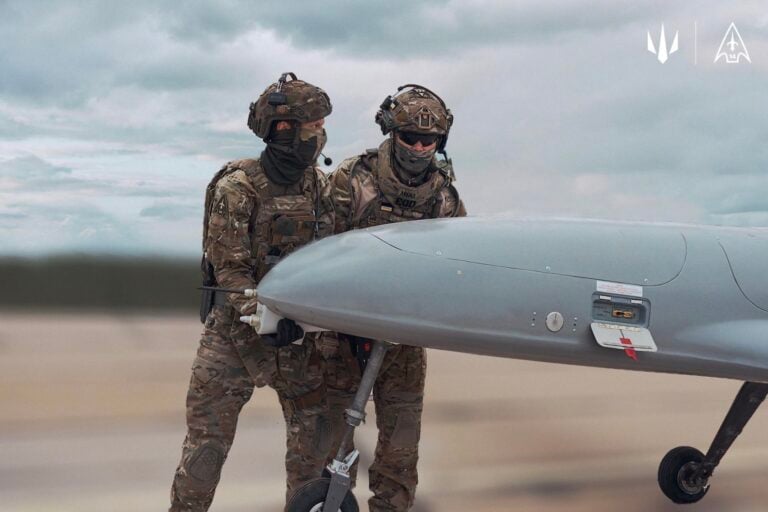
First up this week, the FAA has issued a security notice that is creating new mobile no-fly zones that could affect pilots nationwide, especially in urban areas. This notice is FDC NOTAM 6/4375, issued on January 16th. It prohibits drones from flying within 3,000 feet laterally and 1,000 feet above any stationary and mobile assets from the Department of Defense, the Department of Energy, and the Department of Homeland Security.
The FAA is classifying this as national defense airspace. The big problem here is that there’s no real practical way for us pilots to know where these assets are actually moving. Unlike a TFR for a stadium, these assets are not going to show up on your favorite LAANC app or other maps. They won’t even appear on the FAA TFR website because that would be a major operational security issue for federal agencies.
The FAA has issued guidance, and I want to read it to you directly from what the FAA help desk has sent. Before I read that, I do want to note that we are being told this NOTAM is being reworked. But as of this recording, the NOTAM is still active.
Here’s what the FAA help desk said. This NOTAM is a revision of earlier FAA NOTAMs dating back several years. The FAA UAS Support Center guidance for the NOTAM is as follows: Regardless of operating rules—Part 107, Part 91, or 44809—all drone operators are required to conduct due diligence prior to taking off. This includes ensuring that the UAS is appropriately registered and compliant with Part 89 Remote Identification of Unmanned Aircraft.
An essential component of this due diligence is an analysis and determination of the airspace in which you will be flying. Remote pilots/operators should be using multiple readily available online resources such as Before You Fly service, UAS Facility Map, and VFR sectional charts.
At any time during an operation, if the remote pilot/operator has reason to believe an operation as described in the NOTAM is staging or occurring and the UAS operation may be within the distance provided in the NOTAM, then the remote pilot/operator should land the drone until they can ensure compliance with the NOTAM’s requirements.
At any time during the operation, if the remote pilot/operator is approached by a federal agent and advised that they are operating within a TFR, then the remote pilot should cease operation.
That’s it, really. It’s very interesting. I hope this changes. This is an absolute nightmare for pilots that could be in violation without ever knowing, and it’s just not something that is acceptable for our community.
FAA reopens comment period for BVLOS rulemaking
Next up, another important update from the FAA. They are reopening the comment period for the beyond visual line of sight (BVLOS) rulemaking under Part 108. If you’ve been following for a while, we talked about this at the end of last year.
You have to act fast. The comment period is open for only two weeks, from January 28th to February 11th, 2026. The FAA is specifically looking for feedback on electronic conspicuity—this is not a fully open period to submit any kind of comment, it’s specifically about electronic conspicuity. That’s a technology that allows aircraft to be seen.
The original proposal from last year suggested giving drones some sort of right of way over manned aircraft in some situations, unless the manned aircraft was broadcasting its position using something like ADS-B Out or electronic conspicuity. As you can imagine, that got a lot of pushback from the manned aircraft community, and rightfully so. I think I’m on that side as well.
Now, the FAA is asking seven different specific questions to get more data before finalizing the rule. They want to know what alternate electronic conspicuity devices actually exist out there, how quickly they could get to market, and if the performance standards should match ADS-B.
This is a critical moment for the drone industry. I strongly recommend that you and your company submit your own comments directly to the FAA. Don’t rely solely on industry associations to represent your voice—although they are good as well. This is your chance to provide input on the importance of universal conspicuity, which I think is very important.
The key is how this is going to get done and how it can actually improve safety and reduce the cost for everyone. We’re certainly going to talk about the challenges we saw when Remote ID modules were presented as an option and the challenges in producing them, which ultimately led to a delay in enforcing Remote ID rules because these devices could not get to market quickly enough. We do not want this to happen again.
SkyBrowse launches AI feature for 3D modeling
Next up this week, some cool tech coming for first responders from SkyBrowse. They do 3D modeling, and they just released a major update that uses AI to solve one of the biggest headaches for public safety drone pilots: inconsistent model quality.
The new feature is called SkyBrowse Thinking, and it automatically analyzes a 3D model as it’s being processed. If the AI detects that the model doesn’t meet quality standards, it automatically reprocesses it using optimized settings—all without the user having to do anything.
This is actually a game-changer for crash reconstruction because teams are always under pressure to clear the scene quickly. Manually reviewing and resubmitting footage can add 15 to 30 minutes to the process, which becomes a bottleneck. This new process aims to remove that bottleneck.
In addition to all of this, SkyBrowse is also reporting 40% faster website performance, two times faster internal tooling, and the ability to upload 10 videos at once.
DJI Matrice 30T drone helps save 96-year-old woman from fire
Finally this week, a real-world drones-for-good story. A DJI Matrice 30T drone is being credited for helping save the life of a 96-year-old woman during an apartment fire in Texas.
Fire crews were called to the scene around 1:00 a.m., but before the first engine even arrived, a drone automatically launched to the scene from a nearby fire station. This is part of their DFR program—Drone as First Responder.
The M30T’s thermal and zoom cameras immediately gave the incident commander a very clear view, showing heavy fire that had already broken through the roof. Based on the live feed, they were able to call for a second alarm and request aid from nearby cities.
This was actually critical because when firefighters got on scene, a bystander told them there was a woman trapped inside. Because the chief had already requested backup thanks to the drone, the initial crew was able to focus entirely on the rescue. They entered through the window, pulled the woman to safety, and she was taken to the hospital with only minor burns. She is expected to survive and recover.
This is a textbook example of how drones are a massive force multiplier for first responders. Fantastic work from the Texas Fire Department.
For more drone news and tips, check out the Pilot Institute YouTube channel, and visit Greg’s author page on DroneXL.
Discover more from DroneXL.co
Subscribe to get the latest posts sent to your email.
Check out our Classic Line of T-Shirts, Polos, Hoodies and more in our new store today!

MAKE YOUR VOICE HEARD
Proposed legislation threatens your ability to use drones for fun, work, and safety. The Drone Advocacy Alliance is fighting to ensure your voice is heard in these critical policy discussions.Join us and tell your elected officials to protect your right to fly.

Get your Part 107 Certificate
Pass the Part 107 test and take to the skies with the Pilot Institute. We have helped thousands of people become airplane and commercial drone pilots. Our courses are designed by industry experts to help you pass FAA tests and achieve your dreams.

Copyright © DroneXL.co 2026. All rights reserved. The content, images, and intellectual property on this website are protected by copyright law. Reproduction or distribution of any material without prior written permission from DroneXL.co is strictly prohibited. For permissions and inquiries, please contact us first. DroneXL.co is a proud partner of the Drone Advocacy Alliance. Be sure to check out DroneXL's sister site, EVXL.co, for all the latest news on electric vehicles.
FTC: DroneXL.co is an Amazon Associate and uses affiliate links that can generate income from qualifying purchases. We do not sell, share, rent out, or spam your email.