Your First Drone Under $300. Everything You Need to Know.

Check out the Best Deals on Amazon for DJI Drones today!
So You Want to Fly a Drone
Hi, future pilot. My name is Rafa, and for the better part of the last eight years I have been flying, buying, talking about on my youtube channel, crashing, fixing, writing about them, and — occasionally — selling drones. I want you to feel comfortable right from the start, because once I was exactly where you are now: staring at a browser tab with fifteen open, wondering where to begin, which drone to buy, and whether I even had the skills to fly one.

Photo credit: Rafael Suarez
Let me make this simple. You do not need special abilities. You need curiosity, a little patience, and the willingness to crash a cheap drone before you upgrade to an expensive one. That is the whole secret. Everything else in this guide is just detail.
Having the urge to fly a drone is something that has to be fulfilled — because as you will quickly discover, the only real regret on this path is not starting sooner. So let’s get into it.
What Flying Actually Feels Like (Nobody Tells You This Part)
I remember my very first flight with a mix of excitement and genuine fear. It was 2017. I was in Quito, on a street called La Coruña, standing just outside a Mexican restaurant. My DJI Mavic Air drone had arrived that day — brand new, still smelling like the factory — and I could not wait another hour. I had to see it fly.
What I did not know at the time was something I now tell every student of mine: most drones are easy to fly, but even easier to crash. The moment the drone lifted to about 20 feet, I noticed how close the power lines were. I did not want to lose seven hundred dollars in the first three minutes of ownership. I landed. That entire first flight lasted less time than a coffee.
After that shaky start, I moved to a more controlled environment — the balcony of my apartment — and built a morning routine. Five in the morning, every day. Three batteries, three flights, before the city woke up and the wind picked up. At first, I would go up 65 feet and straight forward 165 feet, then bring it back. That was it. Then 200 feet. Then 330 feet. Then, months later, almost a mile out.
Eventually I started making figures: squares, circles, lazy eights. But here is the thing — for those first months, I barely recorded anything. I was not trying to make a movie. I was learning to trust the machine. And more importantly, I was learning to trust myself.
Those flights were a communion between my drone and myself. I was too busy feeling free with my winged camera.
Right now I charge for flying. I have commercial credits with Porsche, BMW, and MINI Cooper.

But there are still moments when I just want to get out and fly. No client, no deliverable, no shot list. Just me, the sky, and that feeling of being both on the ground and completely free from it at the same time. If you have never experienced that, no description I write will fully prepare you. It is something you have to feel.
Fair warning: this hobby has a way of becoming a life. You will start thinking about weather before you think about traffic. You will develop rituals — dedicated chargers for each battery, a specific folder structure for your footage sorted by date and drone model. One day you will land a shot you were not even trying for, and you will want to call everyone you know. That moment is coming for you. Let it.
Are You Ready? Honest Questions Before You Spend a Dollar
Before you buy anything, I want you to sit with these questions. Not skim them. Sit with them. Some of them are uncomfortable. That is the point.
Do you live somewhere you can actually fly?
I once heard someone say that if there are no cops around, everything is legal. Sadly, that philosophy does not apply to airspace. If you live in Manhattan, Washington D.C., or near any major restricted zone, flying will require significantly more planning than most people expect. You do not need to abandon the hobby — but you do need to know what you are getting into before you spend a dollar.
Are you willing to learn before you launch?
Flying is easy. Crashing is easier. If you are not willing to study basic regulations, learn how wind affects small aircraft, and understand even fundamental composition rules, this hobby will end for you fast. Not because of the crashes — everyone crashes. But because without context, the crashes will not teach you anything.
Do you understand this is not a toy?
That YouTube video of someone crashing a drone into their living room lamp? Or the one where the dog catches it mid-air? Those happen because people treat a small aircraft like a Frisbee.
It can be deeply fun, yes. But if you treat it like a toy, it will fail you like one — and possibly hurt someone in the process.
Are you prepared for the addiction?
I was not. Nobody is. Just accept it now.
Is $300 money you can afford to potentially crash?
This is the question that changes everything. Before you spend $300, spend $30. Seriously. Go to Amazon or AliExpress and buy a no-name 998 Pro or any similar “el cheapo” quad. Fly it into every wall and tree you can find.
Learn your reflexes, learn your panic reactions, learn what happens when you lose orientation. The emotional pain of destroying a $30 drone is 90 percent less than destroying a $300 one. And the lessons are exactly the same.
Do you have 30 minutes a day to actually practice?
A drone that sits in a drawer for two weeks will have a damaged battery. A pilot that does not practice will not improve. If your schedule genuinely does not allow for regular flights, wait until it does. This hobby rewards consistency more than it rewards expensive gear.
Are you willing to check airspace maps before every flight — not just the first one?
Airspace is not like a parking lot. The fact that you cannot see an airplane does not mean the sky above you is clear. There are controlled zones, restricted areas, and temporary flight restrictions that change. Every. Single. Day. Checking the map once is not enough. Checking it every time is not optional.
Are you buying this for a trip you might take someday?
If you are buying a drone specifically for an upcoming vacation, fine — but learn to fly it before you board the plane. Arriving at a destination you may never visit again and trying to learn while you are there is not a strategy, it is an expensive regret.
Is there someone in your life who will support this hobby?
I remember a New Year’s trip to an island. My wife was not exactly thrilled when I brought the drone bag on the first day. She came around eventually — she even buys me accessories now — but if you have a partner who will turn every flight into a negotiation, you need to have that conversation early. Flying before sunrise helps. Communication helps more.
Do you have a car to reach good flying locations?
Not everyone has the luxury of open space outside their front door. If you live in an urban area, having access to transportation matters. The best flying spots are rarely in front of your apartment building — especially if you have neighbors who enjoy filing complaints. Know your nearest parks, open fields, and drone-friendly zones before you need them.
Are you the kind of person who reads the manual?
You do not need to be an engineer. But you do need to read the manual. The pilots who skip this step are the same pilots who call emergency return-to-home a “bug” when it is actually a feature they did not know existed. Read the manual. Break the rules later, once you know what they are.
How do you react when technology does not do what you expect?
Frustration or curiosity? Your answer matters more than you think. The pilots who improve are the ones who, after something goes wrong, ask “what just happened?” instead of panicking or blaming the drone. Three months of daily morning flights before I ever pushed the drone past 660 feet — that patience is what built my confidence. Shortcuts skip the lessons.
Can you stay calm when something goes wrong mid-flight?
I still remember the first time a phone call came in while I was flying. Thank God for automatic return-to-home. True story. Train your calm before you need it.
Are you comfortable being approached by strangers?
Drone pilots attract attention. Curious people will walk up and ask what you are doing. Some of them will not be friendly about it. I personally do not answer questions mid-flight — my attention is on the aircraft — but I always take the time to explain once I land. A little patience and good humor go a very long way. You represent every drone pilot in that moment.
Beyond the drone, are you ready to spend money on accessories?
Extra batteries. A carrying case. ND filters. Replacement propellers. Memory cards. None of these are optional if you want to fly seriously. This is not a maybe — your answer here tells you whether you are buying a drone or buying something to decorate a shelf.
Are you buying this because you genuinely want to fly, or because you saw someone else’s footage?
This is the most honest question in this entire list. Beautiful drone footage is the result of composition knowledge, flight hours, location scouting, good light, and post-production work. Buying a drone gets you a tool. Becoming a good pilot — and a good visual storyteller — takes everything else. The drone is the easy part.
Do you expect to make money with this in the first year?
The fastest way to make money with a drone is to sell it. That is not a joke. Building a commercial drone business takes time, skill, a portfolio, marketing, and a lot of flights where you work for free to build experience. If your expectation is to earn money quickly, recalibrate now. If your expectation is to build something real over time, you are in the right mindset.
What to Look for in a Sub-$300 Drone
You have made your decision. You are getting a drone. Now let’s talk about what actually matters when choosing one at this price point — and what sounds important but really isn’t.
Radio system
This is the first thing I tell my students to look at, and it is consistently the most underrated spec. Drone manufacturers list transmission distances in ideal conditions — clear skies, no interference, open fields.
In a real urban environment with buildings, antennas, and radio interference, you can safely assume the actual usable range is about 30 percent of the advertised number. A drone listed at 0.6 miles of range might give you 1,000 feet of reliable signal in the city. Plan accordingly.
Camera quality
At this stage, camera quality matters — but it should not be your primary filter. You are a beginner. Your current limiting factor is not the sensor, it is your flying skill and your eye for composition. A semi-decent camera on a stable platform beats a great camera in shaky hands every time. Do not chase megapixels yet. That conversation comes later, when you start doing paid work.
Flight time
Twelve minutes of flight time is enough to practice with. What matters more than a single battery’s duration is how many batteries you have. Buy as many as you can afford. More batteries equals more practice time per session. More practice time per session equals faster improvement.
Obstacle avoidance
I want to be direct about this: do not trust obstacle avoidance on drones at this price point, and honestly, do not fully trust it on drones that cost fifteen thousand dollars either. Modern sensors can handle a solid wall or a large tree. A branch? Maybe. A wire? Never. The best obstacle avoidance system ever built is called common sense. Use it.
Build quality and repairability
Before you buy any drone, search for replacement propellers and batteries online. If you cannot easily find either — or if they are disproportionately expensive — keep looking. A drone you cannot repair is a drone with a very short life span.
Weight class
In most countries, including the United States, a drone weighing 0.55 lbs or more requires registration and, in many cases, a pilot certificate. A drone under 8.8 oz keeps your regulatory requirements significantly simpler. At this price range, this is worth paying attention to.
The Drones I Would Recommend Today
I want to be transparent with you: at the time of writing this guide, there are solid options available under $300. By the time you read it, some of these may have been superseded. Use the framework from Section 4 to evaluate whatever is current — that framework does not expire.
DJI Neo 2 — The Recommendation
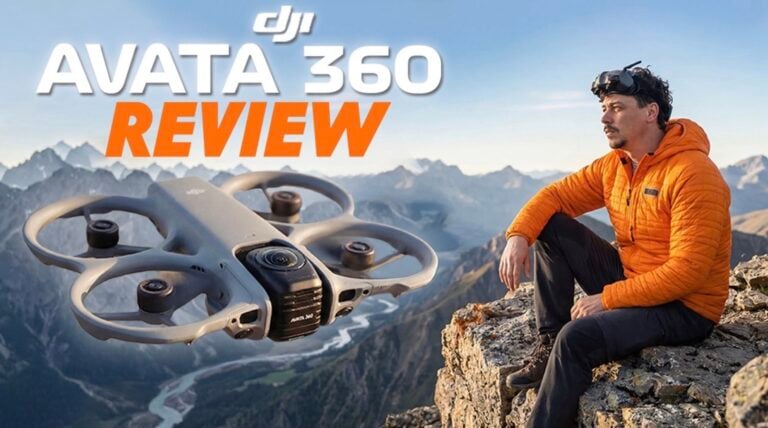
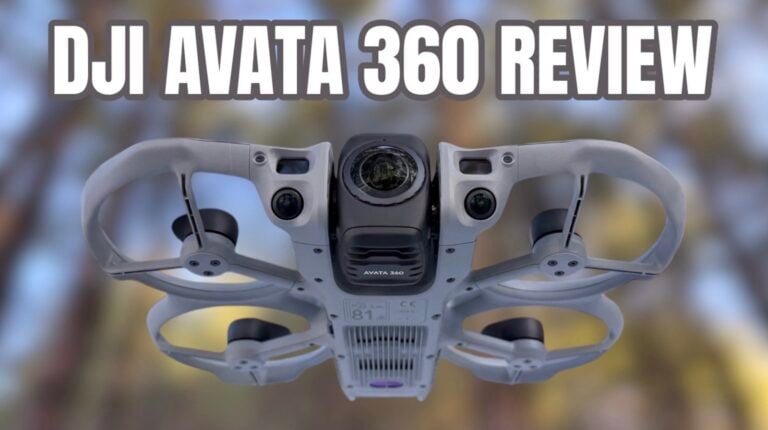
If you are ready to spend up to $300, the DJI Neo 2 is where I would put my money right now. In its basic configuration — drone and one battery — it runs between $199 and $259 depending on where you buy it.
You can control it via the DJI Fly app on your phone, which gives you up to 200 feet of altitude and 1,640 feet of range. You can also fly it with hand gestures directly, which is genuinely useful for run-and-gun shooting.

Compared to the original Neo, the Neo 2 brings meaningful upgrades: front-facing LiDAR obstacle avoidance, 4K video at 100 frames per second, and 360-degree obstacle detection.
I have used mine in tight indoor spaces and inside vehicles because of the prop guard design, and it has held up. If you want the full RC experience with a proper controller, you will need the combo with the O4 module and the RCN3 remote — that takes the price up, but the transmission improvement is significant.
DJI Mini 4K — The Runner-Up
If you want GPS stability, a slightly more traditional form factor, and strong image quality for the price, the DJI Mini 4K is worth considering.
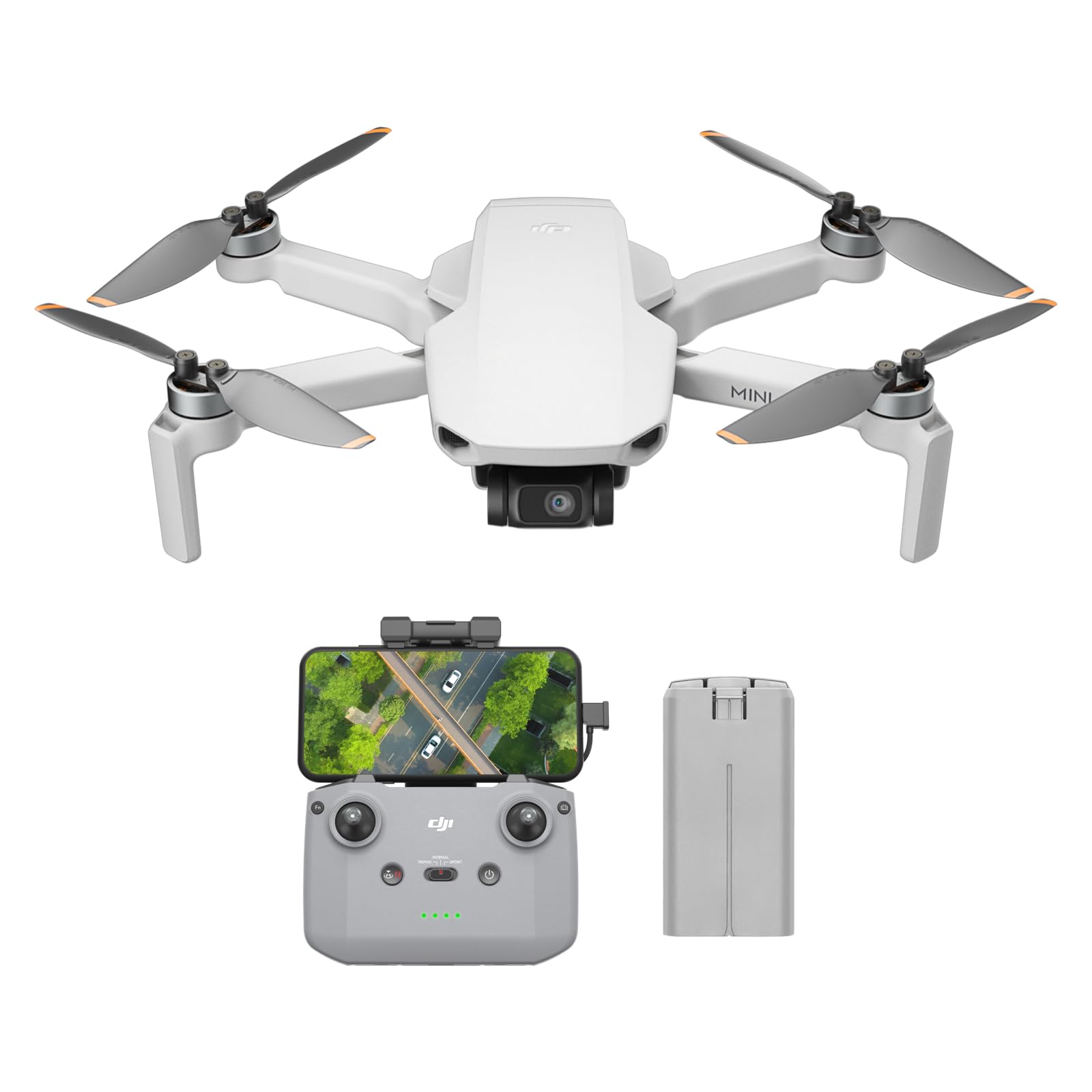
It weighs under 8.8 oz, which keeps you in the lighter regulatory category in most countries, and the camera punches above its weight. It lacks some of the Neo 2’s obstacle sensing, but for outdoor flying in open environments, it is a capable and reliable machine.
Potensic Atom SE — The Non-DJI Option
If you want to stay off the DJI ecosystem entirely — whether for political reasons, budget discipline, or simply because you prefer not to put all your money into one brand — the Potensic Atom SE is the most honest non-DJI recommendation I can make at this price point.
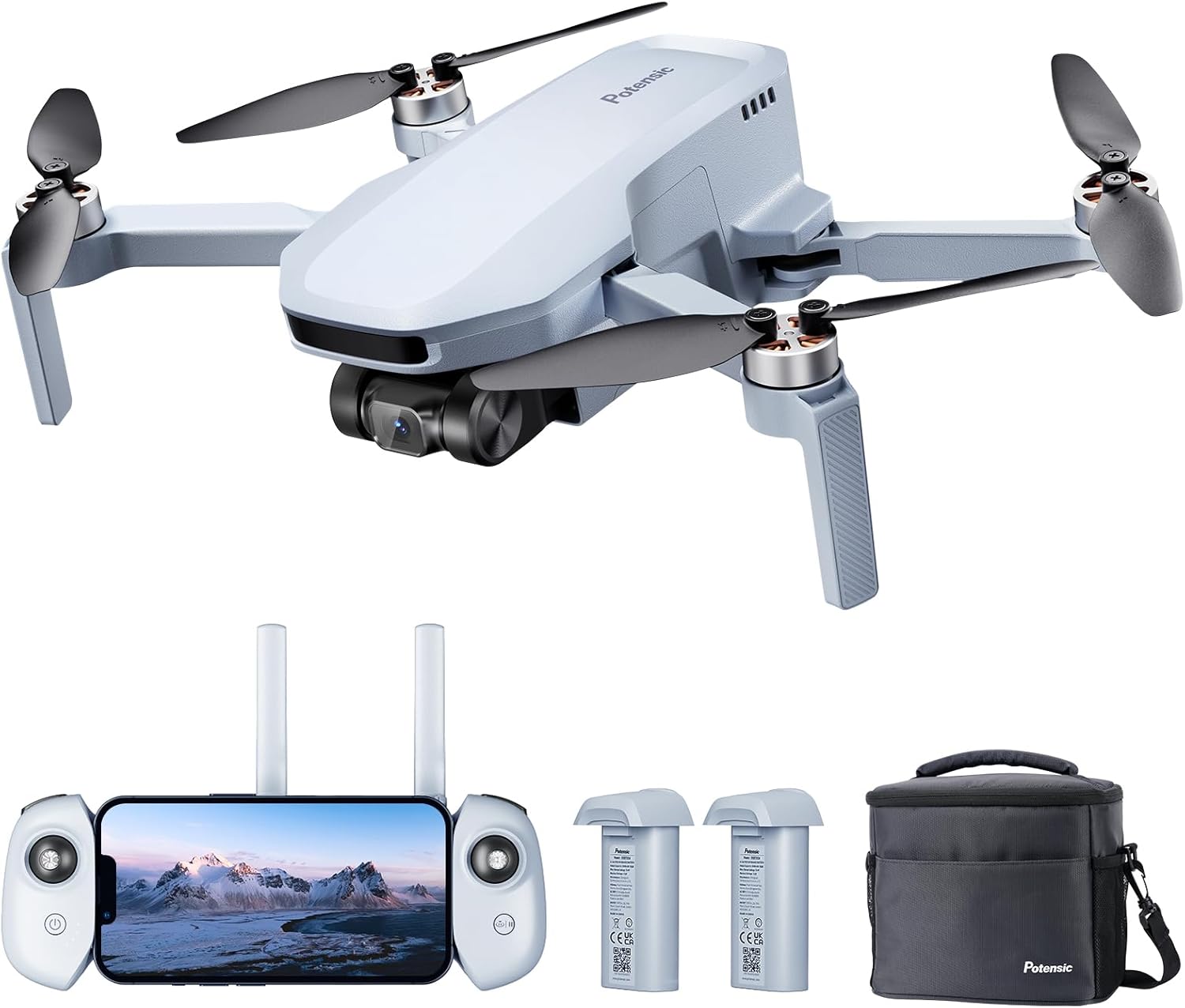
It runs well under $200, weighs under 8.8 oz which keeps you out of the heavier registration category in most countries, and delivers GPS-stabilized flight with a 4K camera that performs respectably for a beginner platform.
What makes the Atom SE stand out from the sea of no-name quads on Amazon is parts availability and a functional companion app. Potensic has invested in actual customer support infrastructure, replacement propellers are easy to find, and the flight behavior is predictable — which is exactly what you need when you are still learning.
The transmission range is more limited than DJI’s system, and the camera processing is not in the same league, but for learning fundamentals in open outdoor environments, it does the job.
The honest tradeoff: you are paying for independence from the DJI ecosystem, and you are giving up some polish to get it. The app is functional but not as refined as DJI Fly. Firmware updates are less frequent. The overall platform feels like what it is — a capable budget drone from a smaller company doing its best against a dominant competitor. If those tradeoffs are acceptable, the Atom SE is a legitimate choice. If you want the smoothest possible experience at this price range, DJI still wins.
The $30 Option: Start Here If You Have Cold Feet
If $300 still makes you hesitate — good instinct. A no-name 998 Pro or any similar basic quadcopter on Amazon, AliExpress, or eBay will cost you around $25 to $35. It has no GPS, no stabilization, and flies like a very nervous fly.

That is exactly why it is valuable. Flying something with no electronic assistance will build your stick skills faster than any GPS-stabilized drone ever will. Crash it repeatedly. Learn from every crash. Then upgrade with confidence.
A final note: by the time you read this, there may already be a Neo 3, a Mini 5 Pro, or a product from a brand that did not exist when I wrote this sentence. Technology moves fast. Principles do not. Use the framework. Evaluate what is current. Buy the best version of the right category for your situation.
Before You Ever Turn It On
You have a drone now. Your drone. It does not matter if it is a Mavic, a Neo, a Mini, or a $30 quad from the internet — it belongs to you, and with that comes a responsibility: to make the most of it. What follows is the checklist I give every new pilot before their first flight. Do not skip steps. The order matters.
- Open all the packages and remove every protection — stickers, foam inserts, plastic covers, lens caps.
- Charge the batteries and the remote controller. If your drone uses disposable batteries, buy fresh ones.
- Download the required app (DJI Fly, Potensic GO, or whatever applies to your drone).
- Open the app and complete any required account registration or firmware setup.
- Insert the charged battery and power on the drone — not to fly, just to check for software updates or required logins. Better to discover these at home than at a launch site.
- If your country requires registration (the U.S. does for drones over 8.8 oz, for example), register your drone before your first flight, not after.
- U.S. recreational flyers: take the TRUST test. It is free, it takes about 30 minutes, and it is legally required. Do it now.
- Choose your first flying location before you leave home. Do not arrive somewhere and then figure it out.
- Check the weather. Wind is the enemy of first flights. If it is gusty, wait for a calmer day.
- Check the airspace. Use B4UFLY, AirMap, or the DJI Fly app — and note that DJI’s app occasionally misses heliports. Cross-reference.
- Tell someone where you are going. This is not paranoia. It is just good practice.
Once every step above is done and you are at your chosen location, do a final visual scan before you set the drone down:
- Power lines and electrical towers
- Trees, especially branches at mid-height
- Water (lakes, fountains, irrigation channels)
- Other tall structures — cell towers, antennas, scaffolding
- Children and pets — they move unpredictably and they are attracted to drones
My recommendation for a first flight location: a large open park, early in the morning. Fewer people means fewer distractions, fewer risks, and no one questioning what you are doing before you have the confidence to explain it calmly. Keep your eyes on the drone, not on your phone screen.
The Rules. Yes, You Have to Read This Section.
I know. Nobody buys a drone to read regulations. But here is the thing — the rules exist because drones share airspace with manned aircraft, and a small drone striking a plane at altitude is not a minor inconvenience. Understanding the basics protects you, protects other pilots, and protects the hobby itself.
400 Feet Above Ground Level (AGL)
In the United States, the maximum altitude for recreational drone flight is 400 feet above ground level. Key word: above ground level. Not above sea level. Not above your takeoff point if you are launching from a rooftop. If you take off from a building that is already 200 feet tall, your effective ceiling above you is only 200 feet more. The reason for the 400-foot(400-foot) AGL limit is simple: the minimum safe altitude for manned aircraft is 500 feet. That 100-foot buffer is a safety margin, not an invitation to test it.
Visual Line of Sight (VLOS)
You must be able to see your drone with your own eyes at all times. Not on a screen. Not through FPV goggles. Your actual eyes. Why? Because you can lose your video feed while maintaining a control signal. If you cannot physically see where the drone is pointing, you cannot bring it back to you. This is not a technicality — it is one of the most critical safety rules in recreational drone flight.
No Flying Over People
A drone falling from altitude is dangerous. How dangerous depends on its weight and the height of the fall, but the regulations do not ask you to calculate the physics before every flight. Keep the aircraft away from people who are not part of your operation.
No Flying Over Moving Vehicles
Same principle. A drone landing on a windshield at highway speed is not a scenario anyone involved wants to experience. Keep clear of roads, highways, and any area with moving vehicle traffic below.
No Flying Near Airports
Manned aircraft have unconditional priority over unmanned aircraft. Always. Check a map before every flight — not just a visual scan of the sky — because airports, helipads, and air corridors are not always visible from the ground. The DJI Fly app provides airspace data, but for complete coverage in the U.S., B4UFLY is the standard.
No Flying at Night Without Authorization
Recreational night flying requires specific lighting so your drone can be seen by other aircraft. If your drone does not have adequate lighting, do not fly after sunset. If it does, you may be required to obtain a waiver. Check your country’s specific regulations — they vary.
The TRUST Test (U.S. Recreational Flyers)
The Recreational UAS Safety Test — TRUST — is the FAA’s required safety certification for recreational drone pilots in the United States. It is free. It takes approximately 30 minutes. It covers the core rules of recreational flight and airspace awareness. You are required by law to carry proof of completion when you fly. Take it before your first flight, not after someone asks you for it.
Remote ID
Remote ID is effectively a digital license plate for drones. Your aircraft broadcasts its ID, location, altitude, and speed in real time — information that can be received by smartphones, enforcement officials, and other airspace users nearby. Most modern drones sold after mid-2023 are Remote ID compliant by default. If yours is not, a Remote ID module is required in most countries. Understand what your drone broadcasts. It matters more than most new pilots realize.
Dronetiquette: The Unwritten Code of the Sky
There is a version of drone pilot who knows every regulation and follows none of the unwritten rules. Flies too close to people at a park without asking. Hovers at eye level outside someone’s window in the name of “testing range.” Refuses to land when a concerned bystander approaches. This pilot gives the rest of us problems.
The Ambassador Mindset
Every single flight you take represents every drone pilot. When you fly responsibly, keep your distance from people who did not consent to having a camera overhead, and handle a confrontation calmly, you protect the hobby for everyone. When you do the opposite, you are the reason local parks start posting “no drone” signs. The reputation of this community is built flight by flight, pilot by pilot.
How to Talk to Neighbors Before a Real Estate Shoot
If you are doing aerial photography near private property — even if you are technically flying in public airspace — a 60-second conversation before you start goes a long way. “Hi, I’m doing some aerial photography of the property next door. I’ll be done in about 20 minutes. Just wanted to let you know.” That is it. You will be surprised how often skepticism turns into curiosity, and curiosity turns into a potential referral.
Privacy Above the Ground
A drone with a camera is a powerful intrusion tool if misused. Flying over private backyards, hovering near windows, or capturing identifiable footage of people without their knowledge is not just legally complicated — it is wrong. Stay out of spaces that would reasonably be considered private. If you are unsure, stay higher and keep moving.
Handling Curious Bystanders
People are drawn to drones. Most of the time, they are genuinely curious and friendly. A smile, a brief explanation, and a willingness to show them what you are doing costs you nothing and earns you goodwill. Do not answer questions mid-flight — your attention belongs on the aircraft — but land first, then engage. If someone approaches aggressively, stay calm, explain that you are operating legally, and if necessary, land and leave. You will not win that argument in the air.
When Someone Asks You to Land
Sometimes a security guard or a property manager will ask you to land, even if you are flying in public airspace where you are technically within your rights. My advice: evaluate the situation, know your rights, but also know that the fastest way to escalate a non-issue into an actual problem is to argue the point on the spot. Sometimes landing and finding another location is the smarter play — even when you are right.
Flying Near Other Pilots
If you arrive at a spot and another pilot is already flying, communicate before you launch. Establish who is where, what altitude each of you is using, and where each drone is headed. This is not just courtesy — two drones in unexpected proximity is a real collision risk. The sky has plenty of room. Use it together.
Your First Flight. Step by Step.
This is it. Before you leave the house, run this checklist one more time:
- Batteries fully charged — drone, remote controller, and any accessories
- Memory card inserted and formatted
- Propellers attached and secure (spin each one and listen for any wobble)
- Drone firmware, app, and — on some models — battery firmware all updated
- Airspace checked for your chosen location
- Weather checked: wind under 15 mph for a first flight
At your location, follow this sequence:
- Choose a large, flat open area with no people, no trees, and no power lines within at least 165 feet.
- Place the drone on the flattest surface you can find. Do not launch from your hand on day one.
- Power-on sequence: connect your phone to the controller first, then turn on the controller, then power on the drone. Always in that order.
- Let the GPS acquire a full satellite lock before you lift off. Do not rush this. If your drone loses signal mid-flight with no home point set, it cannot return automatically. The GPS lock is what makes the safety net work.
- Your first move: straight up, 3 to 6 feet. Hover. That is all. Get comfortable. Let the drone settle in the air and let yourself settle too. Look at the drone, not at the screen.
- Begin slow, deliberate movements: forward, backward, left, right. You are not practicing maneuvers yet. You are learning how sensitive the controls are and how the drone responds to your inputs.
- Practice yaw — rotating the nose left and right while hovering in place. This is one of the most disorienting movements for new pilots because the control directions reverse depending on which way the drone is facing. Take your time with it.
- Land before the battery indicator hits 30 percent. Walk to the drone to retrieve it. Do not fly it back toward yourself on the first day.
When Something Goes Wrong Mid-Flight
If you lose orientation and cannot tell which way the drone is pointing, look at the drone’s position relative to reference points you identified before takeoff: a tree line, a building edge, a parked car. Use those landmarks to orient yourself, then bring it back slowly.
If the drone starts drifting away from you against your inputs:
- First, check and reposition the RC antenna for better signal.
- Move to a higher position or away from any structure that may be blocking the signal.
- Press the Return-to-Home button and let the drone fly itself back.
- If you suspect strong wind, switch to Sport mode — this is the one exception where I recommend Sport mode for a beginner. Apply gentle forward thrust to fight the drift, reduce altitude gradually, and bring it in.
If you completely lose the aircraft and cannot locate it visually: check the map in your app, which typically shows the last known GPS position. Walk toward it calmly. Do not panic. It almost certainly landed rather than disappeared.
You Are Going to Crash. Here Is What to Do.
There are only two types of drone pilots: the ones who have already crashed, and the ones who are going to crash.
This is the main reason I always recommend learning on a cheap drone first. Not because you are careless — but because physics does not negotiate. Wind gusts happen. Unexpected obstacles appear. Firmware updates occasionally introduce handling quirks. A tired pilot makes mistakes. All of it is normal.

Here is the critical thing most new pilots do not hear: the majority of crashes are caused by the pilot, not the drone. There are no air traffic controllers calling you on the radio when you are about to do something unwise. The responsibility is entirely yours. Which is both the humbling part and the empowering part.
After the Crash
There will be a moment of silence. You will look at the pieces. You will think about the money. That is all completely normal. What you do after that moment defines what kind of pilot you will become.
My recommended process:
- Do not fly again that same day. Take a breath.
- Within the next day or two, do a forensic analysis. Replay the flight in your memory. What was the last thing you did before the impact? What could you have done differently? Was it wind? Spatial disorientation? Distraction? A command you gave in the wrong direction?
- Write it down if it helps. The lesson is in the data, not in the wreckage.
- Order replacement parts if needed — propellers, guards, whatever broke. Then come back.
Do not let a crash end the habit. The pilots who quit after their first crash were not bad pilots — they just did not understand that the crash was part of the curriculum.
What Comes After the First Flight
Congratulations. You have now done something that most people who buy a drone never actually do: you went out, you flew, and you came back in one piece. Welcome to the club.
But this is where most beginner guides stop, and most beginner pilots plateau. They fly a few more times, capture some okay footage, and eventually put the drone away. Do not do that. Here is what actually comes next.
The First 10 Hours: Stick Skills
Your first priority for the next ten flight hours is not photography. It is not cinematic moves. It is control. Practice these patterns in order:
- Squares: fly a clean square pattern, making 90-degree turns at each corner.
- Circles: orbit a fixed point at a steady distance and altitude. Then do it in the other direction.
- Figure eights: combine two orbits. This forces you to continuously transition between two different yaw directions.
- Circles with the camera locked on a subject: fly the orbit while keeping the nose pointed at a fixed point the entire time. This is the foundation of cinematic drone work.
If you can do all four of those smoothly, you are no longer a beginner.
Learning to Read Light
Once you have control, start paying attention to when you fly. Early morning and the hour before sunset — what photographers call golden hour — produce light that makes almost any location look cinematic. Harsh midday light flattens everything. It is not about the drone. It is about when you put it in the air.
Start noticing shadows, contrast, the direction of the sun relative to your subject. These are the decisions that separate drone footage that looks like everyone else’s from footage that makes people stop scrolling.
Basic Cinematic Moves Every Pilot Should Learn
These are the movements that have a name because they work consistently:
- The Reveal: start low behind an obstacle, then rise slowly to reveal the landscape beyond. Simple. Effective every time.
- The Orbit: circle a subject smoothly with the camera locked on it. The foundation of aerial B-roll.
- The Fly-Through: pass through an opening — a doorway, an arch, between trees — in a single smooth move. Requires practice, worth every session.
- The Crane: start low with the camera tilted down, then rise while simultaneously tilting the camera up to maintain frame. My personal favorite. Not easy. Gorgeous when done well.
When to Think About Upgrading
Not when your drone manufacturer announces something new. Not because a YouTube reviewer told you that you need more dynamic range. The right time to upgrade is when your current equipment is the actual limiting factor on your work — when you can point to specific shots you cannot capture, or clients you cannot serve, because of a genuine technical limitation. If you upgrade before you reach that point, you are buying confidence you have not earned yet. And confidence bought is not the same as confidence built.
Thinking About Going Professional?
Start thinking beyond flying. Commercial drone work requires equipment management and maintenance, legal compliance and insurance, pricing strategy and client management, video editing and color grading, prospecting, proposals, and contracts.
The flying part? You already know that is only one piece. The business part is what most pilots never figure out. If you want to build something real, start learning the business early — while you are still building your skills. The pilots who wait until they are “good enough” to think about money are almost always the ones who end up flying for free much longer than they should.
And one more thing, because someone needs to say it plainly: if you are genuinely good at something, charge for it. Know your value. Present it well. And never apologize for your rate.
Welcome to the Community. Now Go Fly.
I think you are ready.
You know how the airspace works. You know what to look for when buying. You know how to prepare before a flight, what to do when something goes sideways, and how to actually build skill instead of just accumulating flight hours. You know more right now than 90 percent of the people who buy their first drone and take it out of the box.
That knowledge is only worth something if you use it. So go fly.
Here is what I want you to remember as you build this habit:
- The rules exist to protect the hobby. Follow them, and you protect both the hobby and yourself.
- The crash is coming. It is fine. It is part of the education. Breathe, analyze, come back.
- The community is real, it is welcoming, and it is waiting for you. Find local groups, online forums, and other pilots who will share locations, advice, and encouragement.
- The best shot you will ever take has not happened yet. That is the most exciting part of this.
I started with a Mavic Air. My path from that rooftop in Quito led me to commercial work with Porsche, BMW, and MINI Cooper, to teaching pilots, to writing for DroneXL. None of that happened because I had the best gear. It happened because I flew consistently, I treated every crash as a lesson, and I never stopped trying to do it better than the last time.
That path is available to you too. The sky is yours to explore.
The only regret on this path is not starting sooner. So start now.
Photo credit: Potensic, DJI, Rafael Suarez, Facebook.
Discover more from DroneXL.co
Subscribe to get the latest posts sent to your email.
Check out our Classic Line of T-Shirts, Polos, Hoodies and more in our new store today!

MAKE YOUR VOICE HEARD
Proposed legislation threatens your ability to use drones for fun, work, and safety. The Drone Advocacy Alliance is fighting to ensure your voice is heard in these critical policy discussions.Join us and tell your elected officials to protect your right to fly.

Get your Part 107 Certificate
Pass the Part 107 test and take to the skies with the Pilot Institute. We have helped thousands of people become airplane and commercial drone pilots. Our courses are designed by industry experts to help you pass FAA tests and achieve your dreams.

Copyright © DroneXL.co 2026. All rights reserved. The content, images, and intellectual property on this website are protected by copyright law. Reproduction or distribution of any material without prior written permission from DroneXL.co is strictly prohibited. For permissions and inquiries, please contact us first. DroneXL.co is a proud partner of the Drone Advocacy Alliance. Be sure to check out DroneXL's sister site, EVXL.co, for all the latest news on electric vehicles.
FTC: DroneXL.co is an Amazon Associate and uses affiliate links that can generate income from qualifying purchases. We do not sell, share, rent out, or spam your email.