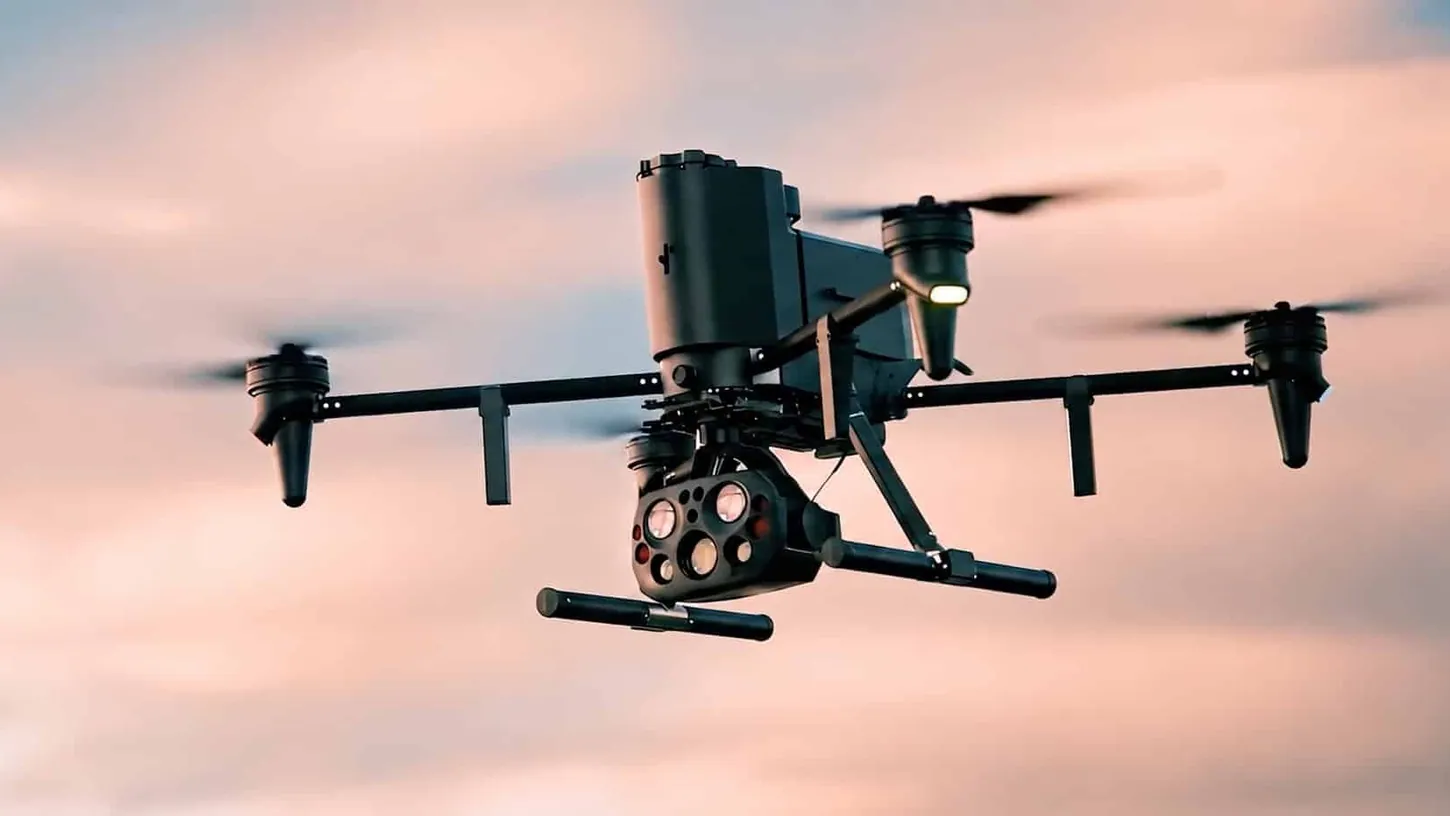
The O’Fallon Police Department in Missouri needed less than 15 minutes to find, track, and arrest a man who ran from officers and disappeared into a storm sewer. The department’s drone watched him go underground on July 23 and guided officers and a K-9 to the other end of the drain, where police were waiting when he climbed out. The flight came from a Drone as First Responder program that went live in June and has already assisted in 12 felony arrests in roughly two months, built on the Flock DFR platform DroneXL has covered as it spread city by city.
The Drone Watched The Suspect Go Underground
The call came in around 4 p.m. on July 23: a man accused of violating an order of protection involving his mother. Drone operators in O’Fallon’s Real Time Information Center watched the man move around the home before he fled from responding officers on foot.

Then he did the thing that usually works. He went where cars and officers can’t follow, into a storm sewer system. Against a ground-only response, that move buys time, and time is how fleeing suspects win.
Against an aircraft holding overwatch, it just told police exactly where he would come out. Operators directed officers and a K-9 unit to the far end of the drain based on the drone’s observations. When the man exited, police were standing there. The entire search and arrest took less than 15 minutes.

An order of protection case is worth pausing on. Behind that dry legal phrase is a mother afraid enough of her own son to ask a court for distance. Resolving that call in minutes, without a prolonged manhunt through the neighborhood, is the difference this technology was bought to make.
Six Drones, Three Rooftops, 90 Seconds
O’Fallon built its program deliberately. The city committed $1.7 million over five years from use tax revenue for the Flock DFR system: six drones deployed in pairs from enclosed boxes on three city-owned rooftops, flying at 400 feet (122 m) with a 3.5-mile response radius and a target response time under 90 seconds.
The Real Time Information Center went up between December 2025 and March 2026, and the program rolled out in June. Chief Frank Mininni has said the drone can launch before a call is even dispatched, with the camera locked at a 90 degree angle en route so operators can’t look down at anything except the destination.

That camera detail is not a throwaway. It is a privacy control written into the hardware, and it answers the most common objection to these programs before it gets asked. The aircraft flies to the call. It does not browse the city on the way.
The department also expects the drones to thin out unnecessary dispatches. A first look from the air tells the RTIC whether a suspicious person call needs four units or one, and the program is set up to assist neighboring St. Charles County communities when their calls spill across the line. Nearly 100 departments nationwide now run some version of this Flock system.
Twelve Felony Arrests In Two Months
The early numbers are stacking up fast. Twelve felony arrests assisted in roughly two months puts O’Fallon on a pace that mirrors what DroneXL has documented across the Flock DFR map, from South Bend’s no-cost pilot to Greenville’s expanding operation. Flock keeps pushing the platform forward, most recently with the Alpha camera announced in June.
The pushback travels with the expansion. Flock’s license plate readers and drones have drawn civil liberties objections in city after city. Oakland County approved its Flock drones in April over a privacy revolt, and the same debate is running in council chambers across the country right now.
DroneXL’s Take
Every Flock story now arrives with the same argument attached: the cameras and drones violate civil rights, the surveillance state is here, the sky is watching. Then a call like O’Fallon’s comes in, and the same technology finds the man a court already ordered away from his own mother, in a storm drain, in minutes. Both reactions come from the same public. That contradiction deserves an honest look, not a shrug.
Here’s the question I keep turning over: what exactly is the freedom being defended if you are not safe enough to use it? A protective order is a piece of paper. On July 23, the paper got enforcement teeth in under 15 minutes. The people angriest about the drone overhead are often the same people who demand answers when a suspect gets away and hurts someone. You cannot have both instincts win at the same time.
And there’s a truth under all of this that the debate keeps dodging: no camera prevents a crime. Prevention by surveillance is a myth on both sides of the argument. What these systems change is what happens after, whether the person who already broke the law is found in 15 minutes or never. That’s not a police state. That’s follow-through.
The civil liberties crowd still earns its seat at the table, and O’Fallon’s fixed 90 degree camera is proof the pressure works: that constraint exists because somebody demanded it. The programs that publish their flight logs, lock their cameras to the call, and stack up arrests like these 12 will keep winning votes. Watch whether O’Fallon keeps releasing its numbers as the program ages. Transparency, not the drone, is what decides how this debate ends.
Sources: Fox 2 Now, First Alert 4, KSDK
DroneXL uses automated tools to support research and source retrieval. All reporting and editorial perspectives are by Rafael Suárez.