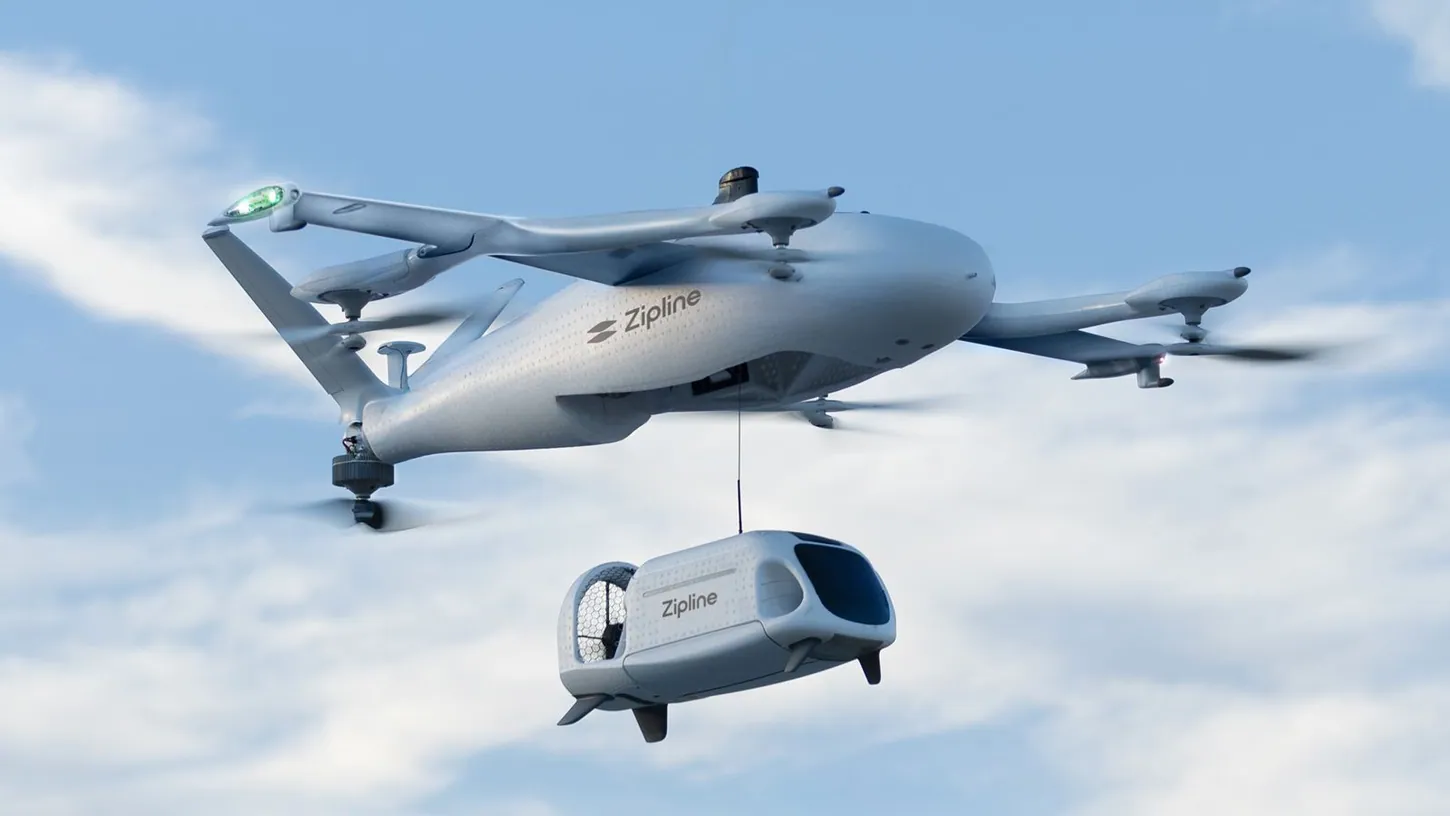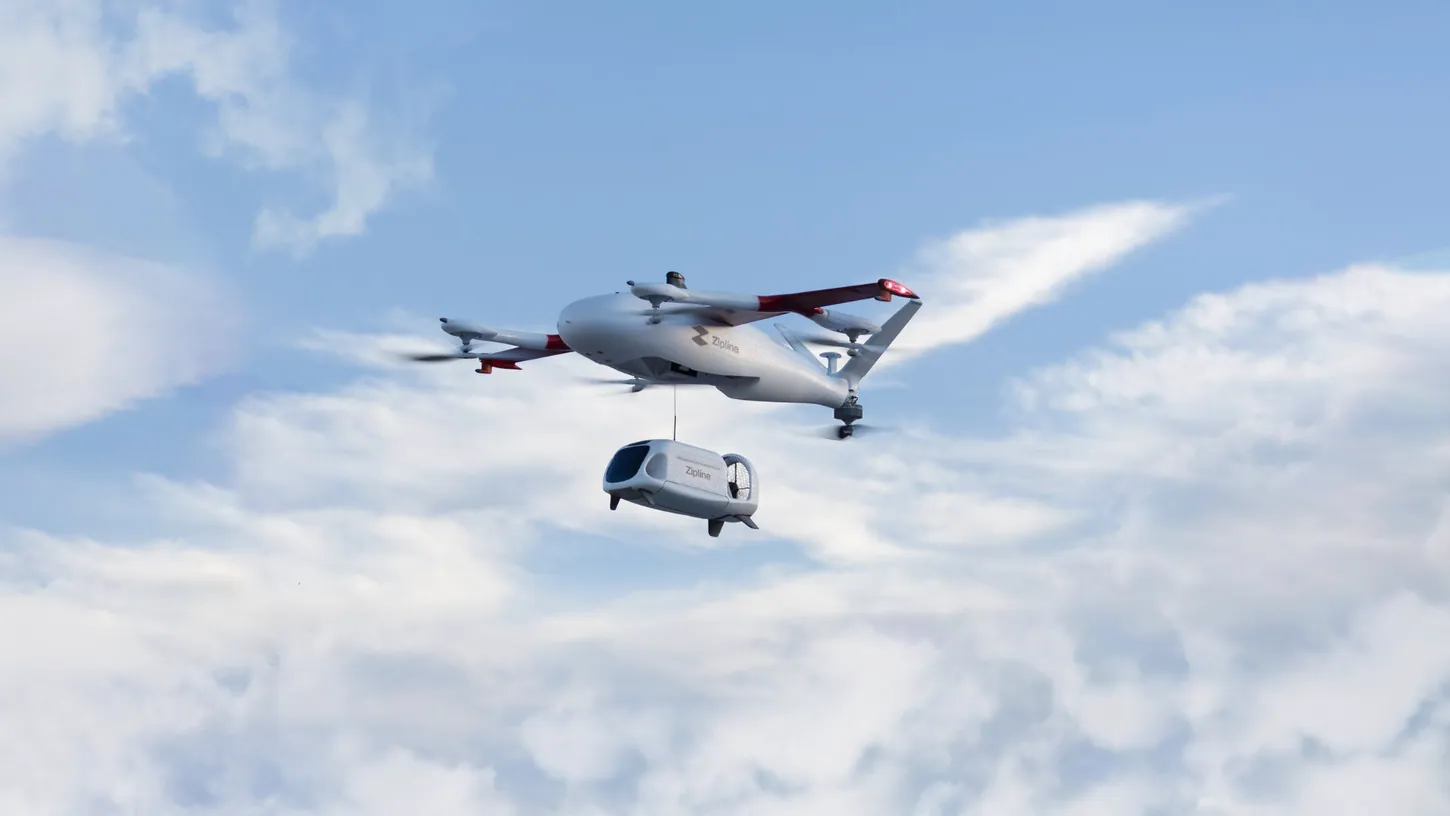
Zipline said on October 27 that every drone in its fleet now flies what the company calls sound-optimized dynamic flying, and that the update, combined with other hardware and software changes, has cut sound exposure per flight by 68% and peak loudness by 24% against its 2025 fleet. Each aircraft reads the wind at takeoff and runs a custom sound model to pick the quietest way onto the wing and back off it. The same change trims 53 seconds off the average flight and 21% off the energy it uses.
I covered the flight-profile change in September, when co-founder Ryan Oksenhorn posted the first fleet numbers on X. The October release gives the technique a name and two headline noise figures, and says it now runs fleetwide. Both figures, by Zipline’s own wording, are “based on internal modeling.” Zipline has published no ground-measured decibel readings for the new profile.
Zipline’s Drones Now Pick the Quietest Climb Using Wind and a Sound Model
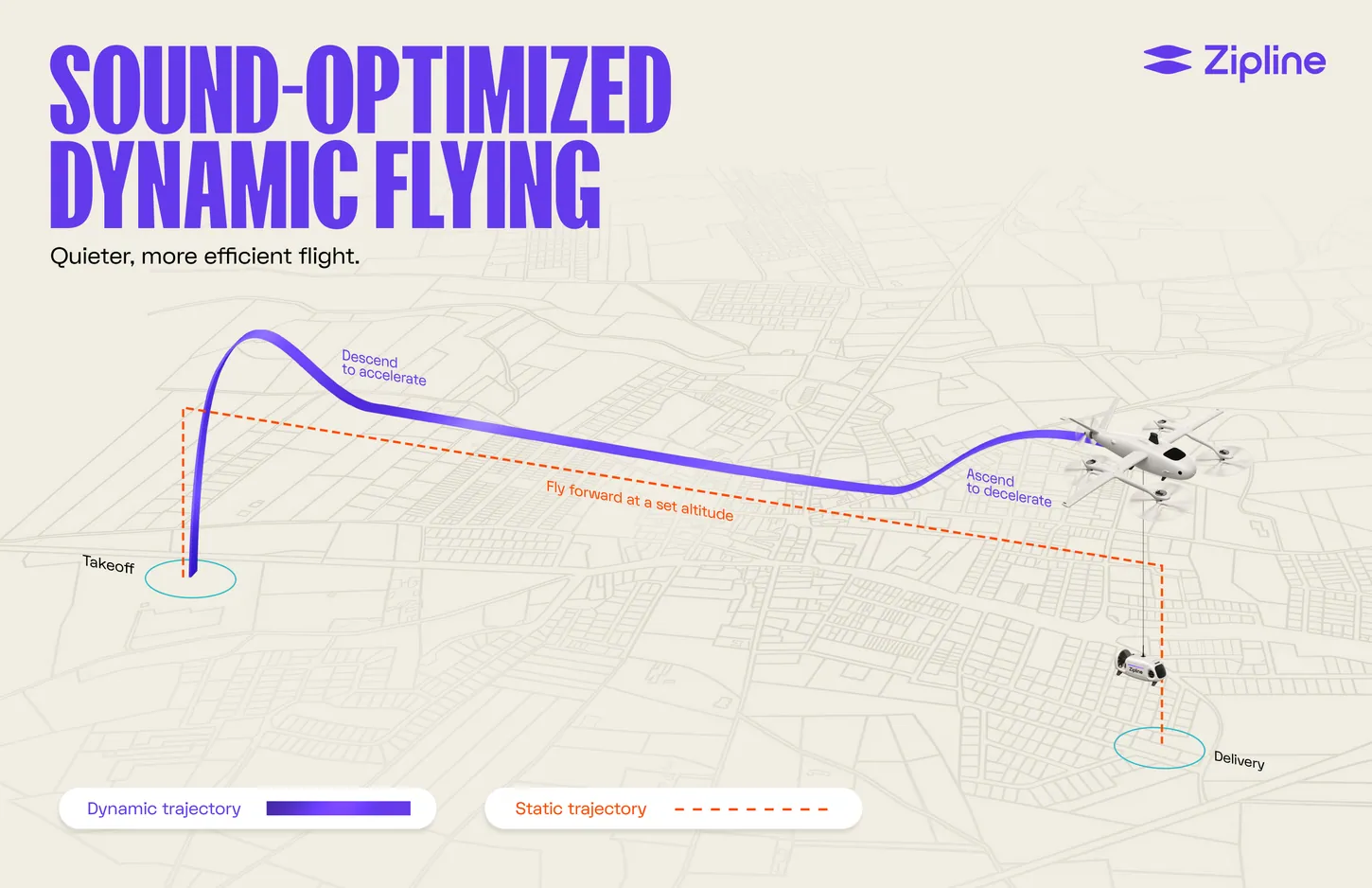
Sound-optimized dynamic flying replaces a fixed route with one the aircraft computes on board. At takeoff the drone measures the wind and feeds that reading into Zipline’s acoustic model. It then chooses how to dip and climb so the loud transition onto the wing takes less time and power.
Zipline’s Platform 2 aircraft lifts off on hover propellers, then tilts onto a fixed wing and cruises on a single motor. The hand-off between the two modes is where the noise and the battery drain concentrate, and I walked through the physics of that in the September article. The new profile dips the nose to gain speed, which Zipline compares to a bike coasting downhill, and pitches up to bleed speed off at the end instead of braking with its motors. Zipline says the aircraft now spends roughly 50% longer on the wing per flight.
Oksenhorn’s September 5 numbers put the median mission 48 seconds shorter, and the October figure is an average rather than a median. The release says the technique “now enables” higher-altitude deliveries and more elaborate maneuvers to come.
Zipline’s 68% Figure Is a Modeled Output Against Its 2025 Fleet
The 68% cut in sound exposure and the 24% cut in peak loudness are modeled outputs. They compare Zipline’s current fleet, hardware and software changes bundled together, with its 2025 fleet, and Zipline’s press release does not say how much the new flight profile contributes on its own.
The release also restates two claims Zipline has made before. It says its two-part design keeps the aircraft about 330 feet (100 meters) up during a delivery, against an average of 32 feet (10 meters) for other delivery drone services, a comparison that is Zipline’s own and that names no competitor. In a March 25 newsroom post, the company said its aircraft are six times quieter during a delivery than others in the industry, that a software update it described as recent had cut perceived noise 30%, and that it plans to raise its cruising altitude to 400 feet (122 meters).
Co-founder and chief technology officer Keenan Wyrobek framed the goal as acceptance rather than tolerance. “We want people to love having Zipline available, not just tolerate it,” he said in the release.
The Release Landed in a Month of Town Fights Over Amazon’s Drones
The pitch that carried the release to my inbox opened with the towns, not the drone. Zipline’s PR firm wrote that noise is the complaint communities raise most, and that “fewer propellers spinning means less noise.” The pitch names no competitor, and the towns it refers to are fighting Amazon.
Amazon’s Prime Air is the company drawing the rules. Westborough, Massachusetts, voted 510 to 13 on October 19 to ban drone launch pads and drop zones, and Governor Maura Healey is weighing a permit freeze aimed at Amazon’s hub there. Kirkwood, Missouri, let a Walmart and Wing drone nest die without a motion on October 15. In Richardson, Texas, residents who call themselves drone warriors are still asking Amazon to fly higher after the company raised its cruise altitude.
The noise numbers those towns quote are Amazon’s, and the FAA put them on the record. The agency’s Chicago noise appendix puts a cruising MK30 at 63.7 dBA SEL measured at 200 feet (61 meters), and its Baton Rouge filing carries the 92-decibel figure Amazon’s own marketing leaves out. Zipline’s own Texas draft assessment has a noise appendix too, and it concludes the company’s flights produce no meaningful noise anywhere in the study areas. The MK30 descends to yard level to drop a package. Zipline’s offer to towns is that its aircraft never does.
DroneXL’s Take
Zipline has the quietest delivery architecture flying in the US, and I have said so since the Platform 2 reveal in March 2023. Keeping the aircraft 330 feet up and sending a droid down a tether beats anything Amazon or Wing descends to a yard with, and software that spends less time in the loud transition phase is the right next layer. The press release is also smart. Towns from Westborough to Kirkwood are voting on drone rules this fall, and a company that can walk into those meetings with a quieter aircraft and a noise story will win permits that Amazon is losing.
But the number those towns need is the one Zipline still hasn’t published. In September I wrote that Zipline should put microphones under a flight path in Princeton and publish the before-and-after, and the October release answers with a bigger model. A 68% modeled reduction will not survive the first council meeting where a resident holds up a phone with a decibel app. The FAA’s environmental reviews put Amazon’s numbers on the record, and Zipline’s own Texas appendix is a model as well. Zipline can beat Amazon’s figures with a microphone, and I think it would, which makes a published measurement the cheapest argument the company has left to make.
Source: Zipline press release, October 27, 2026, Zipline newsroom, March 25, 2026
DroneXL uses automated tools to support research and source retrieval. All reporting and editorial perspectives are by Haye Kesteloo. Read our editorial standards.