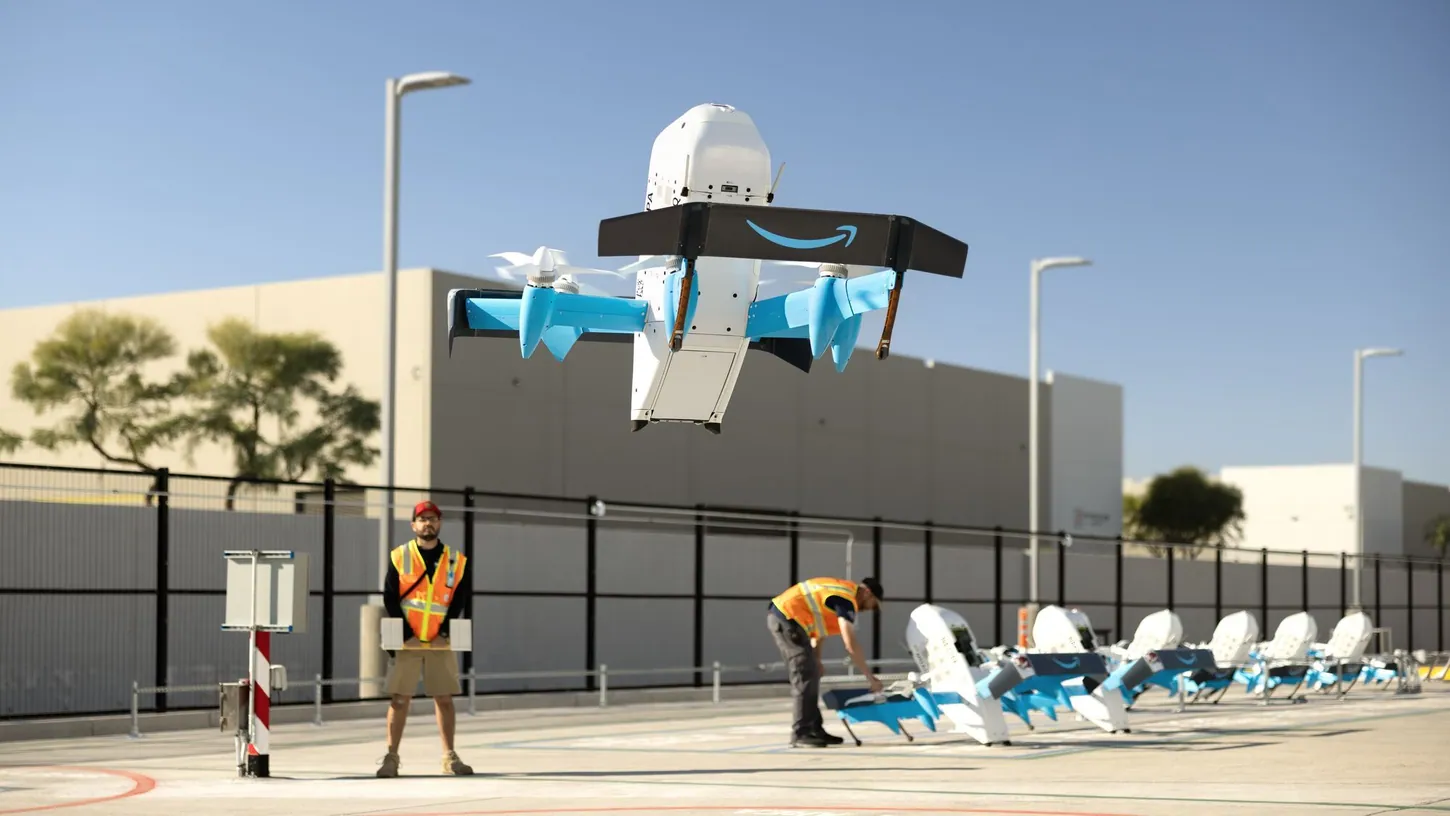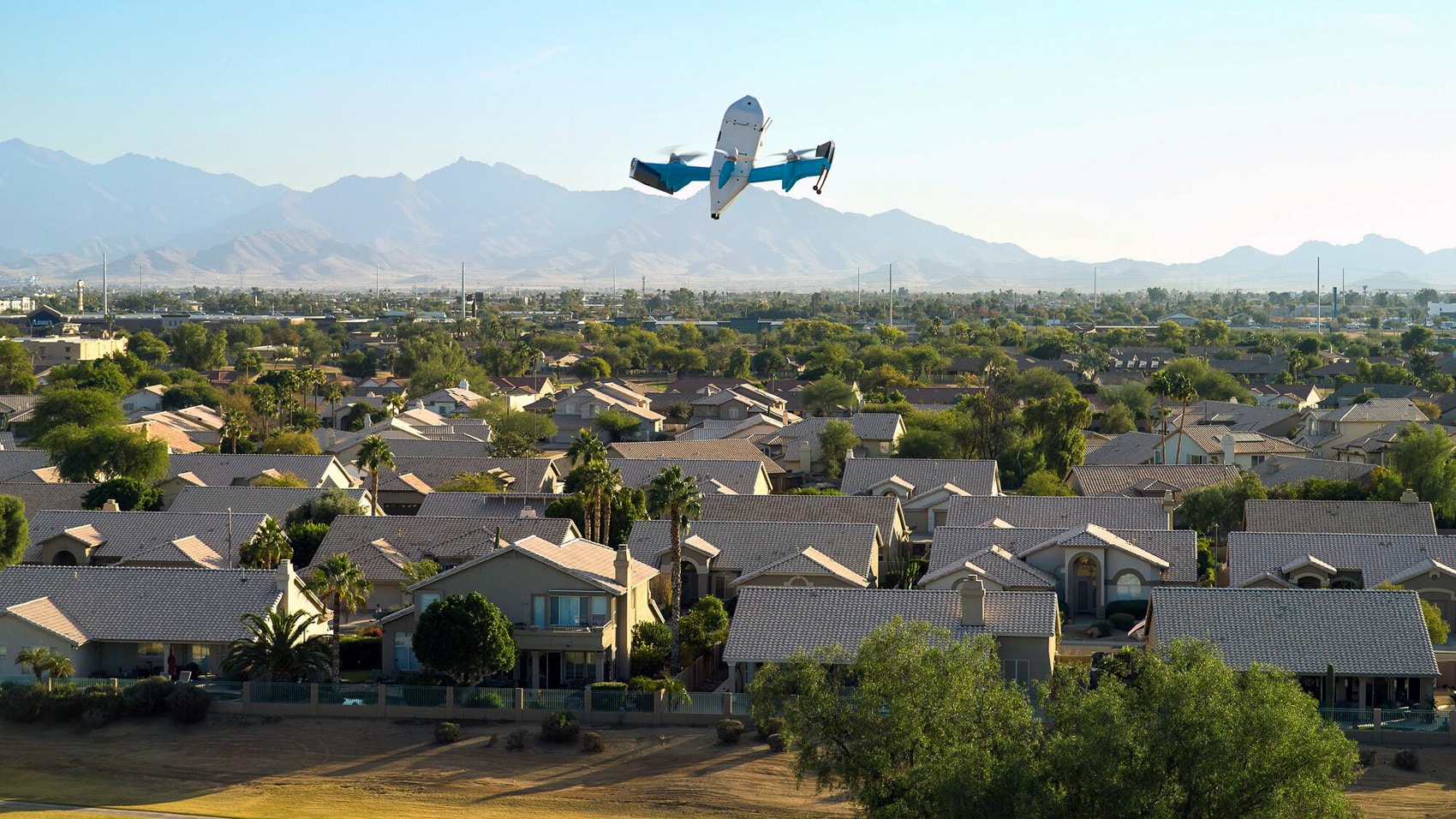
Amazon’s MK30 delivery drones are flying over the south suburbs of Chicago from the company’s fulfillment center in Markham, Illinois, and Amazon says it has about 21 of them there, NBC 5 Chicago reported on Monday, October 26. Homewood residents have filmed the aircraft descending to deliver in their neighborhood, and one of them believes he has already had a package delivered that way. It is the launch Amazon said in February would come “later this year,” after a summer start date the company put out ahead of its March 2 Tinley Park meet-and-greet came and went.
NBC 5 reported that the company has not yet officially launched the rollout. The Village of Homewood, by contrast, told residents the service has launched and that Homewood sits inside the delivery radius, the Country Herald reported the same day. The drones are the same 78-pound (35-kilogram) aircraft that hit a construction crane twice in Tolleson, Arizona a year ago, and the FAA’s environmental review index for drone delivery, last updated October 14, still lists the agency’s Chicago file as a draft with a comment period that closed August 14 and no decision posted.
Amazon Says 21 Drones Fly From Markham. NBC 5 Calls the Rollout Not Yet Official
Amazon has deployed approximately 21 drones at the Markham fulfillment center, the company told NBC 5, each carrying up to five pounds (2.3 kilograms) as far as eight miles (13 kilometers). NBC 5 reported the rollout is not yet official and that Amazon plans to deploy drones at additional centers.
The eight miles is Amazon’s figure. Prime Air senior manager of commercial operations Josh Brundage told ABC7 in February that anyone within an 8-mile radius of the buildings should be eligible, and the FAA’s own draft for the Chicago hubs sets the MK30’s operating range at 7.5 miles (12 kilometers). NBC 5 also reported that Amazon says a delivery will cost the company less than $5. Chicago outlets reported in February that Prime members would pay $4.99 an order, and an internal Amazon projection reported in December 2024, which DroneXL covered in Amazon’s Prime Air Meets Reality, put the company’s cost at about $63 a package by 2025.
“It’s got a weird sound to it,” Homewood resident Paul Bochenk told NBC 5. It was not as loud as he expected, he said, but annoying. Marty Tully, also of Homewood, thinks he has already had a drone delivery and likes the idea for one reason. “I enjoy it because they can drop off medications,” he said, adding that fewer drivers means less traffic.
CBS Chicago reported the Markham drones delivering 12 days earlier, on October 14, after Homewood residents filmed one coming down the day before. “It was decently noisy!” one resident told CBS, and Julian Gomez asked who was piloting it. Amazon told CBS that nobody watches the onboard cameras live, that they exist for navigation and obstacle detection, and that the Markham program created 30 jobs, a figure Amazon corrected from 55 after the story aired. Amazon compared the sound to a passing car, and spokesperson Caitlin Tully told CBS the response has been positive. Prime Air’s delivery is “safe, reliable, and the customer response has been overwhelmingly positive,” a company spokesperson told NBC 5.
The FAA’s Public Chicago File Ends at a July Draft With No Decision
The FAA’s drone environmental review index, last updated October 14, 2026, lists one Chicago assessment and its appendices: a draft environmental assessment dated July 2026 for three Prime Air hubs, with comment closed August 14. No final assessment or signed finding was there when DroneXL checked on October 27.
The draft describes the Markham hub, Amazon’s IGQ1 robotics fulfillment center at 2201 W. 159th Street, with the nearest homes about 1,900 feet (580 meters) to the northwest. It proposes up to 1,000 MK30 flights a day from each of the three sites, in Markham, Matteson and West Chicago, between 6 a.m. and 10:30 p.m., seven days a week, with up to 100 of those flights in the first hour and the last half hour. The FAA’s noise appendix puts a cruising MK30 at 63.7 dBA SEL measured at 200 feet (61 meters), the same figure the FAA’s Baton Rouge filing likened to an air conditioner heard from 100 feet. Amazon’s passing-car comparison comes with no distance or metric.
Whether the Markham flights rest on that draft, or on something else, is not on the public record. On July 28 the FAA signed a national environmental finding that lets it approve new Part 135 delivery markets against one nationwide study, and 15 states, Illinois among them, asked the Second Circuit to throw it out on September 28. No public FAA document names the authorization under which Markham flies. Its Prime Air newsroom page, checked October 27, carries nothing on Chicago since the August 19 notice that promised the metro area “soon.” Matteson, the second south-suburban hub in the draft, is not named as flying in either the NBC 5 or the CBS report.

Homewood Says It Cannot Ground the Drones, and Illinois Law Agrees
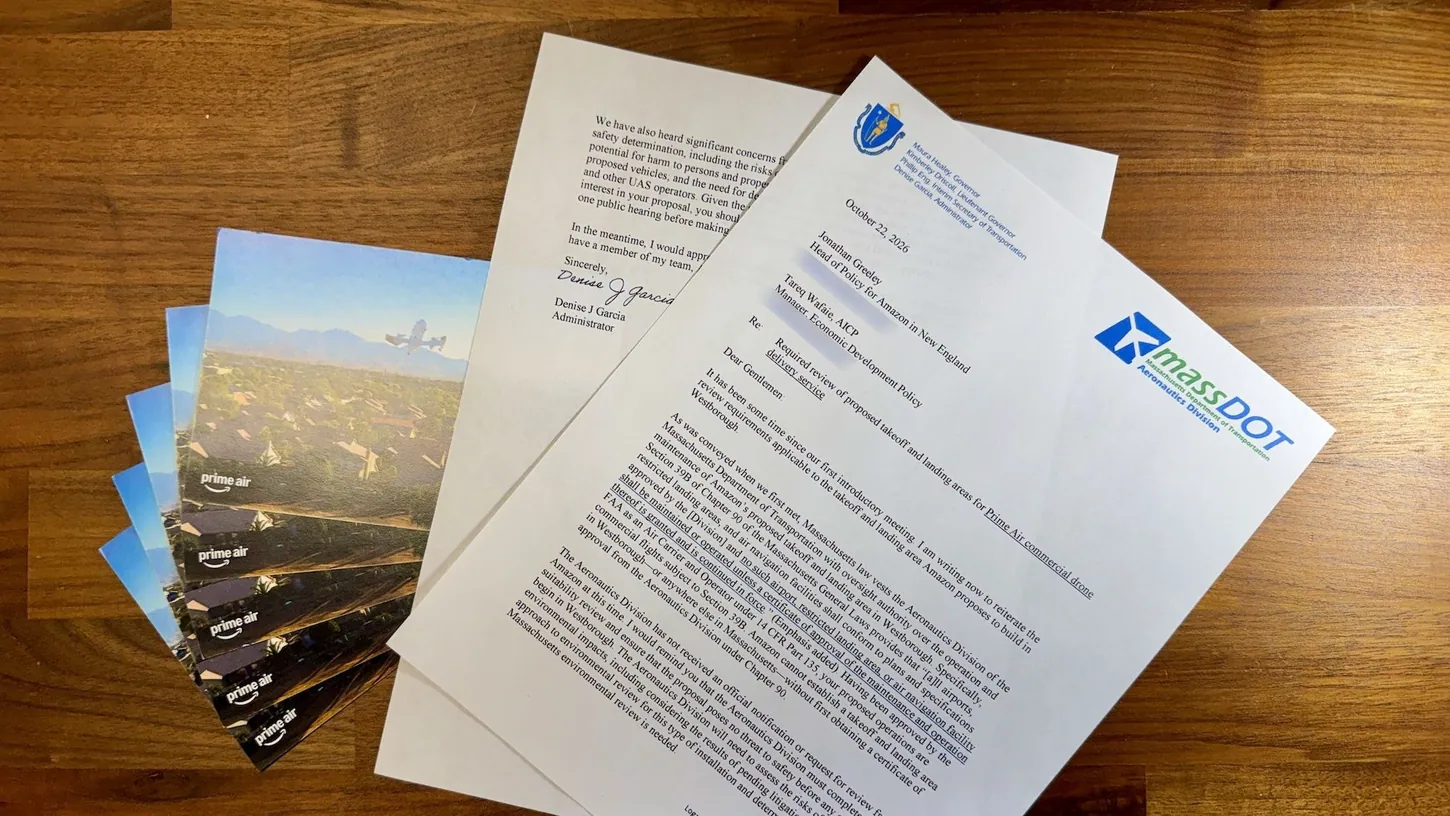
Homewood cannot prohibit drones over the village, set local flight restrictions or regulate the noise of an airborne drone, the village told residents, as the Country Herald reported on October 26. Federal aviation rules and Illinois law govern them. Illinois took that power from its villages in 2018.
Section 42.1 of the Illinois Aeronautics Act, 620 ILCS 5/42.1, makes regulating unmanned aircraft “an exclusive power and function of the State” and denies home-rule units the right to write their own rules, with one exception for a city of more than a million people, which is Chicago. DroneXL set out what that leaves a south-suburban village in its Matteson drone delivery guide: the building permit, the lot, and a state legislator. Markham, for its part, signed a zoning letter on November 4, 2025, saying drone delivery is permitted by right on the IGQ1 lot, per the FAA draft.
The Country Herald’s report gives residents [email protected] as Amazon’s drone contact. That inbox is no longer monitored, according to an automated reply Amazon sent DroneXL in September. Residents can instead call Amazon at 1-888-280-4331 and say it is about drone delivery, or open the customer-service chat and pick “Something Else,” then “Amazon Drone Delivery.” DroneXL’s guide for residents covers what is left once the drones are flying, and the Amazon Prime Air tracker lists the hubs and incidents DroneXL has documented. The closest precedent for what Homewood is about to live with is Richardson, Texas, where a resident’s tracker logged 52 drones over one yard in a day under an FAA decision that analyzed the same 1,000 flights a day.
DroneXL’s Take
Tully’s medication run is the case for this technology, and Amazon is flying the wrong aircraft for it. Medication to someone in Homewood who can’t get to a pharmacy earns its noise, and I’d want it flown the way Zipline flies its P2, hovering at 300 feet and lowering the package on a tether, with a parachute on board. Amazon is flying a 78-pound MK30 with no parachute over yards with mature trees and overhead wires, and each of its three collisions on record, the Tolleson crane, the Waco internet cable and the Richardson apartment building, put the aircraft on the ground, one of them on fire. My read of the FAA’s index is that Markham is flying on the July 28 national finding rather than on the Chicago draft the agency never finished, and if that is right, the 30 days of email to Washington in July and August were the only federal comment period the south suburbs will get. Amazon has not said which document it is flying under, and the FAA’s page has not changed since October 14.
Sources: NBC 5 Chicago, CBS Chicago, Country Herald, ABC7 Chicago, FAA Draft Environmental Assessment, Amazon Prime Air, Chicago, July 2026 (PDF), FAA Appendix E, Technical Noise Report (PDF), FAA drone environmental review index, 620 ILCS 5/42.1.
DroneXL uses automated tools to support research and source retrieval. All reporting and editorial perspectives are by Haye Kesteloo. Read our editorial standards.