The FAA published a draft environmental assessment on Friday that would let Zipline run up to 220,000 drone deliveries a day across five Texas metropolitan areas: Houston, San Antonio, Austin, Amarillo and El Paso. Public comments close on October 11.
The document sets a ceiling of 660,000 individual flight legs a day over 17,584 square miles (45,542 square kilometers), 24 hours a day, seven days a week, holidays included. The Dallas-Fort Worth authorization the agency signed last December allowed 75 sites at 400 deliveries a day each, or 30,000 in total. This filing is more than seven times that, in one document.
Three of the five metros have never appeared in a Zipline launch announcement DroneXL has covered. San Antonio, Amarillo and El Paso show up here for the first time, in a federal table, with numbers attached.
The Draft Covers Five Metros And 220,000 Deliveries A Day
Zipline is asking the FAA to amend its Part 135 operations specifications to cover the five metro areas. The ceiling across all of them is 220 Chargers, 4,400 Dropbox pickup kiosks and 220,000 deliveries a day, every day of the year, with no seasonal limit and no holiday pause.
| Metro | Square miles | Chargers | Dropboxes | Deliveries/day | Transits/day |
|---|---|---|---|---|---|
| Houston | 9,932 | 65 | 1,300 | 65,000 | 195,000 |
| San Antonio | 3,326 | 65 | 1,300 | 65,000 | 195,000 |
| Austin | 2,498 | 30 | 600 | 30,000 | 90,000 |
| Amarillo | 1,199 | 30 | 600 | 30,000 | 90,000 |
| El Paso | 629 | 30 | 600 | 30,000 | 90,000 |
| Total | 17,584 | 220 | 4,400 | 220,000 | 660,000 |
Two rows deserve a second look. San Antonio draws the same allocation as Houston across a third of the land area. El Paso’s 629 square miles carry 30,000 deliveries a day, which works out to 47.7 per square mile against Houston’s 6.5. The densest allocation in the filing sits on the Mexican border, not in the metro where Zipline actually built its network.
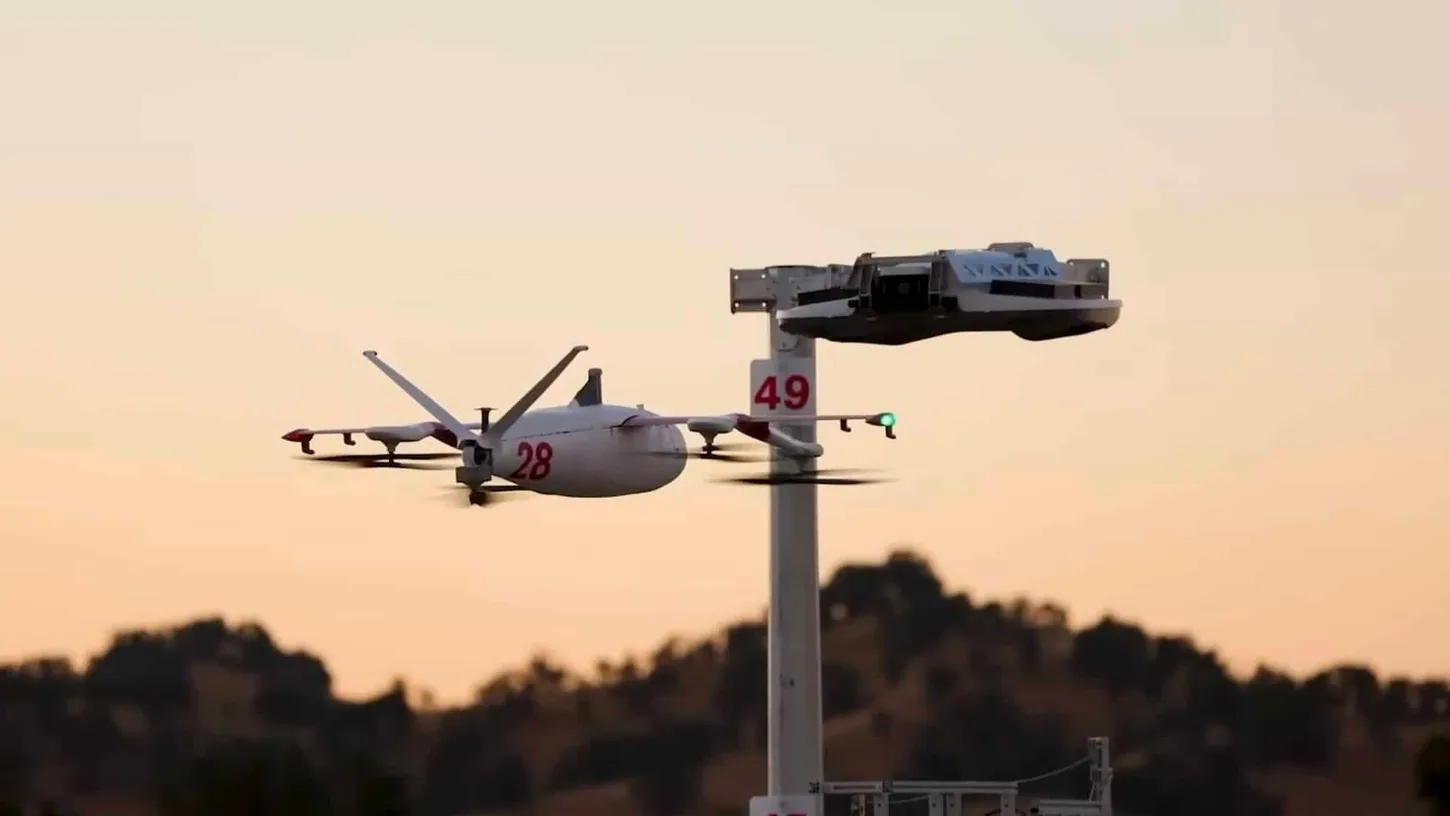
Each delivery is three flight legs: Charger to Dropbox, Dropbox to the customer, then back to a Charger. The aircraft is Zipline’s Platform 2, 63 pounds (28.6 kilograms) at maximum takeoff weight including an 8-pound (3.6-kilogram) payload, cruising at 330 feet (101 meters) and 70 mph (113 km/h). It hovers at altitude and lowers a pod on a winch line, 120 seconds at a pickup and 75 seconds at a delivery. Roughly 5 percent of flights would happen between 10 p.m. and 7 a.m., which at the ceiling is about 11,000 overnight deliveries a day statewide. A Charger holds up to 72 docks, typically 36 across three towers, on about 500 square feet (46 square meters) of new impervious surface.
Zipline Already Flies Two Of The Metros In The Filing
Dallas-Fort Worth went live in August 2025 under its own environmental assessment. Houston opened on April 29, 2026, in Cypress. Austin was announced in June as the third Texas market. The FAA’s published project list shows no Houston-specific Zipline review before Friday’s draft, which leaves an open question about what authority has covered those flights since spring.
The agency has not said. Neither has Zipline. The gap matters because the same pattern showed up in Louisiana, where Amazon started commercial service in Baton Rouge on July 7 and the comment period on its draft assessment did not close until July 22. DroneXL walked through that sequencing last week in the context of Tracy, California, where no document has appeared at all.
There is a plausible innocent answer. The FAA signed a nationwide programmatic assessment for drone package delivery on July 28, built to let operators tier off a single national review instead of waiting for one document per city. That was seven weeks ago, and Zipline got a site-specific review anyway. Either this proposal blows past what the national document analyzed, or the FAA wanted a closer look. Neither reading makes the Houston timeline less strange.
The Wildlife Analysis Rests On Two Recorded Bird Contacts
The draft identifies 19 listed or proposed species that could be present and concludes the proposal may affect, but is not likely to adversely affect, the tricolored bat, the West Indian manatee, 11 listed birds and four sea turtles. It found no effect on the Mexican wolf or on any designated critical habitat.
Those determinations are not final. The FAA sent its informal Endangered Species Act consultation request to the U.S. Fish and Wildlife Service on August 28, two weeks before publishing, and that consultation is still open. So is the Texas State Historic Preservation Officer review. The Texas Coastal Management Program was notified on September 11, the same day the document went out for public comment.
The bird section is where the draft gets candid. It states that without baseline data, an effective predictive model for drone and bird interactions is not possible, then cites the entire recorded American evidence: two instances of birds touching a drone, both ravens, both brief contacts with a hobbyist aircraft out of curiosity. That is the empirical floor under 660,000 flight legs a day. The draft names the northern mockingbird, red-winged blackbird and common grackle as likely mobbers during spring and early summer nesting, and gives the grackle the scientific name Cyanocitta cristata, which belongs to the blue jay.
Zipline commits to keeping 1,000 feet (305 meters) of vertical and horizontal separation from any bald eagle nest it finds, with nests identified partly through iNaturalist and tips from local birders. Six national wildlife refuges and the Sam Houston National Forest sit inside the operating areas. The draft says they are “not currently included in Zipline’s fly less restrictions” and leans on National Park Service, Forest Service and state rules to do that work instead.
Houston Airspace Will Hold Three Delivery Operators
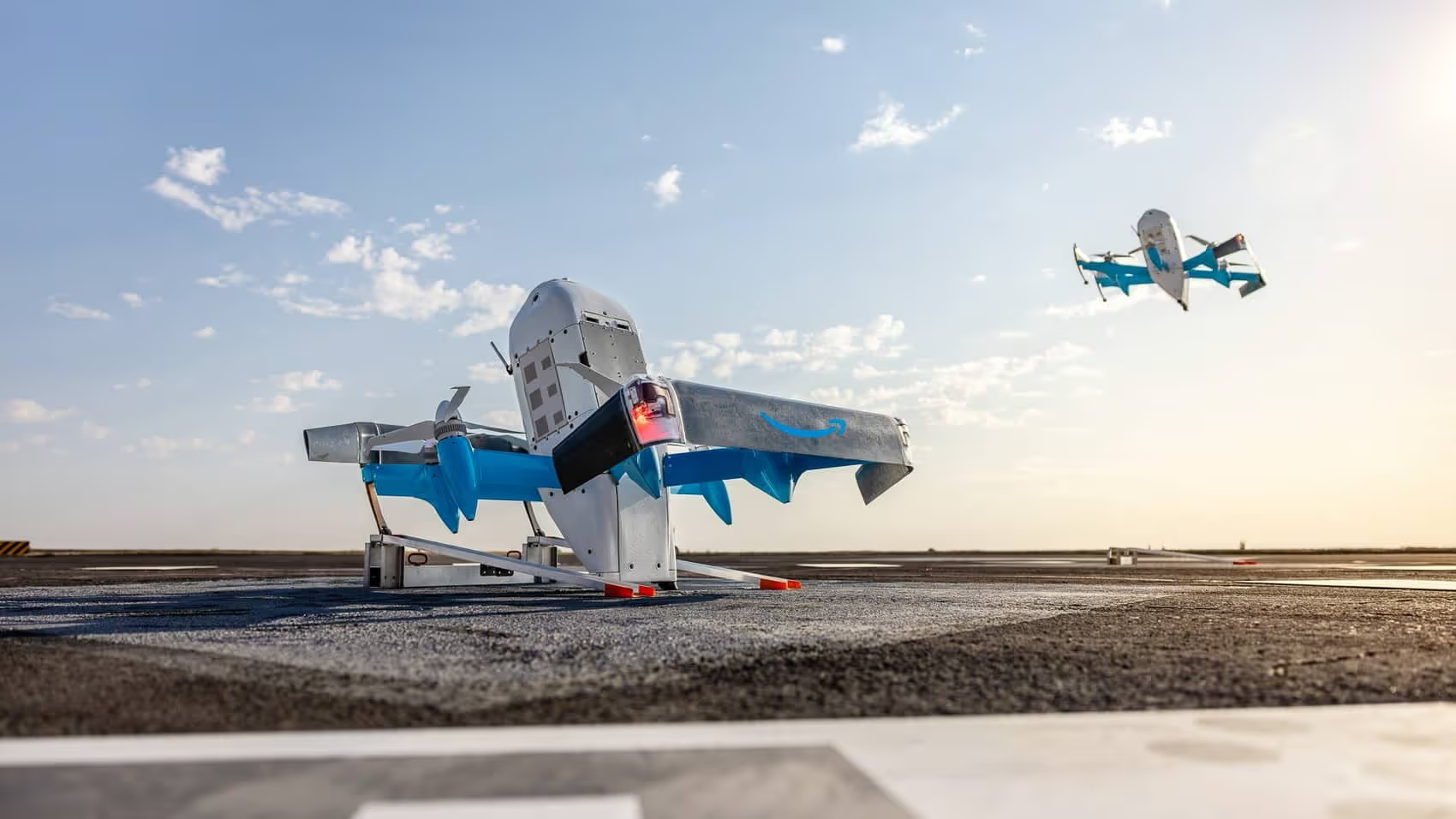
Wing received its Houston approval on August 13 for up to 75 nests at 400 deliveries a day. Amazon’s 22-center Texas authorization cleared in February. Zipline’s 65 Chargers would land on top of both. The national programmatic assessment flagged exactly this case as the remaining path to a real noise problem: en route flights from multiple operators’ hubs stacking up in shared airspace.
The Texas draft analyzes Zipline’s own operations and concludes the proposal would not produce meaningful noise levels anywhere in the study areas. What it does not appear to do is add Wing and Amazon to the same sky over Cypress and count. DroneXL has been following how operators are deconflicting with each other in Dallas, and coordination between companies is a separate question from how many aircraft a neighborhood hears.
To Zipline’s credit, the noise number is moving in the right direction. A software update the company shipped this month has its aircraft dive to build speed and climb to brake, and Zipline’s own model puts each flight at 19 seconds and 1,740 feet (530 meters) less at peak noise. Those are company figures from a company model, not microphones in backyards, but the physics behind them is sound.
Comments Close October 11
The draft is on the FAA’s drone environmental review page, and the full document runs to Appendix G. Comments go to [email protected] with “Zipline Texas Draft EA” in the subject line, or by mail to AVS Environmental, Suite 802W, 800 Independence Avenue SW, Washington DC 20591. Every substantive comment gets a response in the final assessment.
Notice ran in the Houston Chronicle, San Antonio Express-News, Austin American-Statesman, Amarillo Globe-News and El Paso Times, in English and Spanish. The responsible official is Derek Hufty, who manages the General Aviation and Commercial Operations Branch in Flight Standards. Zipline wrote the draft under FAA supervision, which is standard for these reviews and worth knowing when you read it.
DroneXL’s Take
I am not alarmed by 220,000. A ceiling is a ceiling, and no operator on earth is flying 80 million deliveries a year today. Zipline puts its lifetime total at more than 2.5 million deliveries and is adding the Texas capacity it actually uses one Walmart parking lot at a time. The number in that table is headroom, not a forecast, and I would rather the FAA authorize headroom once than drag every operator back through NEPA every eighteen months.
What bothers me is the order of operations. Houston has had these aircraft overhead since April 29. The public comment period on whether Houston should have them opened September 11. Whatever legal authority bridges that gap, the civics of it are backwards, and it is the same shape as Baton Rouge. Ask people to weigh in on a thing that is already happening and you teach them their comment is decorative.
The counterpoint is real and I want to state it. Cypress has lived with Zipline since April and the community has largely shrugged, including when a Zip came down under its parachute on Highway 6 on September 4 and nobody called the police. That was the second Texas paraland in six weeks after the Greenville landing in July, and both ended with nobody hurt. Operating first and papering later has not produced a disaster. It has produced a functioning service that people like.
It has also produced an assessment that asks Texans to comment on analysis that is not finished. The Fish and Wildlife consultation opened on August 28 and is open now. The SHPO has not answered. The coastal program was told on the day of publication. Comment on what, exactly? The strongest argument against drone delivery has never been noise or birds. It is that the approvals feel like a formality, and every document like this one hands that argument to the people who want these aircraft grounded. I am pro-delivery and I want this expansion approved. I want it approved on a record that survives a lawsuit.
Two things to watch between now and the end of the year. First, whether the final assessment appears before the Fish and Wildlife and SHPO consultations close, or whether the FAA waits, as the draft says it will. Second, whether San Antonio, Amarillo or El Paso gets a launch announcement before October 11. If a Zipline press release lands in one of those cities while the comment window is still open, the process question stops being academic and starts being the story. DroneXL’s drone delivery tracker has every Zipline hub, approval and incident on the record, and this filing goes into it today.
Sources: FAA Draft Environmental Assessment for Zipline International Inc. Proposed Drone Package Delivery Operations in Multiple Texas Metropolitan Areas, FAA Public Involvement and Environmental Review for Drone Operations
DroneXL uses automated tools to support research and source retrieval. All reporting and editorial perspectives are by Haye Kesteloo. Read our editorial standards.