The FAA told AUVSI’s Drone & AAM Policy Symposium in Washington this week that drone traffic management is no longer an experiment. Jessica Jones, executive director of the agency’s Office of Advanced Aviation Technologies, said 2.2 million flights have gone through strategic deconfliction under UAS Traffic Management (UTM) since January.
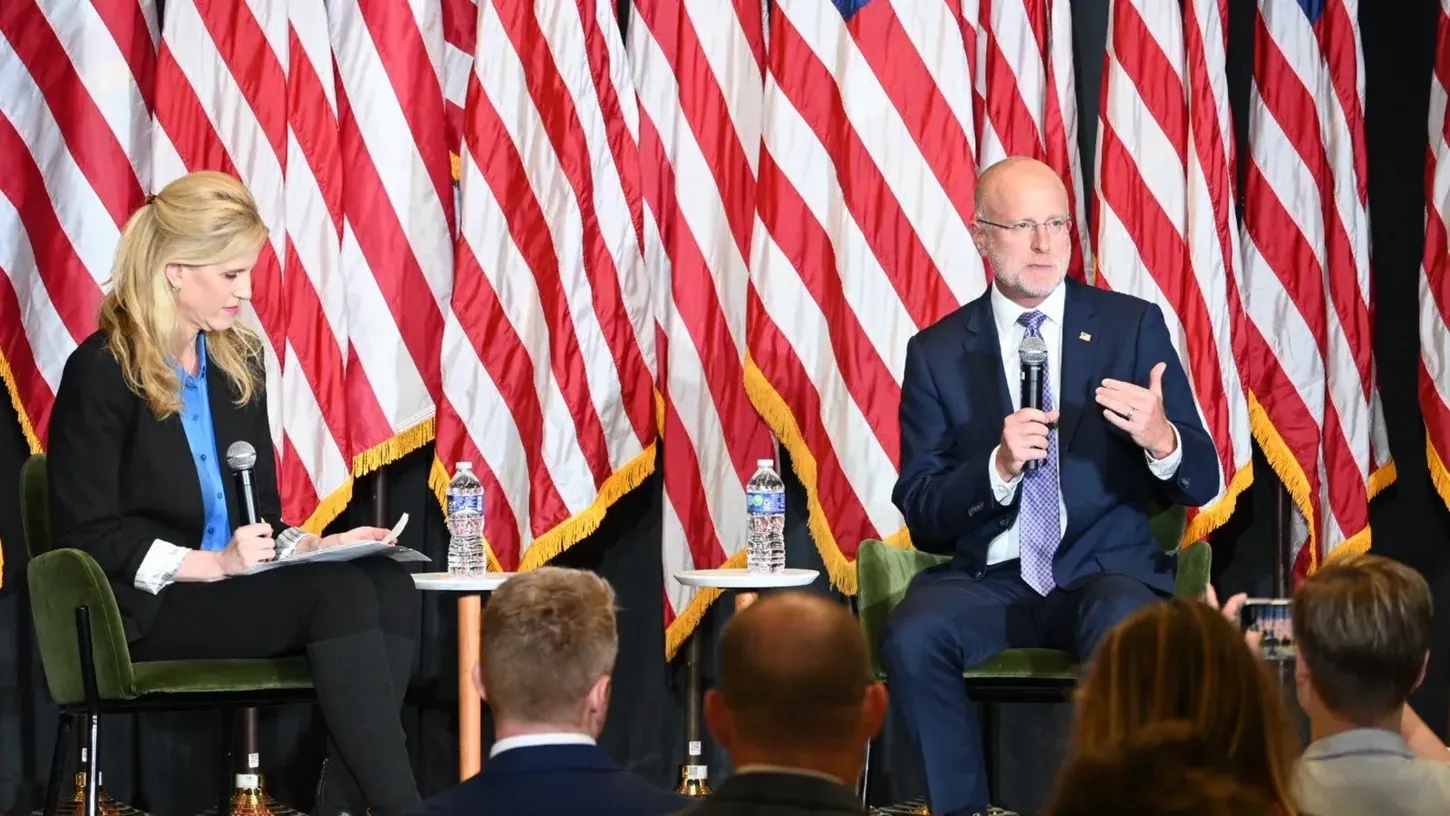
Acting Deputy Administrator Liam McKenna, the Day 1 keynote at Nationals Park, said the FAA has started looking at how it certifies aircraft and how it writes rules. The two-day event, which also produced a new AUVSI CEO, closed on Tuesday, November 10.
Neither official gave a date for Part 108, the rule that would make beyond visual line of sight (BVLOS) flight routine, beyond the message that action would come soon. Congress set December 7 as its deadline.
FAA Says UTM Already Runs at Scale Before Any BVLOS Rule
Jones presented the 2.2 million deconflicted flights as proof that drone integration has moved past research, according to Autonomy Global’s report from the room. “UTM is here and it’s now,” she said. The report does not say which operators or programs the figure covers.
Jones also said the agency has seen too little data sharing because developers test in isolation, and she asked them to bring the FAA in early and use its test sites. Two of those sites, the Choctaw Nation of Oklahoma and Indiana, were added in January, the first new designations in nearly a decade. McKenna made the same pitch to counter-drone makers when he described the interagency counter-UAS agreement on stage, the day DHS announced it.
NASA’s Parimal “PK” Kopardekar, who shared the stage, described wildfire research that takes the agency’s UTM work into portable airspace management. The aim is to let responders plan and deconflict drone flights around the clock, including when smoke or darkness limits conventional aerial operations, and NASA plans to move the technology toward broader use by states and industry.
McKenna Opens a Type Certification Rethink With No Timetable
McKenna said the FAA has begun examining changes to aircraft type certification. Neither safety nor innovation, he argued, justifies “a process that takes this long that is this cumbersome.” The work is early: he announced no reform package and no timetable, and asked industry for feedback, especially on eVTOL.
He also listed rulemaking changes under consideration. They include shorter rules, a faster path from concept to publication, artificial intelligence to help with research and comment review, and more transparency between a proposed rule and the final version.
None of that touches the rules already in the pipeline: Part 108, Part 149 and the Section 2209 limits on drone flights over critical infrastructure. Officials put no date on any of them.
Part 108 Has Sat at the White House Since July 10
The final Part 108 rule, titled “Normalizing Unmanned Aircraft Systems Beyond Visual Line of Sight Operations,” is still listed as pending at the White House Office of Information and Regulatory Affairs (OIRA). The OIRA review list dated November 10 shows it received on July 10 with a statutory deadline.
While the rule sits there, its publication date is a White House call as much as an FAA one. The statutory deadline is December 7, 16 months after the August 2025 proposal, as set by the 2024 FAA Reauthorization Act. The long-range approval the FAA announced on Monday, the Skyways flight from a Shell facility to a Gulf platform, came through a Section 927 waiver, one operator at a time, because Part 108 does not exist yet.
The FAA’s own $12 million research round for its test sites, announced in October, is also meant to generate data for a rule that has not been published.
DroneXL’s Take
The FAA brought the best argument for Part 108 to AUVSI itself, and then left it on the stage. If 2.2 million flights have been deconflicted through UTM this year, the agency is telling industry that the airspace management Part 108 depends on already works, and operators flying waiver to waiver should not have to wait on a White House desk to use it. I’m glad McKenna is questioning how long type certification takes, and his own words concede the process is slow. But a certification rethink with no timetable is a promise, and Part 108 is already written and under White House review. The test of this week’s talk about faster rules is December 7. If the rule is not out by then, every number the FAA put on that stage is an argument against the administration’s own delay.
Sources: Autonomy Global, OIRA review list (reginfo.gov), AUVSI symposium program.
DroneXL uses automated tools to support research and source retrieval. All reporting and editorial perspectives are by Haye Kesteloo. Read our editorial standards.