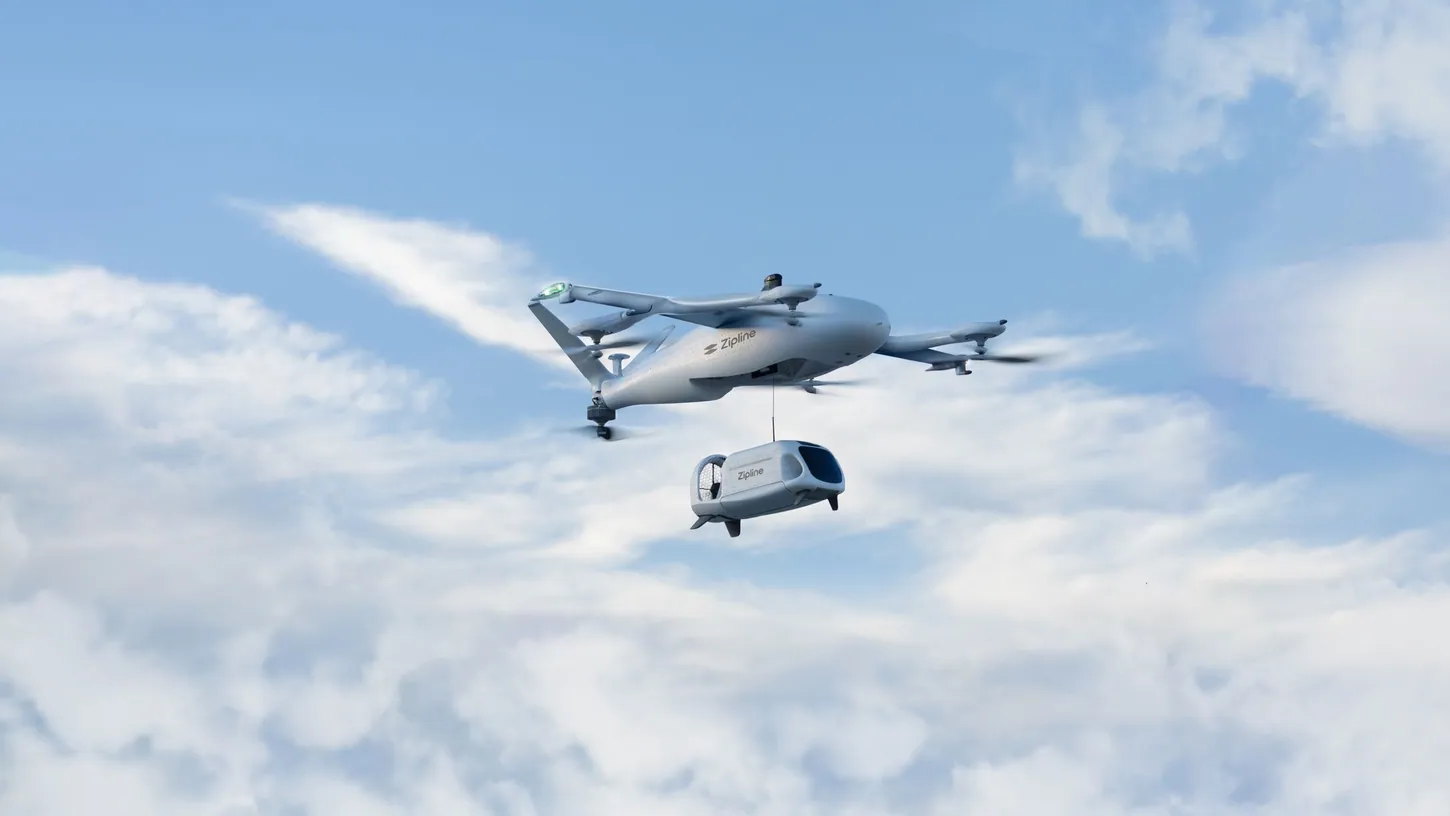
Zipline CEO Keller Rinaudo Cliffton says three or more partners are each trying to buy more than a million drone deliveries a day from the company. Zipline’s whole operating plan had been to reach a million a day over a couple of years, so the company threw that plan out and wrote a new one.
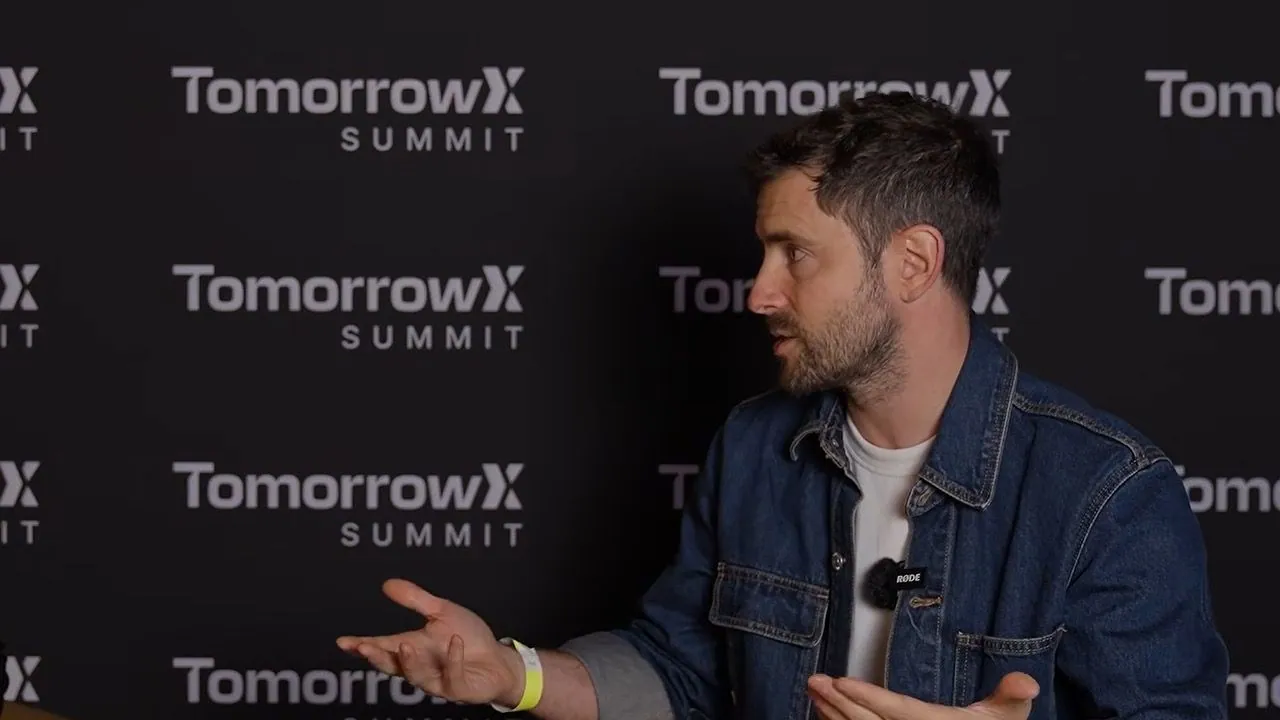
He said it in a 19-minute interview with Molly O’Shea of the Sourcery podcast, published on November 22. It was recorded at the TomorrowX summit in Austin on the morning Zipline announced that Uber Eats drone delivery had started in Spring, Texas. The new plan asks whether Zipline can scale three to five times faster over the next two years.
Rinaudo Cliffton named one thing that could break the plan, a supplier that cannot keep up. He listed regulation and permitting among the things that make hardware slow, but he never named the FAA, whose largest signed environmental approval for Zipline covers 30,000 deliveries a day in one metro.
Three Partners Each Want More Than Zipline’s Entire Plan
Rinaudo Cliffton told Sourcery that “our entire operating plan for the company became like the unit of sale.” He named two of the partners, Uber Eats and Walmart, and gave figures for both that Zipline’s November 5 release did not carry. He did not name the third.
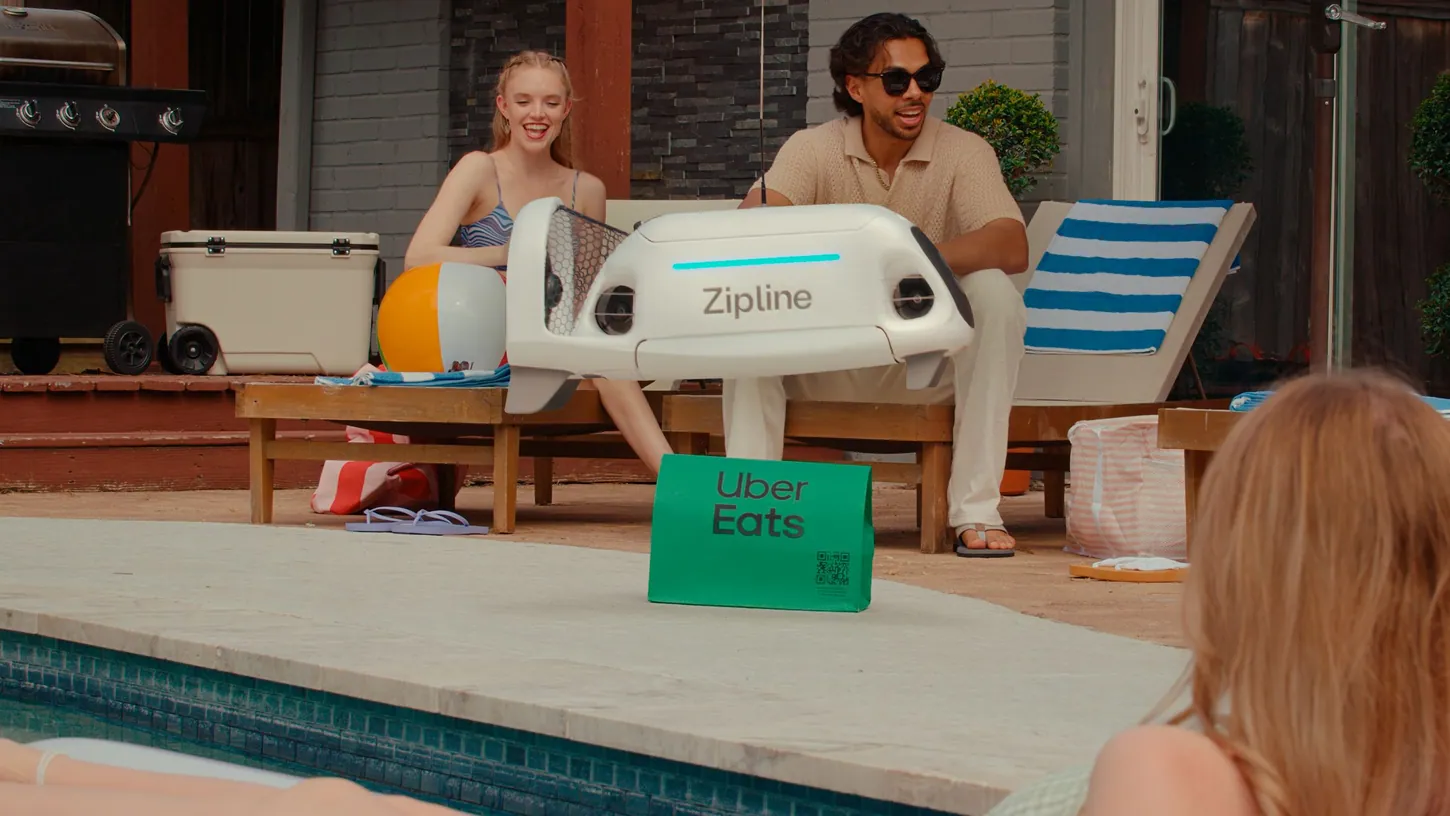
He put Uber Eats’ target of a million deliveries a day at about a quarter of Uber Eats’ US deliveries, under a contract that takes Zipline to almost every US metro. Uber and Zipline set that target for the end of 2029 in August.
Zipline had grown to 22 Walmart supercenters, he said, and the agreement announced on November 5 expands that to 300 in a first phase, with anything beyond it depending on performance. Customers can order about 90,000 of the 100,000 items a supercenter stocks. Zipline’s release gave neither the 22 nor the performance condition, and said 300 additional sites with potential to grow further.
Rinaudo Cliffton Said a Million a Day per Metro, and Zipline’s Record Says a Year
Rinaudo Cliffton said Zipline is now doing more than a million deliveries a day in each of its busy metros. Zipline’s November 5 release counted more than one million in Dallas-Fort Worth so far in 2026, an average of about 3,200 a day through November 5.
His own X thread that day said a million a year per metro. In his next sentence in the interview he said the goal is to get to a million a day, so the per-day figure reads as a slip of the tongue. BigGo Finance’s write-up of the interview already lists more than 1 million in each metro under deliveries per day.
He also said Zipline is growing 10% to 15% week over week, without saying over what period. At 10% a week, volume doubles about every seven weeks. His November 5 thread put growth at about 100 times in 18 months, which works out to about 6% a week.
Dallas has about 25 charging sites, he said. Zipline counted its 20th Dallas-Fort Worth site in March, under an FAA approval that allows 75. He wants to put Fleet Command, the live map of every charging site and flight that Zipline shows visitors, on the company’s website for anyone to open in a browser.
Rinaudo Cliffton Expects Hardware Investors to Get Three or Four Hard Years
Most of the valuable companies built over the next decade will be hardware companies, Rinaudo Cliffton said, and few of their investors have ever set up a factory. He expects the next three or four years to teach them the timelines.
Very few have permitted a construction project either, he said. For 13 years of Zipline’s life, venture capital treated capital spending as radioactive and a hardware company as the dumbest thing a founder could build. Investors now think AI will wipe out software companies, which leaves hardware as the business they can defend. By his count Tesla took 15 years to reach meaningful scale and SpaceX took 20, and Zipline has been at it for more than a decade.
He said even OpenAI and Anthropic are finding data centers hard to build, and he blamed regulation, permitting, community acceptance and supply chains. For Zipline the hard part is that every supplier in a global chain has to grow at the same pace, and one that cannot sinks the whole plan. The questions he says investors don’t know to ask are about actuator reliability, a motor supplier’s production engineering and end-of-line inspection.
The FAA’s Largest Signed Zipline Approval Allows 30,000 Deliveries a Day
Three partners at a million a day each is more than three million deliveries. The largest approval the FAA has signed for Zipline, for Dallas-Fort Worth in December 2025, allows 75 sites at 400 deliveries each, or 30,000 a day. Every other metro-scale request is still a draft.
The Texas draft would add 220,000 a day across Houston, San Antonio, Austin, Amarillo and El Paso, and the Arizona draft would add 130,000 across Phoenix and Tucson. A Seattle draft for 75 sites at 400 flights each, another 30,000 a day, has had no decision since its comment period closed on November 2, 2025. The FAA’s drone environmental review page still listed all three as drafts on November 23. Those four metro-scale documents together come to 410,000 a day, about a seventh of three million.
Zipline is not waiting on the drafts. It has flown in the Houston area since April 29 and started Uber Eats orders in Spring on November 17 while the Texas review is still a draft, and it has not published which FAA approval covers those flights. The FAA also signed a nationwide environmental finding for drone delivery on July 28, which 15 states are challenging in court.
Part 108, the FAA rule that would make beyond visual line of sight (BVLOS) flight routine, has been in White House review since July 10. That is 136 days as of November 23, and the regulatory office’s list still shows it pending. Rinaudo Cliffton opened the interview by saying investors would not fund Zipline for a decade because BVLOS flight was illegal in the United States. Neither he nor O’Shea mentioned the rule.
DroneXL’s Take
I think Rinaudo Cliffton is right about hardware, and Zipline earned the right to say it by flying blood in Rwanda for years before it carried a burrito in Texas. My read is that the FAA gets in the way before a supplier does.
In August I worked out that Uber’s target alone needed Zipline to grow about 14% every month through 2029, and he now says 10% to 15% a week. If Dallas grew 10% a week from this year’s average, it would reach the 30,000 a day its approval covers in under six months.
Zipline already flies in Houston and Austin while the Texas review is a draft, so the paperwork has not stopped it yet. But I don’t see three million deliveries a day running on approvals Zipline has not published, and Part 108 is the rule that was supposed to settle that.
I’d like to see Fleet Command on Zipline’s website, as he says he wants. I’d like the delivery count on it too, per day, so nobody has to guess whether it was a million a day or a million a year.
Sources: Sourcery with Molly O’Shea, Zipline press release, FAA, reginfo.gov
DroneXL uses automated tools to support research and source retrieval. All reporting and editorial perspectives are by Haye Kesteloo. Read our editorial standards.
Advertise with DroneXLYour company hereReach 200,000+ drone readers a month with a sponsored article, a banner on your beat, or a partnership.See the options →