
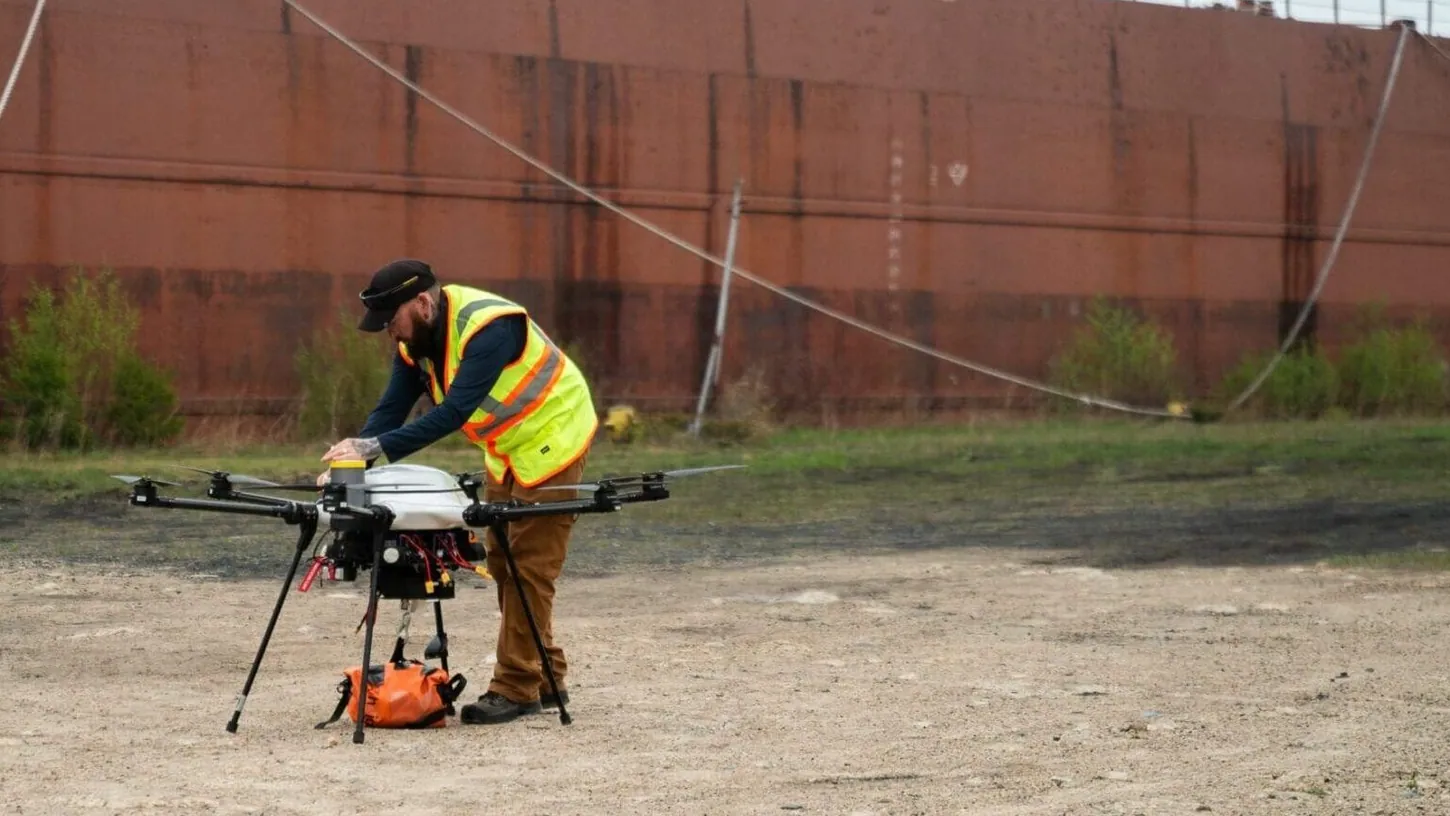
Michigan paid for drones to fly mail, linens and oil samples out to Great Lakes freighters, and the state’s drone program manager says that route makes the beyond-visual-line-of-sight safety case easier to justify. Skyports Drone Services flew the trial from DeTour Village in the Upper Peninsula to Interlake Steamship vessels in May 2025, funded by a $512,168 grant from the first round of Michigan’s Advanced Aerial Mobility Activation Fund.
Zach Tecson, who manages the Michigan Department of Transportation’s Advanced Air Mobility Program, explained the reasoning to Capital News Service this week. A drone that fails over the lake falls into the water, not onto people.
Michigan’s other big drone bet, medical delivery in Traverse City, flies over people. Tecson thinks that is where drone operations take root first.
Skyports Flew 122 Trips and 223 Pounds of Cargo to Interlake Ships
Skyports flew 122 shore-to-ship flights from Interlake’s facility at DeTour and carried 223 pounds (101 kilograms) of cargo, according to its case study of the trial. The aircraft was a Speedbird DLV-2 that lowers its load to the deck on a winch, so it never lands on the ship.
The Skyports release from May 2025 puts the DLV-2’s payload at up to 8.8 pounds (4 kilograms), flying in gusts up to 28 mph (45 km/h). The cargo was oil samples, potable water samples, flat and small mail, and linens and laundry. The winch stops on its own when it detects the load on deck, and once the cargo is delivered or collected the crew moves clear and the remote pilot reels the line in. Skyports called it its first US maritime delivery operation and handled the route planning, regulatory approvals and data collection itself.
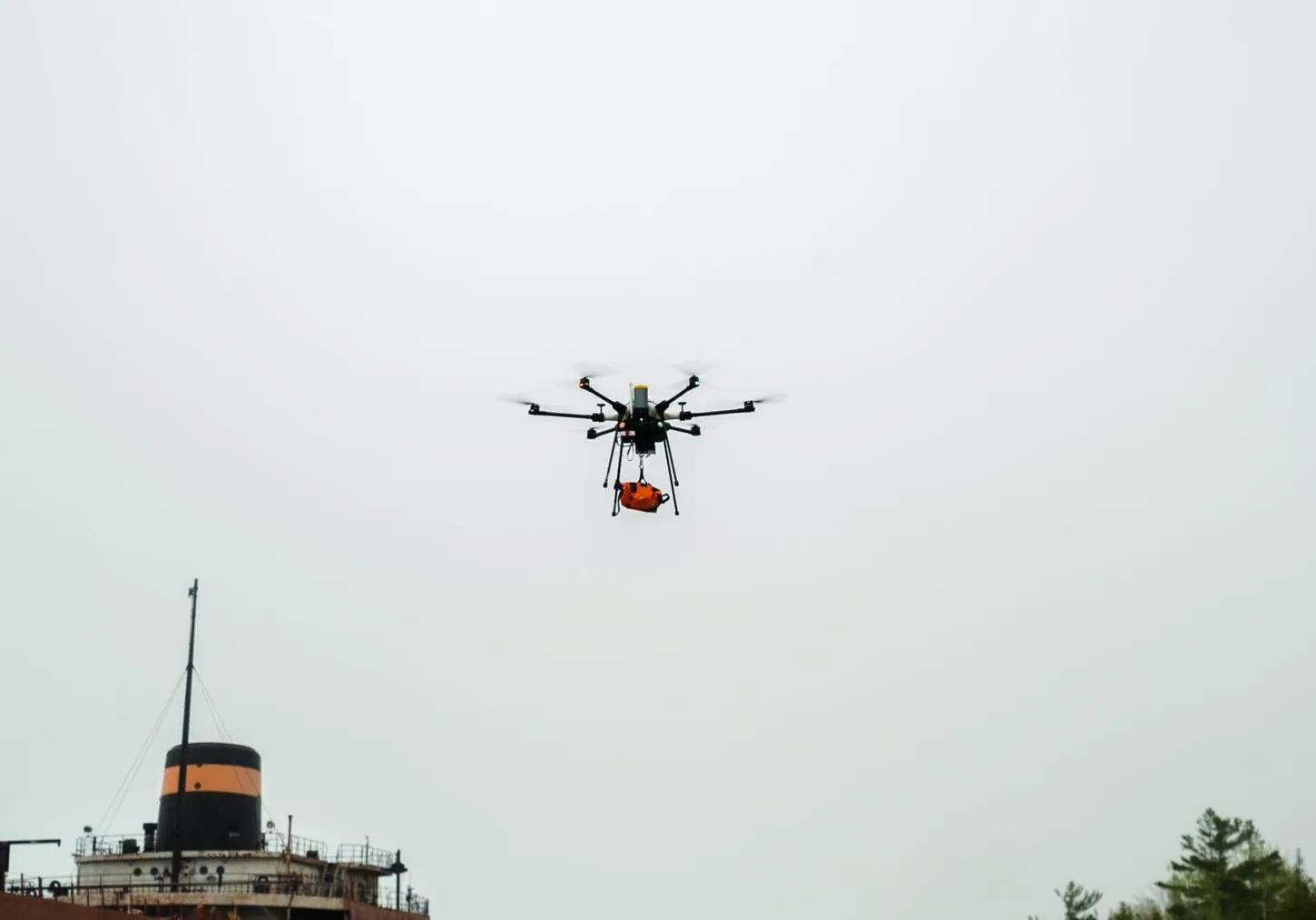
Interlake runs 10 ships on the Great Lakes and moves 18 million tonnes of raw material a year. Light cargo for a freighter at anchor normally goes out on a supply boat. Tecson’s pitch is the time saved: a ship that gets its mail by drone does not have to come in for it. Brendan O’Connor, chief operating officer of Interlake Maritime Services, said in the case study that the company was proud to have piloted the technology “aboard the first U.S-flagged vessel.”
The DeTour campaign was the first part of a proposed three stages, per the release. MDOT’s round one project page lists Sault Ste. Marie as a site too, but Skyports and the state’s 2025 annual report place the flights at DeTour. The next two stages have not been announced. Skyports says it is targeting permanent commercial operations on the Great Lakes “in the near future.”
Michigan Pays for the Safety Data, and the FAA Still Decides
Michigan cannot write drone flight rules. Tecson said the FAA must approve any flight beyond the pilot’s sight, so the state fund pays for the infrastructure and data behind the case. MDOT Director Brad Wieferich said the state is “looking to put systems in place to do that more safely.”
The fund dates to July 2024, when the state announced $6.25 million for four projects, as DroneXL reported that August. Over cities, the infrastructure means sensors. That first round gave $2.45 million to Michigan Central’s Advanced Aerial Innovation Region in Detroit for radar, radio systems and a launch pad, and Tecson said the project looks at how to spot crewed aircraft sharing the airspace with drones over populated areas. Aerialoop flies a BVLOS cargo route from the Newlab roof there with FAA clearance, which DroneXL covered in September 2025, and the state counts more than 600 flights on it by November 2025.
Munson Healthcare’s medical project is the over-people case. Its first phase flew 67 times in May 2025 with a 91% success rate, and its second ran in Traverse City in October, after operator DroneUp left the project. The second phase report has not been released. The state has put $689,000 and then $950,000 into it, per its annual report.
Part 108, the FAA rule that would make BVLOS flight routine instead of approved case by case, has sat at the White House Office of Information and Regulatory Affairs since July 10, as DroneXL noted on Monday.
DroneXL’s Take
Tecson is right that empty water is the cheapest place to build a BVLOS track record, and starting there was a sensible use of Michigan’s money. The value of that track record depends on who gets to read it, though. Traverse Connect published every Munson flight and every failure from phase one, down to the winch and GPS faults, and that report is why I take the Traverse City project seriously.
Skyports has published its headline numbers. If the state wants the Great Lakes flights to help the next operator get through the FAA, the full data from DeTour should be just as public.
Sources: Capital News Service, November 25, 2026, Michigan Advanced Air Mobility 2025 report, MDOT Round 1 AAM projects, Skyports Drone Services.
DroneXL uses automated tools to support research and source retrieval. All reporting and editorial perspectives are by Haye Kesteloo. Read our editorial standards.
Advertise with DroneXLYour company hereReach 200,000+ drone readers a month with a sponsored article, a banner on your beat, or a partnership.See the options →


