Ashburnham Police Drone Program Shows What Smart Public Safety Investment Looks Like

Check out the Best Deals on Amazon for DJI Drones today!
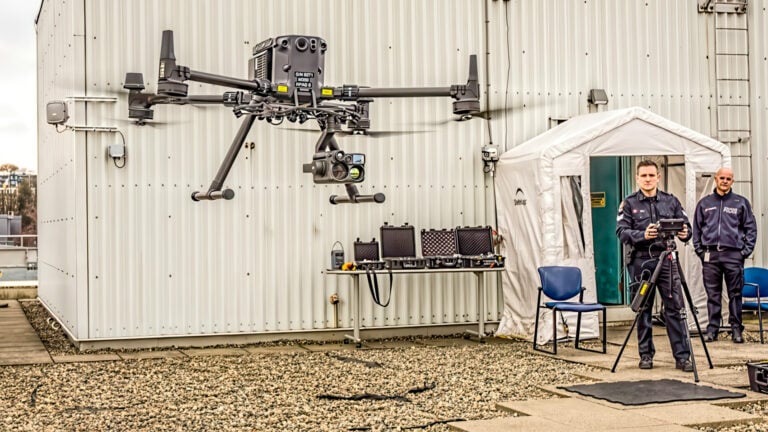
When a small Massachusetts town with 100 miles of hiking trails and seven bodies of water decides to build a drone program, the smart money says they’ll do it right or not at all. The Ashburnham Police Department chose to do it right, spending two years developing their Unmanned Aerial Vehicle Drone Unit before taking it operational, and funding the entire program from their operational budget rather than asking taxpayers for additional money.
That patience and fiscal discipline is worth highlighting because it represents exactly the kind of deliberate approach that builds public trust in police drone programs. According to The Gardner News, Officer Dylan Denis is now the department’s first FAA-certified drone pilot, having completed a three-day prep course before testing at Nashua Airport in New Hampshire. Three additional officers will begin the certification process this spring.
The K-9 and Drone Partnership That Makes Sense
Lieutenant John Boucher explained the operational logic behind pairing the drone unit with the department’s existing K-9 program:
“The Drone Unit is complementing our K-9 Unit program to make search and rescues more efficient and increase officer safety. In Ashburnham, we have over 100 miles of hiking trails and seven large bodies of water, and with the drone, we can cover more ground faster and safer. We can deploy both the drone and the K-9 to cover large areas.”
This dual-deployment strategy mirrors what we’ve seen work effectively in departments across the country. Just last month, a Merrimac Police drone located a missing 8-year-old in Massachusetts woods within 72 minutes, with the drone operator guiding K-9 units on the ground directly to the child’s location. The combination of aerial thermal imaging and ground-level tracking creates a search capability that neither technology delivers alone.
We’ve also seen this K-9 and drone coordination prove decisive in suspect apprehension. In Lee’s Summit, Missouri, a drone tracked a car prowler through multiple backyards while a K-9 unit recovered the stolen firearm the suspect dropped during the chase. The drone maintained visual contact even after the suspect fired at it, demonstrating just how much tactical advantage these tools provide.

The Part 107 Pipeline Every Department Should Follow
Ashburnham’s approach to pilot certification deserves attention from other departments considering drone programs. Rather than rushing to deploy hardware, they’re building a bench of four certified pilots who can cover different shifts and scenarios. Officer Denis took the standard path: a three-day prep course followed by the FAA’s Aeronautical Knowledge Test at an approved testing center.
This mirrors what we’re seeing at successful programs nationwide. The Columbus Police RAVEN program trained 14 FAA-certified pilots before launch. The Reading Police Department in Massachusetts went even further, certifying eight officers to ensure qualified personnel are always available.
The FAA’s Part 107 certification requires passing a 60-question exam covering airspace regulations, weather conditions, emergency procedures, and operating requirements. For police departments, this standardized training ensures every pilot understands not just how to fly, but how to fly legally within the national airspace system.
The Privacy Commitment That Matters
Lieutenant Boucher made a point of addressing what has become the central tension in police drone adoption: “We aren’t using the drone for surveillance. We are committed to using this new technology to better serve our community.”
This explicit commitment matters because police drone programs have exploded to approximately 6,000 nationwide, and not all of them have been equally thoughtful about privacy boundaries. The Sonoma County drone surveillance lawsuit currently working through California courts demonstrates what happens when departments blur the line between emergency response and revenue-driven code enforcement.
Ashburnham appears to be taking the search-and-rescue-first approach that has built public support in similar communities. Portland, Maine recently rejected a police drone proposal in a 4-3 vote after residents raised surveillance concerns. Departments that lead with clear use-case limitations and operational transparency tend to face far less resistance.
VR Training: The Other Technology Investment
The drone program isn’t Ashburnham’s only technology investment. A $30,000 federal grant through the Edward Byrne Justice Assistance Grant program is funding a StreetSmartsVR immersive training system for first responders. The system can simulate scenarios ranging from school shootings to domestic mental health crises to armed suspect situations.
Lieutenant Boucher noted that Fitchburg and Leominster police departments already operate similar systems, and once Ashburnham’s program is certified, they plan to extend access to local school districts, firefighters, EMTs, and even teachers and guidance counselors. Four officers will complete VR operator certification by spring.
The combination of drone and VR investments suggests a department thinking systematically about how technology can improve both response capability and training quality without burdening local taxpayers.
DroneXL’s Take
Ashburnham Police did this the right way. Two years of program development. Operational budget funding that didn’t require voter approval. A clear focus on search-and-rescue that leverages the town’s specific geography. FAA compliance from day one. And an explicit commitment to avoiding surveillance mission creep.
The 6,000 police drone programs now operating across the United States didn’t all launch with this level of thoughtfulness. Some rushed to deploy hardware before developing policies. Others expanded from emergency response to routine patrol to revenue enforcement without meaningful public debate. The legal challenges mounting in California and elsewhere are the predictable result.
Ashburnham’s terrain makes the case for drones obvious: 100 trail miles and seven bodies of water create search-and-rescue scenarios where aerial thermal imaging isn’t optional, it’s decisive. But the department’s approach makes the case for patience. They waited until they had certified pilots, clear operational boundaries, and a K-9 integration strategy before launching.
My prediction: this program will deliver results without controversy. And in three years, when neighboring departments are asking how Ashburnham built public trust while expanding drone operations, the answer will be simple. They earned it by doing the work upfront.
What do you think about Ashburnham’s approach to building their drone program? Does the two-year development timeline and operational budget funding change how you view police drone adoption? Share your thoughts in the comments below.
Editorial Note: AI tools were used to assist with research and archive retrieval for this article. All reporting, analysis, and editorial perspectives are by Haye Kesteloo.
Discover more from DroneXL.co
Subscribe to get the latest posts sent to your email.
Check out our Classic Line of T-Shirts, Polos, Hoodies and more in our new store today!

MAKE YOUR VOICE HEARD
Proposed legislation threatens your ability to use drones for fun, work, and safety. The Drone Advocacy Alliance is fighting to ensure your voice is heard in these critical policy discussions.Join us and tell your elected officials to protect your right to fly.

Get your Part 107 Certificate
Pass the Part 107 test and take to the skies with the Pilot Institute. We have helped thousands of people become airplane and commercial drone pilots. Our courses are designed by industry experts to help you pass FAA tests and achieve your dreams.

Copyright © DroneXL.co 2026. All rights reserved. The content, images, and intellectual property on this website are protected by copyright law. Reproduction or distribution of any material without prior written permission from DroneXL.co is strictly prohibited. For permissions and inquiries, please contact us first. DroneXL.co is a proud partner of the Drone Advocacy Alliance. Be sure to check out DroneXL's sister site, EVXL.co, for all the latest news on electric vehicles.
FTC: DroneXL.co is an Amazon Associate and uses affiliate links that can generate income from qualifying purchases. We do not sell, share, rent out, or spam your email.