Amazon Prime Air hosts community meet-and-greet in Tinley Park ahead of Chicago suburbs drone delivery launch

Check out the Best Deals on Amazon for DJI Drones today!
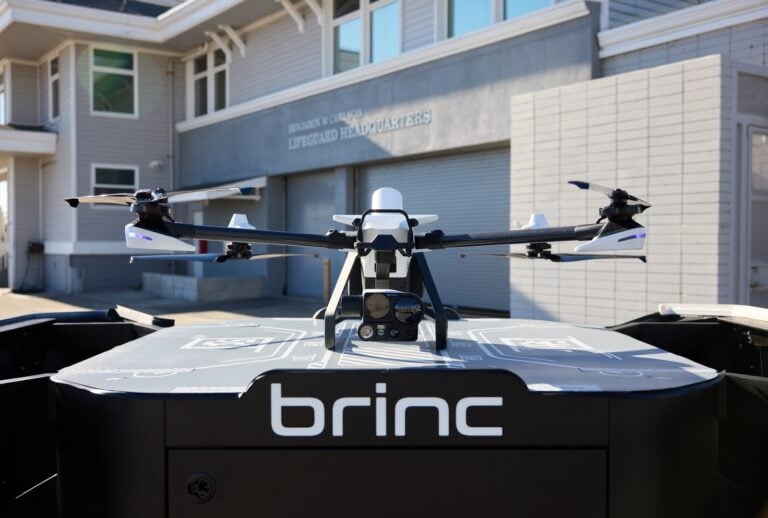
Amazon is bringing its Prime Air drone delivery service to Chicago’s south suburbs this summer, and the company wants to introduce itself to the neighbors first. As Patch reports, a free community meet-and-greet is scheduled for Monday, March 2 at the Tinley Park Convention Center, where residents can see a static MK30 drone up close and ask Amazon’s team questions about what’s coming to their airspace.
Here is what you need to know:
- The Event: Amazon Prime Air community meet-and-greet, Monday, March 2, from 3 to 7:30 p.m. at the Tinley Park Convention Center, 18451 Convention Center Dr. Free to attend with light bites and refreshments.
- The Service: Prime Air drones will fly from Amazon’s Markham and Matteson fulfillment centers, delivering packages up to 5 pounds within what Amazon describes as an eight-mile radius (FAA documents list the MK30’s operating range as 7.5 miles). Eligible communities include Tinley Park, Midlothian, Homewood, Flossmoor, Dolton, Blue Island, Chicago Heights, and Country Club Hills.
- The Context: Amazon’s MK30 drones have been involved in at least seven significant incidents since January 2025, including crashes into a construction crane, an apartment building, and an internet cable.
- The Source: Patch
Amazon’s eighth US market arrives in suburban Chicago
Amazon’s Prime Air drone delivery service is expanding to Chicago’s south suburbs, where the company’s 83-pound MK30 drones will operate from two major fulfillment centers in Markham and Matteson. The service will deliver packages weighing up to 5 pounds within 60 minutes to customers who live within a 7.5-mile radius and opt in through the Amazon app.
The Chicago expansion will make it Amazon’s eighth metropolitan area with active drone delivery, joining Phoenix, Dallas-Fort Worth, Waco, San Antonio, Tampa, Detroit, and Kansas City. As we reported two weeks ago, the drones will launch from Amazon’s massive Markham robotics fulfillment center, which city officials describe as the largest of its kind in the country.
Amazon says customers can input their preferred drop-off location in the app, and delivery times are accurate within five minutes. The MK30 descends to about 13 feet above ground before releasing the package, after scanning the area to confirm it’s clear of pets, cars, or people. A 75-minute forward-looking weather system determines whether drone delivery will even appear as an option.
The company says its drones can now deliver over 60,000 items. Deliveries are limited to items roughly the size of a shoebox.
Amazon’s crash record raises questions about expansion pace
Amazon’s aggressive expansion into new markets comes despite a track record of incidents that no other major drone delivery operator has matched. Since January 2025, we have documented a long list of MK30 failures that should give Chicago-area residents something to think about before their first delivery.
In January 2025, Amazon suspended all US drone operations after two MK30 drones crashed at its Oregon testing facility. The drones’ lidar sensors misread altitude data during light rain, causing the software to cut power to all six propellers mid-flight. One drone fell from 217 feet, the other from 183 feet. Both were destroyed. The company had removed physical “squat switch” sensors from the MK30 design to cut costs and weight, eliminating a safety backup that the older MK27 model had.
After a two-month grounding and FAA-approved software fixes, Amazon resumed operations in April 2025. Then came the summer. In May, an MK30 made what Amazon called a “precautionary controlled landing” at a Tolleson, Arizona apartment complex. In July, a drone dropped a customer’s vitamins into a swimming pool.
October was worse. Two MK30 drones slammed into a construction crane in Tolleson, sparking a fire that brought a hazmat response. The FAA and NTSB both opened investigations. Amazon resumed flights 48 hours later. Ten days after that, a drone landed on a sidewalk five feet from a Goodyear, Arizona resident who was checking his mailbox.
In November, just 13 days after launching in Waco, Texas, an MK30 severed an internet cable during ascent. The FAA opened its second investigation into Amazon in two months. And in February 2026, a drone crashed into a Richardson, Texas apartment building, leaving smoke and debris on a public sidewalk with propellers still spinning while bystanders gathered nearby. Five days later, Amazon launched in Kansas City.
Wing and Zipline operate with far cleaner safety records
The contrast with Amazon’s competitors is striking. Zipline has logged over 120 million autonomous flight miles and completed roughly 1.5 million deliveries globally since 2016, with zero serious injuries. The company’s Platform 2 drones weigh a fraction of the MK30 and use a tether-based delivery system that keeps the aircraft at 300 feet altitude while lowering packages. Zipline performs over 500 safety checks per second during every flight and manufactures its drones in the United States.
Wing, Alphabet’s drone delivery unit, has similarly built its record on smaller, lighter aircraft designed to break apart on impact rather than cause damage. Wing’s drones operate in winds up to 20 knots with gusts to 25, and the company has completed hundreds of thousands of deliveries across the US and internationally with no comparable pattern of crashes into buildings, cranes, or infrastructure.
There’s a reason for the difference. Amazon’s MK30 weighs 83 pounds at maximum takeoff weight. Zipline’s P2 and Wing’s delivery drones weigh between 10 and 40 pounds. When a 15-pound drone has a problem, it’s an inconvenience. When an 83-pound drone hits an apartment building at speed, people start smelling smoke and watching propeller fragments fall to the sidewalk. The physics alone explain why the FAA has given Wing and Zipline broader operating exemptions while Amazon still requires case-by-case approval for many operations.
Amazon’s rapid post-crash expansions contrast sharply with FAA enforcement on Part 107 pilots
What keeps surprising me about this whole situation is how quickly Amazon gets cleared to resume operations and expand into new markets after each incident. Two drones hit a crane and one catches fire? Back in the air in 48 hours. A drone crashes into an apartment building in Richardson? Kansas City launches five days later. Cable severed in Waco? Hazel Park, Michigan goes live the same month.
Compare that to how the FAA treats Part 107 operators. As we reported earlier this month, the agency just posted enforcement actions with fines reaching $36,770 for a single operator. Pilot licenses get suspended for flying near stadiums. Amazon operates under a Part 135 air carrier certificate with different oversight mechanisms, but the optics are hard to ignore: multiple federal investigations in a single year, and new markets keep launching on schedule.
The economics don’t help the optics either. Internal projections we reported in December 2024 showed delivery costs of roughly $63 per package against customer pricing of $4.99 to $9.99. Those numbers may have improved with scale since then, but Amazon has not disclosed updated figures. The company is losing money on every single drone delivery. It can afford to because it’s Amazon. Zipline and Wing are building sustainable operations. Amazon is buying market presence through brute-force capital while hoping scale eventually solves the math.
DroneXL’s Take
I’ve been covering Amazon’s drone delivery program for years now, and the pattern is always the same. Crash. Pause. Fix. Expand. Repeat. The technology has real promise, and the MK30 is a genuinely capable aircraft in controlled conditions. But controlled conditions aren’t what you find in suburban Chicago. You find cranes, power lines, internet cables, trees, unpredictable Midwest weather, and neighborhoods full of people who didn’t sign up to be part of a beta test.
What bothers me is not that Amazon has incidents. Any company pushing new technology will. What bothers me is the pace. Amazon launches a community meet-and-greet while the Richardson crash investigation is still open and the Waco cable incident remains under FAA review. The message to suburban Chicago residents is clear: trust us, despite what you’ve read.
Walmart took a different approach. They partnered with Zipline, a company with 120 million autonomous miles and zero serious injuries. They partnered with Wing, which has years of safe commercial operations. Those partnerships gave Walmart access to proven platforms operated by teams that have already solved the hardest problems. Amazon insists on building everything in-house, and the crash log shows the cost of that stubbornness.
My prediction: within six months of Chicago-area operations going live, we will see at least one MK30 incident in these south suburbs that generates local news coverage. Not because I want it to happen, but because Amazon’s track record makes it a statistical probability. An 83-pound drone flying over dense suburban neighborhoods where homes are close together, trees are everywhere, and overhead wires crisscross every block is a different challenge than the Arizona desert or rural Texas.
If I lived in Tinley Park, I’d go to that March 2 meet-and-greet. I’d look at the MK30 up close. And I’d ask Amazon one simple question: what happens when your drone hits something in my neighborhood, and how long before you’re flying again?
Editorial Note: AI tools were used to assist with research and archive retrieval for this article. All reporting, analysis, and editorial perspectives are by Haye Kesteloo.
Discover more from DroneXL.co
Subscribe to get the latest posts sent to your email.
Check out our Classic Line of T-Shirts, Polos, Hoodies and more in our new store today!

MAKE YOUR VOICE HEARD
Proposed legislation threatens your ability to use drones for fun, work, and safety. The Drone Advocacy Alliance is fighting to ensure your voice is heard in these critical policy discussions.Join us and tell your elected officials to protect your right to fly.

Get your Part 107 Certificate
Pass the Part 107 test and take to the skies with the Pilot Institute. We have helped thousands of people become airplane and commercial drone pilots. Our courses are designed by industry experts to help you pass FAA tests and achieve your dreams.

Copyright © DroneXL.co 2026. All rights reserved. The content, images, and intellectual property on this website are protected by copyright law. Reproduction or distribution of any material without prior written permission from DroneXL.co is strictly prohibited. For permissions and inquiries, please contact us first. DroneXL.co is a proud partner of the Drone Advocacy Alliance. Be sure to check out DroneXL's sister site, EVXL.co, for all the latest news on electric vehicles.
FTC: DroneXL.co is an Amazon Associate and uses affiliate links that can generate income from qualifying purchases. We do not sell, share, rent out, or spam your email.