Ukraine’s Petcube Founder Built AI Drones That Strike Without a Pilot, and Investors Are Lining Up
Check out the Best Deals on Amazon for DJI Drones today!
Yaroslav Azhnyuk went from building a smartphone-controlled laser toy for bored pets to manufacturing AI-guided kamikaze drones that fly their final attack run without human input. The New York Times profiled Azhnyuk and his two defense companies today, documenting how his team at Odd Systems and The Fourth Law repurposed the same core technology stack, image recognition, remote operation, and laser targeting, from entertaining lonely dogs into weapons that identify and strike Russian military targets autonomously.
The profile arrives as Ukraine’s defense tech sector crosses $100 million in annual foreign investment and produces more than 2,000 startups building weapons systems from underwater drones to armed ground robots. Azhnyuk’s companies sit at the center of two of the war’s most pressing technical challenges: making first-person-view (FPV) attack drones effective despite Russian electronic jamming, and building affordable interceptors to stop waves of Iranian-designed Shahed drones.
From Pet Cameras to Autonomous Strike Drones
Azhnyuk, 37, co-founded Petcube, a consumer gadget sold in dozens of countries that lets owners watch and play with pets remotely using a built-in camera and laser pointer. Before Russia’s full-scale invasion in February 2022, he split his time between Kyiv and San Francisco. He stepped down as Petcube’s CEO on the day the invasion began.
By 2023, Azhnyuk had launched Odd Systems and The Fourth Law. The team integrated AI-powered image recognition into FPV drones using YOLO, short for “you only look once,” an open-source computer vision framework that DroneXL has documented in Ukrainian battlefield use since last year. An operator spots a target on the video feed, engages the automated system, and the drone flies the final approach to impact on its own. The Times puts that autonomous phase at roughly 400 yards; The Fourth Law’s own specs describe the TFL-1 module taking over in the final 500 meters. That autonomous terminal phase makes the drone immune to the Russian jamming that currently causes roughly 90 percent of Ukrainian FPV drones to crash before reaching their targets, according to the Times report.
The Fourth Law’s TFL-1 autonomy module costs approximately $70 per unit and has shown hit rate improvements from 20 percent to 80 percent in preliminary brigade-level data, as we reported in October 2025 when the Kyiv Independent investigated the hardware limits of battlefield AI. More than 50 Ukrainian military units currently use the company’s systems across multiple sections of the front.
Odd Systems is also testing versions that fly a fully autonomous route and strike targets identified from a pre-loaded database, removing operator involvement entirely beyond mission planning. The drones are geofenced to engage only within a designated strike zone, a design choice meant to prevent the system from targeting civilians or circling back on the soldier who launched it. On the ethics question, Azhnyuk did not hedge. “We could literally regulate ourselves to death,” he told the Times, arguing that Russia and China operate without equivalent restraints.
The Zerov-8 Interceptor Targets Shahed Drones
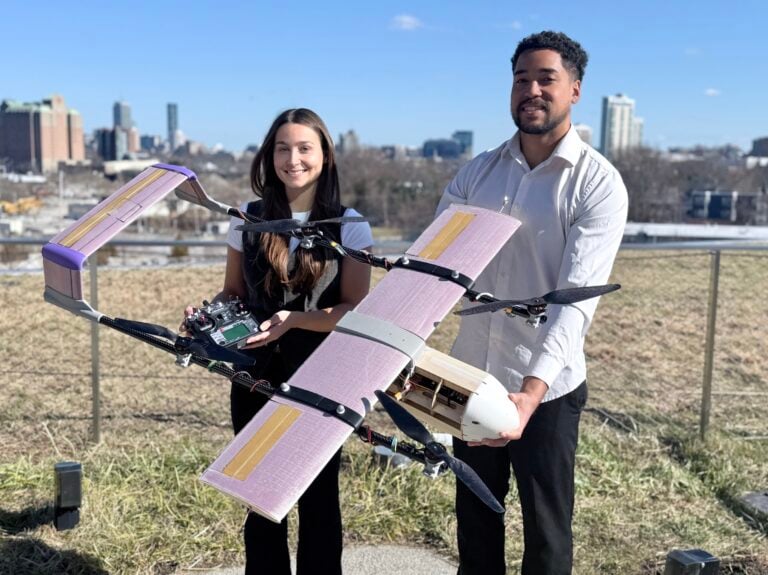
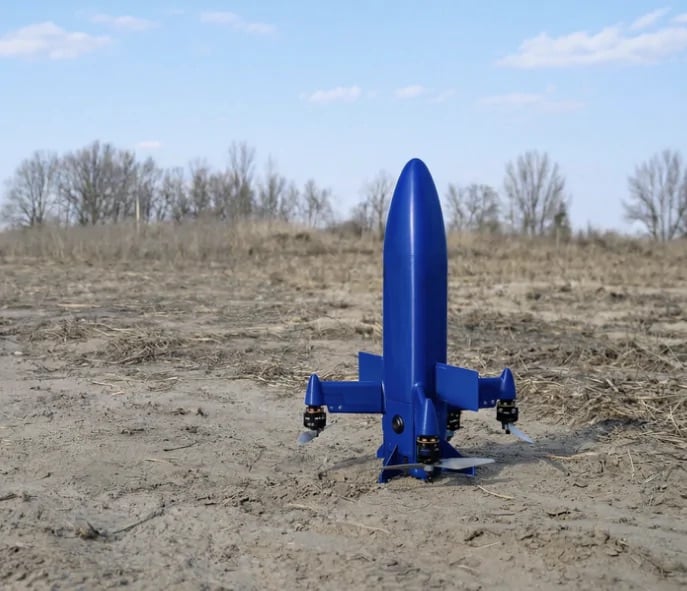
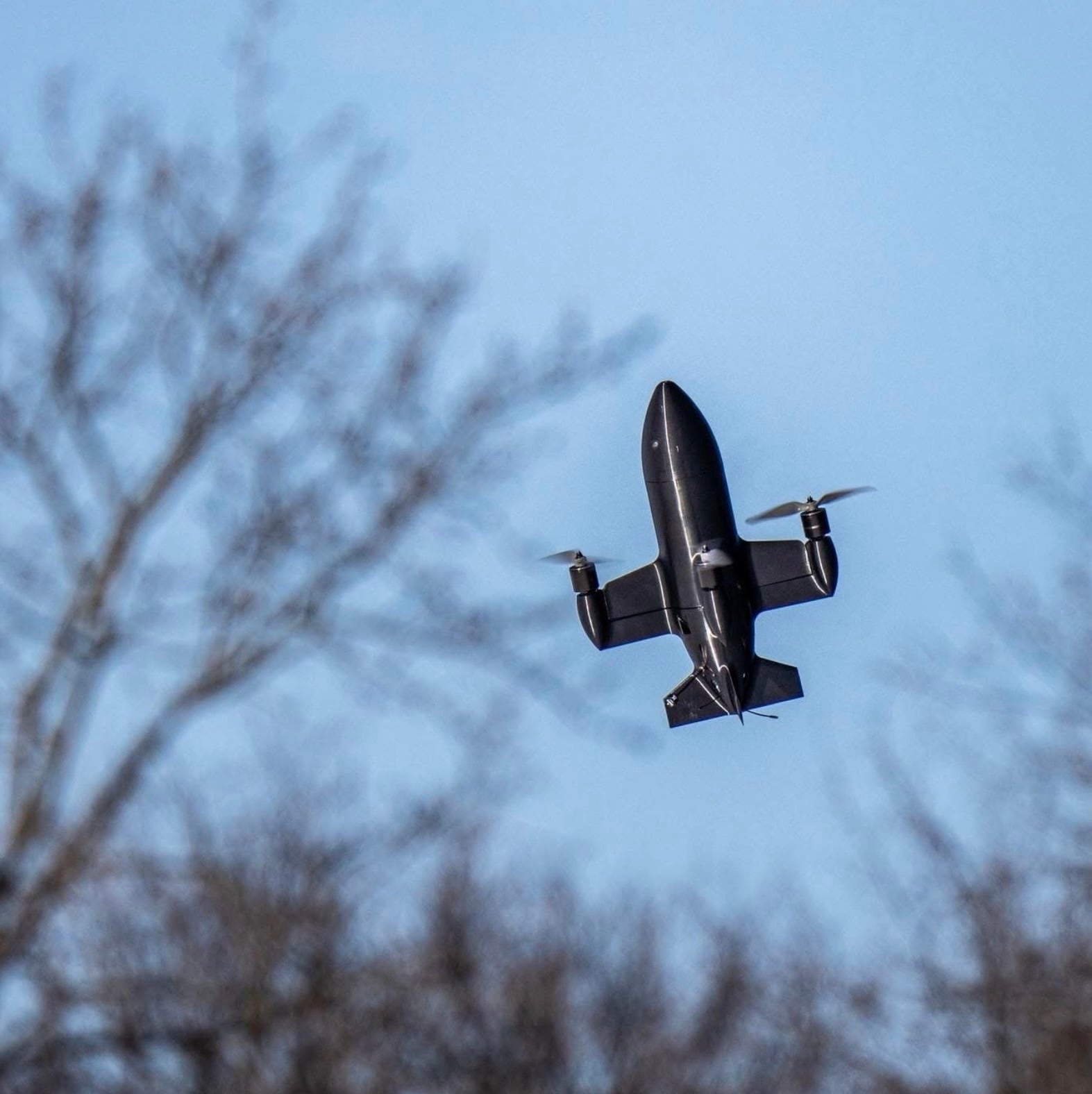
Odd Systems also produces the Zerov-8, an autonomous interceptor drone designed specifically to hunt Shahed-type attack drones. Azhnyuk announced the Zerov-8 on March 6, describing it as a tailsitter, a vertical takeoff and landing design that combines the speed of a missile with the maneuverability of a drone.
The Zerov-8’s published specifications: a maximum speed of 326 km/h (203 mph), capable of intercepting targets moving up to 270 km/h (168 mph). Combat radius reaches 20 km (12.4 miles). It carries a warhead of up to 0.5 kg (1.1 lbs), launches vertically, and reaches mission altitude within 30 seconds. Operators can switch between daytime and thermal cameras depending on the mission.
The interceptor’s core advantage is its TFL Anti-Shahed detection module, which uses AI to analyze a target’s movement, thermal signature, and other parameters. The company claims detection range of up to 1 km (0.6 miles) in ideal conditions and 300 meters (984 feet) in poor weather. Once the system locks a target, it highlights and tracks it continuously while the pilot selects the interception approach. The Zerov-8 is currently in final full-cycle autonomous interception testing, with plans to integrate external radar systems for automated course calculation.
The interceptor is named after Mykola Zerov, a Ukrainian poet and translator executed by the Soviet regime on November 3, 1937, at the Sandarmokh clearing in Karelia. The Fourth Law names all its products after figures from Ukraine’s Executed Renaissance, the generation of writers, artists, and intellectuals systematically destroyed by Moscow in the 1930s.
Axon Investment and the Defense Startup Boom
In February 2026, Axon Enterprises, the Arizona-based maker of Tasers, announced a strategic investment in The Fourth Law. The amount was not disclosed. Axon CEO Rick Smith said Ukraine is innovating drone technology at a pace most countries cannot match, and described the investment as a bet on systems built and tested under real combat conditions. The introduction came through BRAVE1, Ukraine’s defense tech cluster, after Smith met Ukrainian Defense Minister Mykhailo Fedorov.
Azhnyuk’s companies are part of a broader investment surge in Ukrainian defense technology. Before the invasion, Ukraine’s tech industry was its third-largest export earner behind steel and agriculture. Grammarly and Ring, which Amazon acquired in 2018 for roughly $1 billion, both came out of that sector. The war redirected that engineering talent toward weapons. Foreign direct investment in Ukrainian defense companies rose to approximately $100 million in 2025, up from $40 million the year before, according to Artem Moroz, head of investor relations at BRAVE1. More than 2,000 military tech startups are now active in Ukraine.
The numbers are accelerating. In September 2025, Swarmer, a developer of AI targeting software for drone swarms, raised $15 million in the largest publicly disclosed defense tech investment since the full-scale invasion began. Investors included D3 Ventures, backed by former Google CEO Eric Schmidt. In March 2026, UFORCE, a consortium of nine Ukrainian defense companies including the maker of Magura drone speedboats, raised $50 million at a valuation exceeding $1 billion, making it the first Ukrainian-founded defense tech unicorn.
The Ethics Debate Over Autonomous Weapons
The Red Cross and other organizations monitoring the laws of warfare have formally opposed AI-conducted strikes without full human control. The tension between autonomy and oversight is playing out across Ukraine’s drone industry. As we reported in March, Ukraine’s K2 Brigade deliberately keeps human operators in the loop for armed ground robots, not because the technology requires it, but because the ethics demand it. The Fourth Law’s current FPV systems follow a similar pattern: the AI handles the terminal approach where jamming is heaviest, but a human operator still selects the target and initiates the mission. The fully autonomous versions in testing represent the next step beyond that line.
International Partners Are Taking Notice
The Times report documents a widening circle of foreign partnerships. Shield AI, a San Diego-based defense contractor, cooperates with Iron Belly, a Lviv-based fixed-wing drone manufacturer. Estonia funds Ukrainian companies if at least 30 percent of components are Estonian-made. Denmark has hosted Ukrainian interceptor drone demonstrations at NATO exercises. The UK launched Project OCTOPUS to jointly produce thousands of interceptor drones monthly. Germany committed a multimillion-euro deal for 15,000 STRILA interceptor drones from WIY Drones, as we covered in late March.
Iran’s recent use of Shahed drones against U.S. bases and embassies in the Middle East has driven a surge of interest in Ukrainian counter-drone technology. The Times notes that Odd Systems declined to say whether it is exporting to the region. As we reported when the Gulf crisis escalated, Gulf states burned through more than 800 Patriot missiles in three days of Iranian attacks, more than Ukraine has received across four years of war. Ukraine’s $2,500 interceptor drones represent the only battle-tested answer that closes the cost gap.
DroneXL’s Take
The Petcube origin story is memorable, but the harder point is buried in the failure-rate data. Whether the real baseline miss rate is 80 percent or 90 percent, DroneXL’s own prior reporting and the Times arrive at slightly different numbers from limited battlefield samples, the engineering problem is the same. Jamming and signal loss have baked a structural vulnerability into operator-dependent FPV systems. Azhnyuk’s YOLO architecture is a direct engineering answer to that problem, not a philosophical statement about autonomous weapons. When I first covered The Fourth Law’s autonomy modules in December 2024, the company was still in early deployment with a few brigades. Eighteen months later, 50-plus units run its software across the front, and Axon, a $34 billion U.S. public company, has written a check. That’s how fast this sector moves.
The Zerov-8 interceptor is the product to watch. At 326 km/h it’s fast enough to catch the standard propeller-driven Shahed variants that still make up the bulk of Russia’s drone attacks, but it falls short of the jet-powered Geran-3 variants that fly at 400 to 500 km/h. Every interceptor manufacturer in Ukraine faces that speed ceiling. The company that solves it first, likely through radar-cued autonomous flight path planning rather than raw airframe speed, will own the next generation of drone air defense.
Azhnyuk told the Times he was obliged to carry on because of an oath he took as a Boy Scout. That line will get the headlines. The $100 million in foreign capital flowing into Ukrainian defense startups will reshape the industry for the next decade.
DroneXL uses automated tools to support research and source retrieval. All reporting and editorial perspectives are by Haye Kesteloo.
Discover more from DroneXL.co
Subscribe to get the latest posts sent to your email.
Check out our Classic Line of T-Shirts, Polos, Hoodies and more in our new store today!

MAKE YOUR VOICE HEARD
Proposed legislation threatens your ability to use drones for fun, work, and safety. The Drone Advocacy Alliance is fighting to ensure your voice is heard in these critical policy discussions.Join us and tell your elected officials to protect your right to fly.

Get your Part 107 Certificate
Pass the Part 107 test and take to the skies with the Pilot Institute. We have helped thousands of people become airplane and commercial drone pilots. Our courses are designed by industry experts to help you pass FAA tests and achieve your dreams.

Copyright © DroneXL.co 2026. All rights reserved. The content, images, and intellectual property on this website are protected by copyright law. Reproduction or distribution of any material without prior written permission from DroneXL.co is strictly prohibited. For permissions and inquiries, please contact us first. DroneXL.co is a proud partner of the Drone Advocacy Alliance. Be sure to check out DroneXL's sister site, EVXL.co, for all the latest news on electric vehicles.
FTC: DroneXL.co is an Amazon Associate and uses affiliate links that can generate income from qualifying purchases. We do not sell, share, rent out, or spam your email.