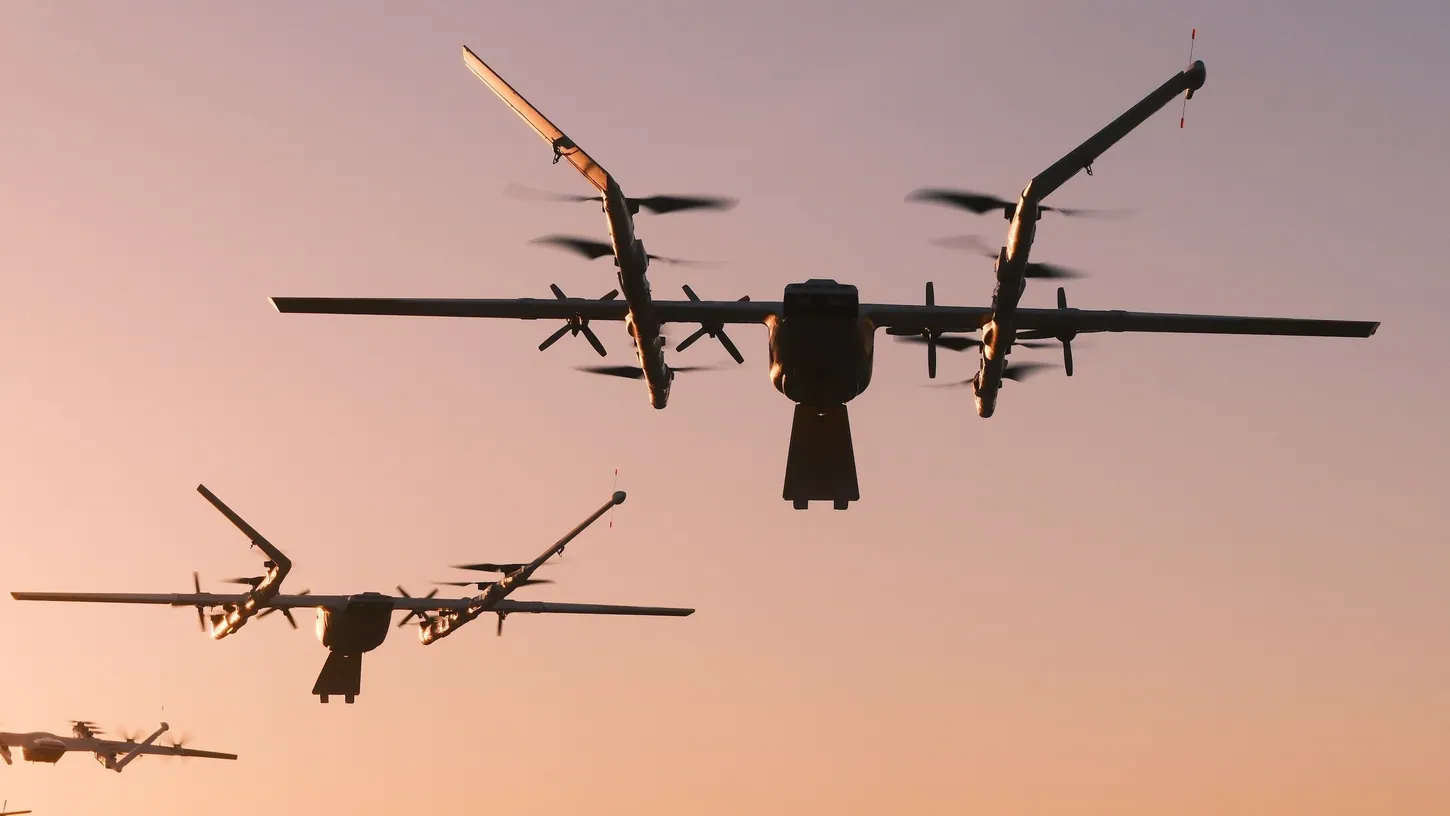
A five-person startup on the French Riviera will begin commercial drone deliveries to yachts anchored off Juan-les-Pins on August 1, 2026. Flyde says its service can carry up to 17.6 pounds (8 kg) as far as 6.2 miles (10 km) offshore in under 15 minutes. Luxurylaunches reported a price of $57 per flight.
The company is based in Roquebrune-Cap-Martin and led by founder Pierre Deyris and CTO François Massias. Flyde worked with French aerospace firm CAVOK Engineering on the electric delivery aircraft, called the Beluga, after testing several platforms. The launch follows trial operations from Port Hercule in Monaco and opens from Port Gallice in Antibes.
The Beluga Lowers Cargo Without Landing
Flyde’s delivery method keeps the Beluga above the yacht while a motorized winch lowers the package to the deck. The aircraft does not need a landing pad or clear deck space, and its rotors remain away from passengers, crew, railings, and rigging during the handoff.
Flyde’s official service description says customers book a delivery slot through its digital platform. A logistics partner takes the parcel to a secure departure point, where it is scanned and loaded before the aircraft flies along a predefined corridor approved by local authorities.
The company’s May update identifies the aircraft as the CAVOK CK25VE, equipped with a 22-pound (10 kg) smart winch, a two-axis camera with 320-degree movement, redundant 4G and Iridium satellite communications, and four maritime-certified floats. The 17.6-pound figure is the commercial cargo limit reported for the August service.
Every Flight Remains Supervised
Flyde describes an automated delivery system that remains under remote human supervision. Each flight follows an approved aerial corridor, and the parcel is lowered by winch after the aircraft reaches the yacht rather than landing on a moving vessel.
That model matters near a crowded coast. A direct maritime route can keep the drone away from beaches and promenades while the remote crew monitors the flight and retains control of the operation. It also lets Flyde use the same delivery process for vessels swinging at anchor instead of relying on a fixed landing point.
The $57 Fee Buys Time
Flyde is selling speed and convenience rather than the cheapest possible trip. A yacht crew that launches a tender for groceries, flowers, spare parts, or medicine must send someone ashore, collect the order, and return to the anchorage. The drone handles that last leg in minutes.
The customer is easy to understand. Charter crews and yacht owners already pay to protect guest time and keep onboard service moving. A $57 delivery can make sense when the alternative interrupts a crew member’s work and requires a tender run for one forgotten item.
Flyde says its system is intended to work with provisioning agents and existing maritime logistics providers. Those partners can book the flight while the drone handles only the final trip between the port and the anchored vessel.
Flyde Picked A Different Delivery Market
Amazon, Walmart, Wing, and Zipline have spent years building delivery networks around small parcels and suburban homes. Flyde chose open water, where a boat trip is slow, a customer can absorb a premium fee, and a winch solves the lack of a conventional landing zone.
The company says it received a generic SAIL II operational authorization from France’s civil aviation authority in February 2026. Flyde’s own launch update says the authorization covers the Mediterranean basin and follows more than three years of regulatory work.
That does not make the mission easy. It makes the business case different. Flyde does not need to beat a delivery van on a dense suburban route. It needs to beat a tender carrying one urgent package from a marina to a yacht.
Wind Will Decide The Operating Window
Flyde has published range, cargo, communications, and winch details, but its public material does not state a maximum wind speed or gust limit. That missing number will determine how often the service can fly along a coast exposed to mistral winds.
A winch delivery requires the aircraft to hold position while a suspended load moves beneath it and the yacht shifts on the water. Range and payload figures describe what the aircraft can carry. The wind envelope will show how often it can perform that job during a real Riviera season.
DroneXL’s Take
This is a smart use of drone delivery because Flyde picked a customer whose existing option is slow and expensive. Amazon and Walmart are trying to make aerial delivery cheaper than a short road trip. Flyde only needs to make a $57 flight better than launching a yacht tender for one package.
The engineering deserves attention, especially the no-contact winch and redundant communications. Still, I want to see a published wind limit and a season of routine flights before calling the model proven. Open water gives Flyde a cleaner route, but it also exposes the aircraft and its hanging load to coastal wind.
The number worth watching after August 1 is not the maximum range. It is the completion rate when the sea breeze rises and the anchorages get busy. If Flyde can keep flying safely through those conditions, this service becomes a practical template for coastal logistics rather than a luxury demonstration.
Source: Flyde, Flyde’s May 2026 operational update, and Luxurylaunches.
DroneXL uses automated tools to support research and source retrieval. All reporting and editorial perspectives are by Haye Kesteloo.