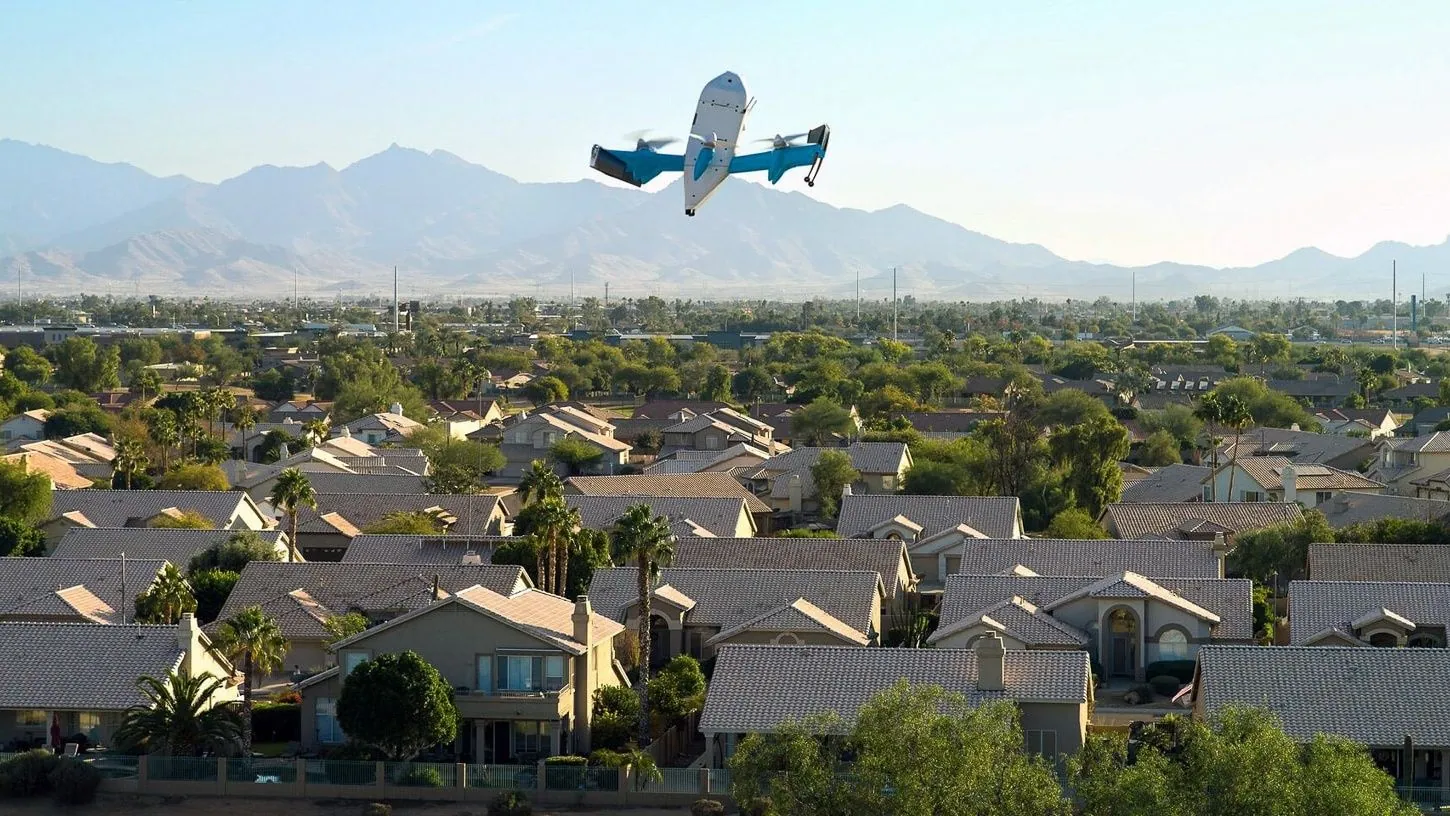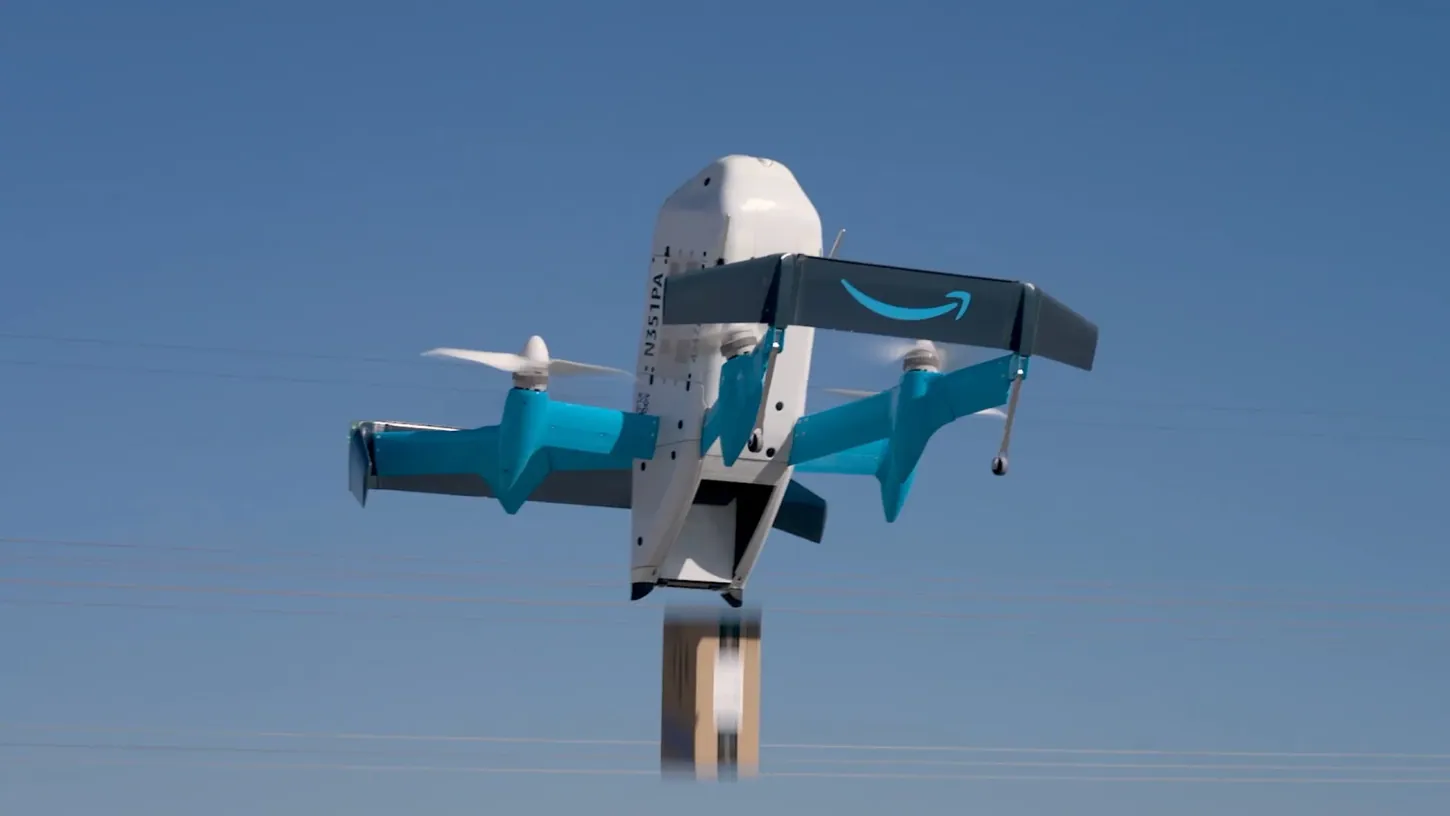
The City of Nampa, Idaho, has asked Amazon for flight data on the Prime Air drones that began flying over the city on October 30, and city staff visited the area last week to observe them. Nampa has received about 20 to 25 emails and phone calls about the drones since deliveries began, communications director Amy Bowman told BoiseDev. Meridian, parts of which sit inside the 7.5-mile (12-kilometer) delivery radius, says it has had a handful.
Nampa also holds the conditional use permit for Amazon’s launch pad, which its Planning and Zoning Commission approved 6-1 on May 26, and Meridian holds none. At that hearing, Amazon told the commission a backyard delivery in a sound test topped out at 68 decibels. The city’s planning director said at the time that the permit can be revoked.
Nampa Has Shared Complaints With Amazon and Asked for Its Flight Data
Nampa has passed residents’ concerns to Amazon, requested flight data, and hopes to send staff back to the delivery area this week, Bowman said on Tuesday. The city is in communication with Amazon about ensuring it complies with the conditional use permit, BoiseDev reported on November 11.
BoiseDev’s report quotes no city finding that Amazon has broken the permit’s terms, and Amazon also needed FAA approval to fly.
The complaints residents have made publicly are about sound. Residents told Idaho News 6, in a report published November 10, that they can hear the drones inside their homes, one of them with the windows and doors closed. Kristie Patterson, who works from home, said “I’m constantly hearing them buzz over our house on a daily basis.” She has looked at homes elsewhere after 10 years in the neighborhood. Anna Luke said her family no longer finds the backyard relaxing, with one drone heading one way and the next coming back the other.
Meridian communications manager Trevor Smith said the city is gathering residents’ feedback on how the drones affect their neighborhoods. Meridian’s drone delivery page tells residents that cities are “generally preempted” from regulating delivery drones and sends them to Amazon or the FAA’s noise complaint portal. Nampa’s flyer gives the same advice. Residents can call Amazon at 1-888-280-4331 with the date, time and address of the flight, and Meridian warns that Amazon will ask to verify an account. The online route, choosing “Something Else” and then “Amazon Drone Delivery,” asks the user to log in or create an Amazon account. DroneXL’s guide for residents covers both.
Amazon’s 68 Decibels Came From an Arizona Backyard
Amazon’s 68-decibel figure came from a test in the backyard of an Airbnb in Arizona, Amazon senior manager Sam Bailey told the Nampa commission in May. The front of the same house measured 61 decibels. BoiseDev’s account of the hearing gives no distance from the drone and no measurement method.
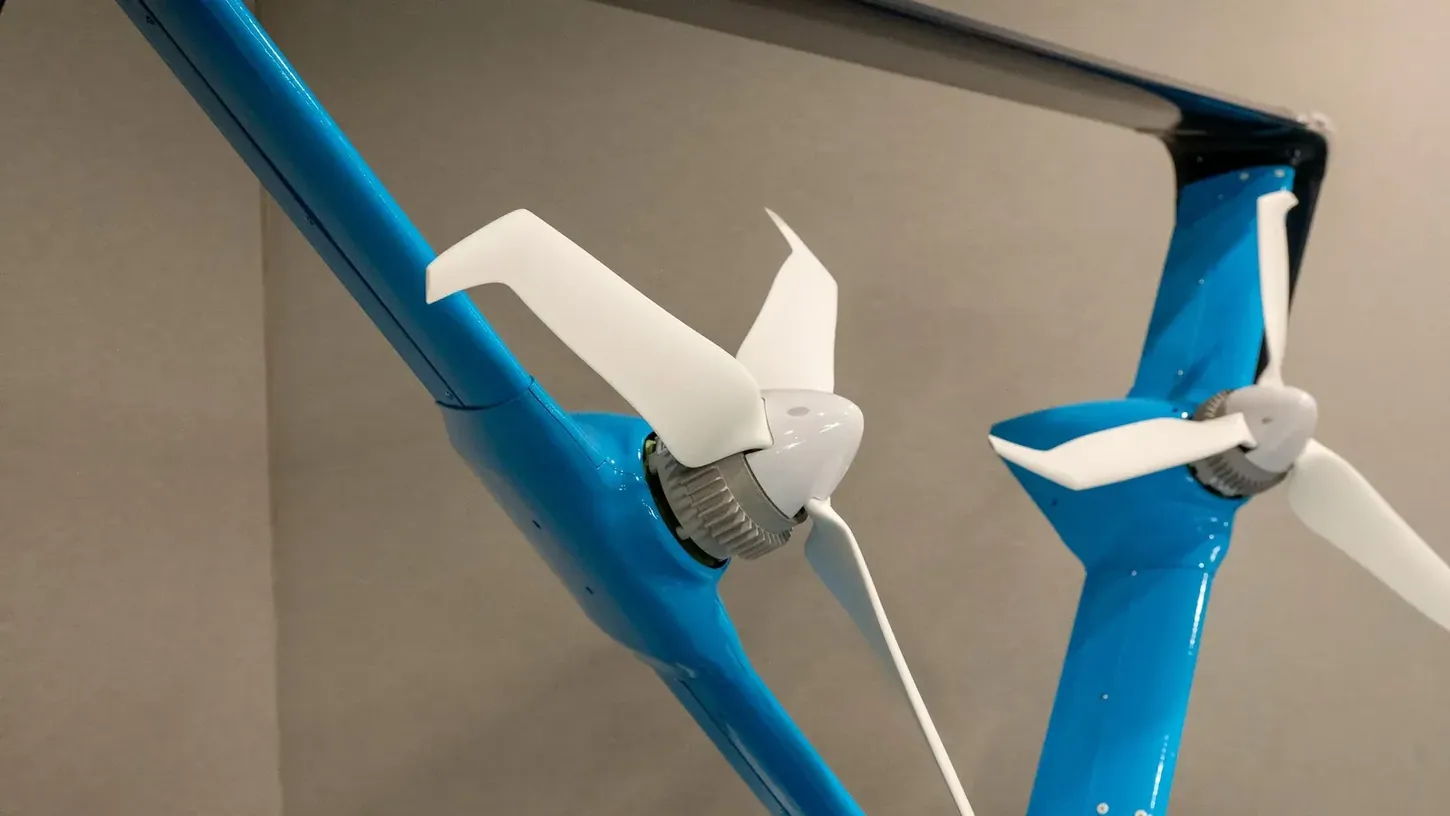
Bailey also described a typical delivery. The MK30 cruises out at an average of 225 feet (69 meters), descends to about 13 feet (4 meters) to drop the package, and climbs to 300 to 400 feet (91 to 122 meters) for the trip home, with about 20 seconds over the drop point. He said Amazon planned to start Nampa with 12 to 15 drones. Amazon’s FAA filings list the MK30 at 83.2 pounds (37.8 kilograms) at takeoff carrying 5 pounds of cargo, and no FAA filing or Amazon spec DroneXL has reviewed lists a parachute.
The FAA’s filings describe the MK30, the aircraft flying from Nampa, in a different metric. Its noise appendix for Amazon’s Baton Rouge hub puts an MK30 in delivery hover at 92.1 dBA SEL measured 25 feet (7.6 meters) away, the figure DroneXL compared with Amazon’s “quieter than a truck” claim in September. Its Chicago appendix puts a cruising MK30 at 63.7 dBA SEL at 200 feet (61 meters), as DroneXL reported when the Markham hub opened. SEL packs the sound energy of a whole pass into one second, so it does not line up with a single meter reading in a backyard.
Nampa Can Revoke the Permit, a Lever Dolton Lacked
Because the permit is conditional, Nampa has the authority to revoke it, planning and zoning director Rodney Ashby said in May. As an example, he said the city could act if drone noise proved much higher than Amazon represented, at least two residents complained and staff found the complaints valid.
Amazon would then have to return to the commission for reinstatement. Ashby’s description, as BoiseDev reported it, did not say how the city would measure “much higher” or against which Amazon figure.
That is more than Dolton had. When MK30s reached Chicago’s south suburbs, Dolton and Homewood sent residents to Amazon and the FAA. Homewood said federal rules and Illinois law leave it unable to ban the drones or regulate their noise in flight, and the same state statute binds Dolton. In Richardson, Texas, resident complaints in January got Amazon to raise its average outbound altitude to 225 feet and move some routes over commercial land, the same 225 feet Bailey described for Nampa. In September one Richardson resident still logged 52 overflights of her home in a day. The Nampa hub and its record are on DroneXL’s Amazon Prime Air tracker.
DroneXL’s Take
Nampa should use the flight data to set a number before it argues about one. Until the city measures in a Nampa yard under the actual routes, I think noise much higher than Amazon represented is a standard Amazon can’t fail, because the only Amazon number on the record came from an Arizona backyard with no distance attached. The flight data matters for a second reason. Richardson showed the complaint is about repetition as much as volume, and a per-street count of overflights is the number that would show whether a few backyards carry most of the traffic. I’d still rather see delivery drones carry insulin than a phone case, and an MK30 that weighs 83 pounds at takeoff, with no parachute, is a lot of aircraft for a five-pound box. Nampa can’t change that. It can make Amazon’s May numbers mean something, and as the city that issued the hub’s permit, it is the only one under this circle that can.
Sources: BoiseDev, November 11, BoiseDev, May 28, Idaho News 6, City of Meridian, FAA noise complaints
DroneXL uses automated tools to support research and source retrieval. All reporting and editorial perspectives are by Haye Kesteloo. Read our editorial standards.