Can you fly a drone over people under Part 107? Yes, but only in certain cases, and the rules are very easy to misunderstand. How does the FAA actually define flying over people? What is a categorized drone, and what are the requirements? I’m going to break all of this down for you as simply as possible, including how to check whether your drone qualifies and when you need a waiver.
I’m Greg from Pilot Institute. We’ve trained over 150,000 remote pilots, and by the end of this you’re going to know exactly how to fly over people and which rules apply to you. One thing up front: flying over people can only be done under Part 107. It is not possible under the recreational rules. A lot of people try, but the FAA just does not allow it.
Flying Over Someone Means Any Part of the Drone Over Any Part of a Person
The FAA rule is pretty simple: some part of the drone must be directly over some part of the person. It doesn’t matter if it’s only an arm, a leg or somebody’s toe, and it doesn’t matter if it only lasts a second. That still counts as flying over them.
There’s also the separation you need to keep the flight safe. Imagine you’re flying forward and the drone suddenly shuts off. Even without power, it keeps moving forward as it falls, so someone could still be in its path. And right before it hits them, guess what, it’s over them. So when you plan a flight, keep that distinction in mind. Over means directly over the person, but your safe distance may need to be a little bit larger.
Part 107 Allows Three Ways to Fly Over People
Section 107.39 lets you fly over people who are directly participating in the operation, people under a covered structure or inside a stationary vehicle that gives them reasonable protection, or anyone at all when you fly a categorized drone. There are four categories, each with its own requirements.
Direct participants are the remote pilot, a visual observer or another crew member the flight needs. Each of them should have a specific job in the operation and understand the risks. That distinction is very important. Somebody who hired you and told you they’re okay with you flying over them is not a direct participant. If you’re filming the bride and groom at a wedding and they say, “Ah, it’s fine if you fly over us,” technically, that’s not what the FAA wants to hear. (The rules are in Part 107, Subpart D.)
Exposed Props Typically Keep the Sub-250 Gram DJI Mini Out of Category 1
To qualify for Category 1, the aircraft must weigh 0.55 pounds (250 grams) or less during the operation, including anything attached to it. It also cannot have any exposed rotating parts that could lacerate human skin. Category 1 needs no FAA declaration of compliance. The remote pilot verifies it.
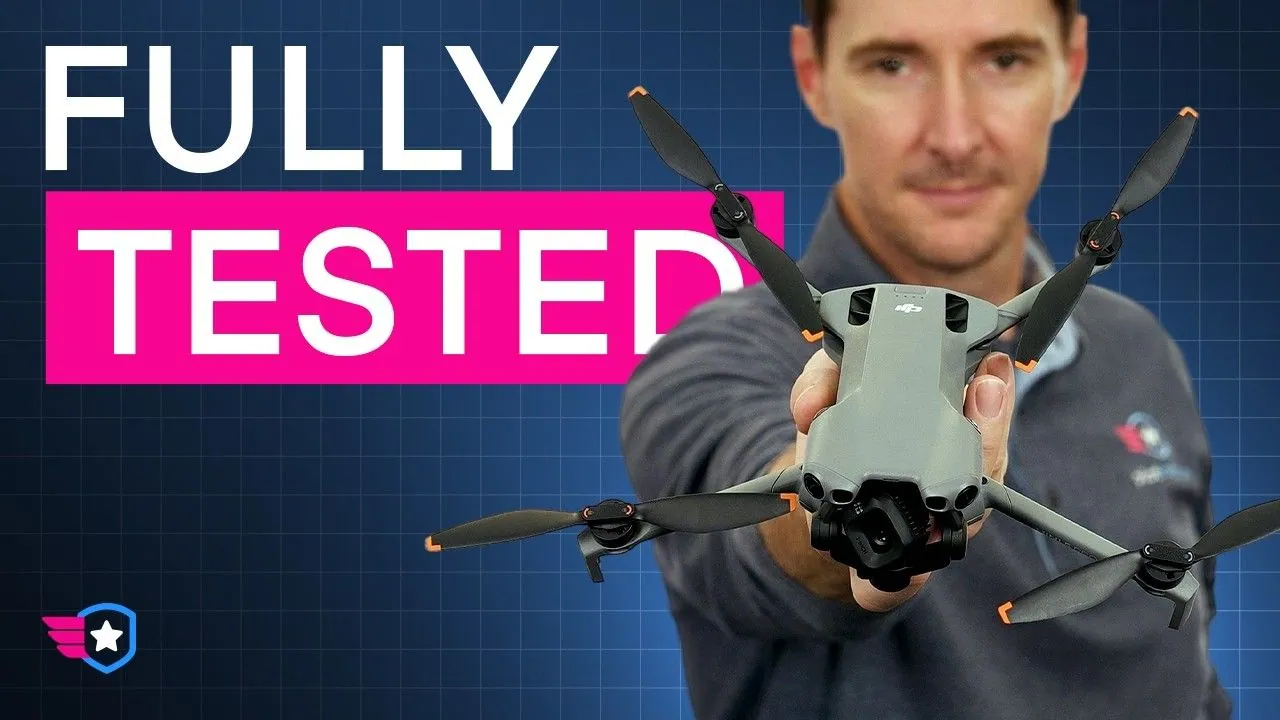
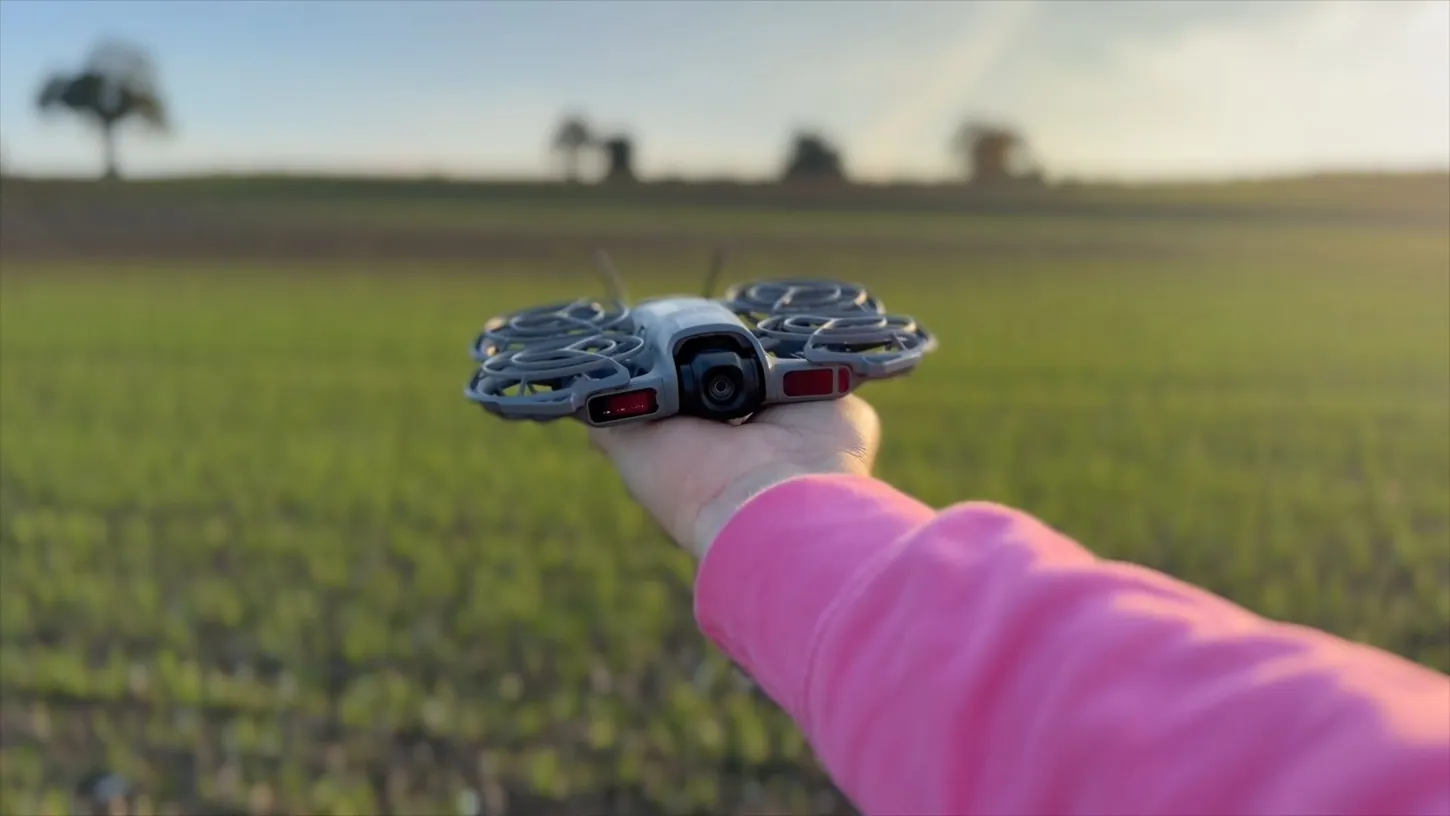
This is why the 0.55 lb or 250 g drone causes a lot of confusion. A drone under 250 grams may meet the weight requirement, but its exposed propellers disqualify it from Category 1. The DJI Neo and Neo 2 qualify, because they’re under 250 grams on takeoff and have full prop guard coverage. The DJI Mini series, or any other brand’s mini-type drone sitting right at 250 grams, typically has no prop guards, so it doesn’t qualify. You have to meet both requirements, and as soon as you add prop guards, that usually takes it over the weight. The check applies to the exact aircraft and setup used on takeoff.
Category 2 Depends on the Manufacturer, Not on You
Category 2 uses an injury standard: an impact limit of 11 foot-pounds of kinetic energy from a rigid object. The manufacturer proves compliance with an FAA-accepted means of compliance and submits it to the FAA. As a pilot, you just verify your exact configuration is on the accepted list.
Then you can fly it as a Category 2 aircraft, as long as it’s properly labeled and operated according to its Category 2 instructions. Just like Category 1, it cannot have any exposed rotating parts that can lacerate skin, and it cannot have any safety defects. Real-life examples: the DJI Mavic 3 Thermal with the approved AVSS parachute system is Category 2 compliant, and so is the DJI Matrice 4 Enterprise with the approved AVSS parachute. The exact setup is very important. That approval does not apply to every Mavic 3, every Matrice 4 or any other drone of that size, because a similar model is not the same aircraft and has not been approved by the FAA.
Category 3 Allows 25 Foot-Pounds but Comes With Tighter Operating Rules
Category 3 follows the same process as Category 2: a declaration of compliance on the FAA website, a category label on the drone and operating instructions. It allows a higher injury limit of 25 foot-pounds of kinetic energy, but with tighter operating rules than Categories 1 and 2.
You can fly it within or over a closed or restricted-access site where the people inside are on notice that a drone will be flying over them. Outside that site, a Category 3 drone cannot make sustained flights over a person unless that person is directly participating or has the protection we covered. Examples are the AgEagle eBee X series and the WingtraRAY with its approved parachute add-on. Both have an FAA-accepted Category 3 configuration, but other than that, it’s pretty slim pickings, even this many years into the regulation.
To check whether a drone is Category 2 or 3, the FAA has a searchable declaration of compliance list for that exact purpose. Search for the aircraft and the approved setup, because the drone may only qualify with specific gear, such as a parachute system. Can you get your own declaration of compliance for a drone that doesn’t already have one? Sort of, but it is much more involved than filling out a few forms, and chances are it’s not something the average person can do unless you have a lot of money to spend on the process.
Category 4 Requires an Airworthiness Certificate Few Drones Will Ever Get
Category 4 is a completely different beast. The aircraft needs an FAA-issued airworthiness certificate under Part 21, with approved operating limitations that allow flight over people, plus extra maintenance and record-keeping. I don’t even know of any drones that are Category 4 approved. We’ve never seen one.
For most Part 107 pilots, Category 1 is going to be the easiest, maybe Category 2. Category 3 is almost out of the league for most people. If you still want to fly over people and your drone doesn’t fit one of these categories, you can apply to the FAA for a Part 107 waiver. Show them what you want to do and how you are going to do it safely. That process gets detailed pretty fast, so we built a class for it, Part 107 Waivers Made Easy, which walks you through every possible waiver step by step.
Category 3 Drones Can Never Fly Over an Open-Air Assembly
The FAA sets no headcount for an open-air assembly, but think concerts, festivals and sporting events. Categories 1 and 2 allow transiting and sustained flight over people, including over an assembly if the drone meets Remote ID. A Category 3 drone cannot fly over one at all, transiting or hovering.
Transiting over people has a definition that is clear as mud: transiting over a portion of the assembled gathering where the transit is mainly incidental to a point-to-point operation unrelated to the assembly. You’re basically repositioning your aircraft in a straight line, point to point, to get somewhere else. Outside an open-air assembly, a Category 3 drone can transit over people, no problem. Sustained flight over people is only allowed inside a restricted area with people on notice, or over direct participants and people under a structure or inside a non-moving vehicle.
And because we get asked this all the time: you cannot fly over people, even transiting, without a waiver or a categorized drone. I know there’s misinformation online about this, but the FAA is very, very clear. I think this is the most complex and complicated piece of regulation the FAA has put out in the drone world, and that’s kind of unfortunate.
Sustained Flight Over Moving Vehicles Only Works on a Closed Site
With a Category 1, 2 or 3 drone, sustained flight over moving vehicles requires a closed or restricted-access site, with every person in those vehicles on notice, like a racetrack with posted signs about the drone. Without that, you can only transit over people in moving vehicles.
Again, if you don’t have a categorized drone, none of this applies. You cannot transit over people in a moving vehicle without a waiver or a categorized drone.
I know this is a lot to remember, but you can make it much easier by working through the same questions before each flight. Does your exact drone and setup qualify for Category 1, 2, 3 or 4? If so, will there be an open-air assembly? Will there be moving vehicles below the aircraft? And if you don’t have a categorized drone, you’ll need to adjust your flight plan or get a waiver. Hopefully you’re not confused.
This article is based on a video from our YouTube partner Greg Reverdiau. Watch the full video on the Pilot Institute YouTube channel, and find more of Greg’s work on his DroneXL author page.
Sources: Pilot Institute / YouTube, 14 CFR Part 107, Subpart D, FAA UAS Declaration of Compliance, Wingtra.