
Drone Delivery · Amazon
MassDOT Says Amazon Hasn't Applied for the Drone Pad Permit It Needs
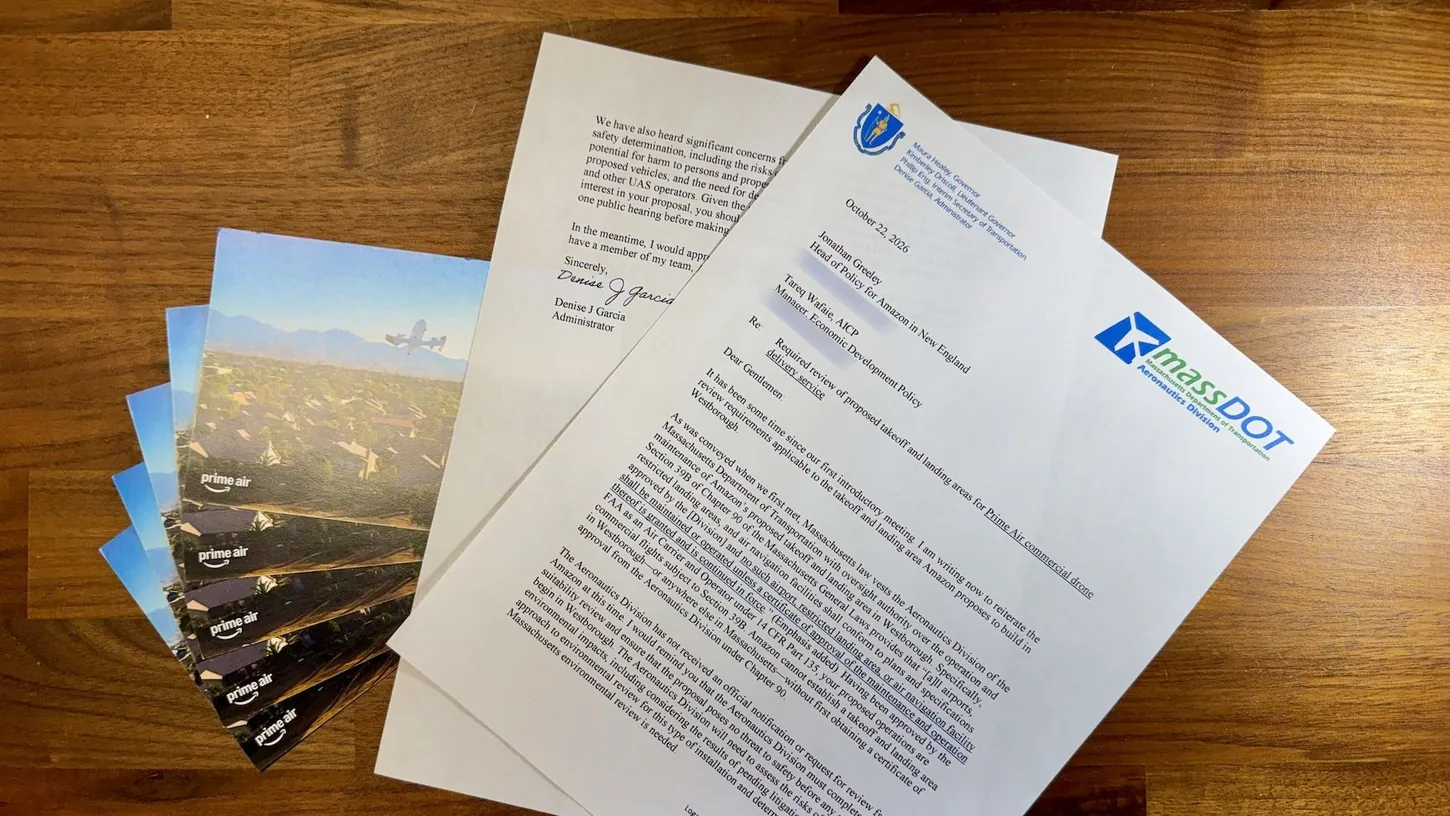
MassDOT told Amazon it has no request to review its Westborough drone pad, which needs a state certificate and a public hearing before any flights.
Zipline, Wing, Prime Air, Flytrex — the logistics networks taking packages to the sky.
Drone delivery stopped being a demo somewhere in the last two years, and the receipts are dull in the way real infrastructure is dull. Walmart crossed 1 million drone deliveries in May 2026, and the number worth reading was not the million: 40% of it flew in a single quarter, from 66 stores across four states, at an average of 23 minutes from order to drop. Zipline passed 2 million commercial deliveries in January 2026 and by that summer was flying more than 70% of its daily global volume inside the United States. The category found its inflection point while most of the coverage was still asking whether it would.
Retail is the volume story and medicine is the margin story. Wing, the Alphabet spinout, is Walmart’s nationwide build partner and is under contract to fly from more than 270 stores by 2027, a footprint Amazon cannot easily match because about 90% of Americans already live within 10 miles of a Walmart. The mechanics have barely changed since Fort Worth in 2024: a worker clips the package to a tether, the aircraft routes itself, and the order comes down from about 20 feet without the drone ever landing. Meanwhile the aircraft that justify themselves fastest are the ones carrying blood and prescriptions. Cleveland Clinic went live with Zipline prescription runs in August 2026, Tampa General started flying whole blood to trauma scenes, the NHS made drone pathology routine for 1.8 million people in South London, and in Sweden an Everdrone AED beat the ambulance to a cardiac arrest and a bystander restarted the man’s heart.
What is actually holding the US market back is a document. Part 108, the rule that would make routine BVLOS flight legal without one-off waivers, blew past its February 2026 deadline and sat in White House review through the summer, with DOT calling the delay deliberate while Zipline’s CEO warned the uncertainty freezes investment. The cost of waiting shows up in comparisons: the UK logged 1,672 BVLOS trial flights while the US read drafts. It also shows up in attrition, from DroneUp losing the Walmart partnership a year after earning Part 135 certification, to Amazon shutting down its Italian operation and staking its European future on a Darlington trial permission that expires in December 2026. For the standing explainer rather than the news river, start with our guide to drone delivery in 2026. The feed below carries every drone delivery story as we publish it.
Last updated October 22, 2026 — the feed below updates with every new story.
MassDOT told Amazon it has no request to review its Westborough drone pad, which needs a state certificate and a public hearing before any flights.

Healey's office is reviewing a call from 16 legislators for a drone delivery task force and a freeze on state certificates as Amazon awaits approvals.
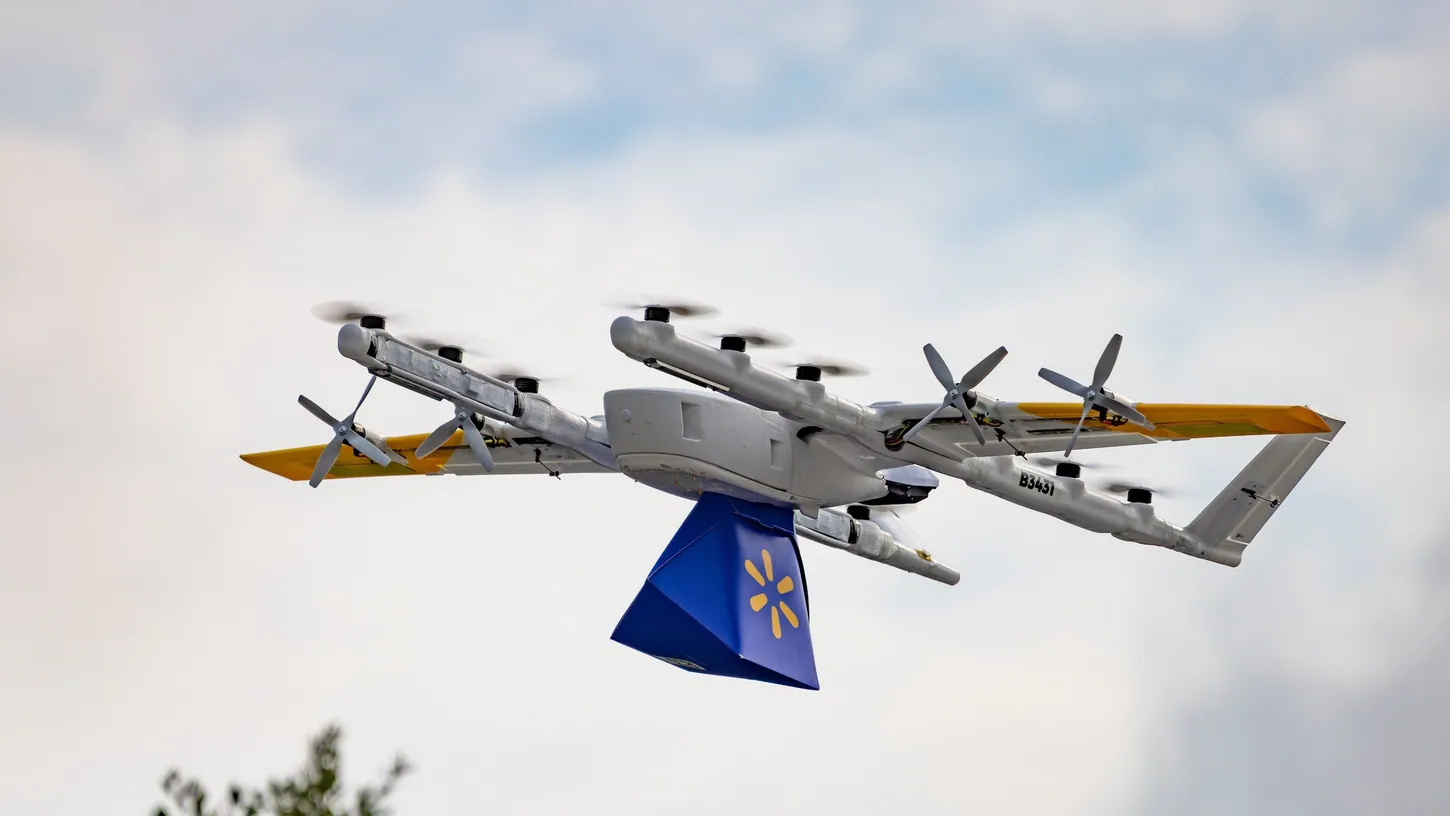
Wentzville drafted drone delivery zoning after Wing pitched an 18-drone Walmart nest in June. Bill 4914 passed first reading with no payload cap.
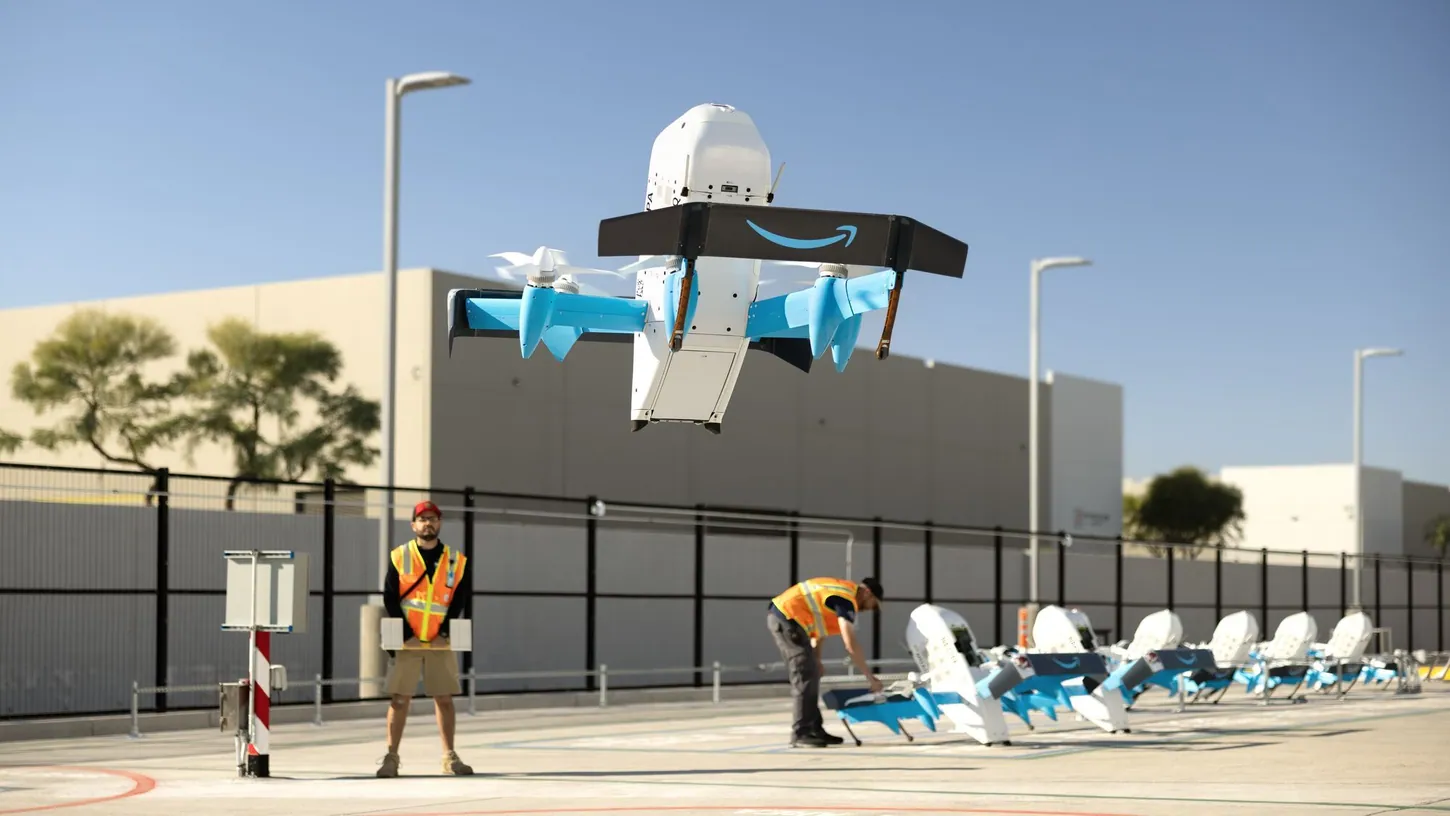
Amazon aims to start Prime Air drone deliveries in Tallahassee by mid-November. The drones' on-site housing is still under permit review.
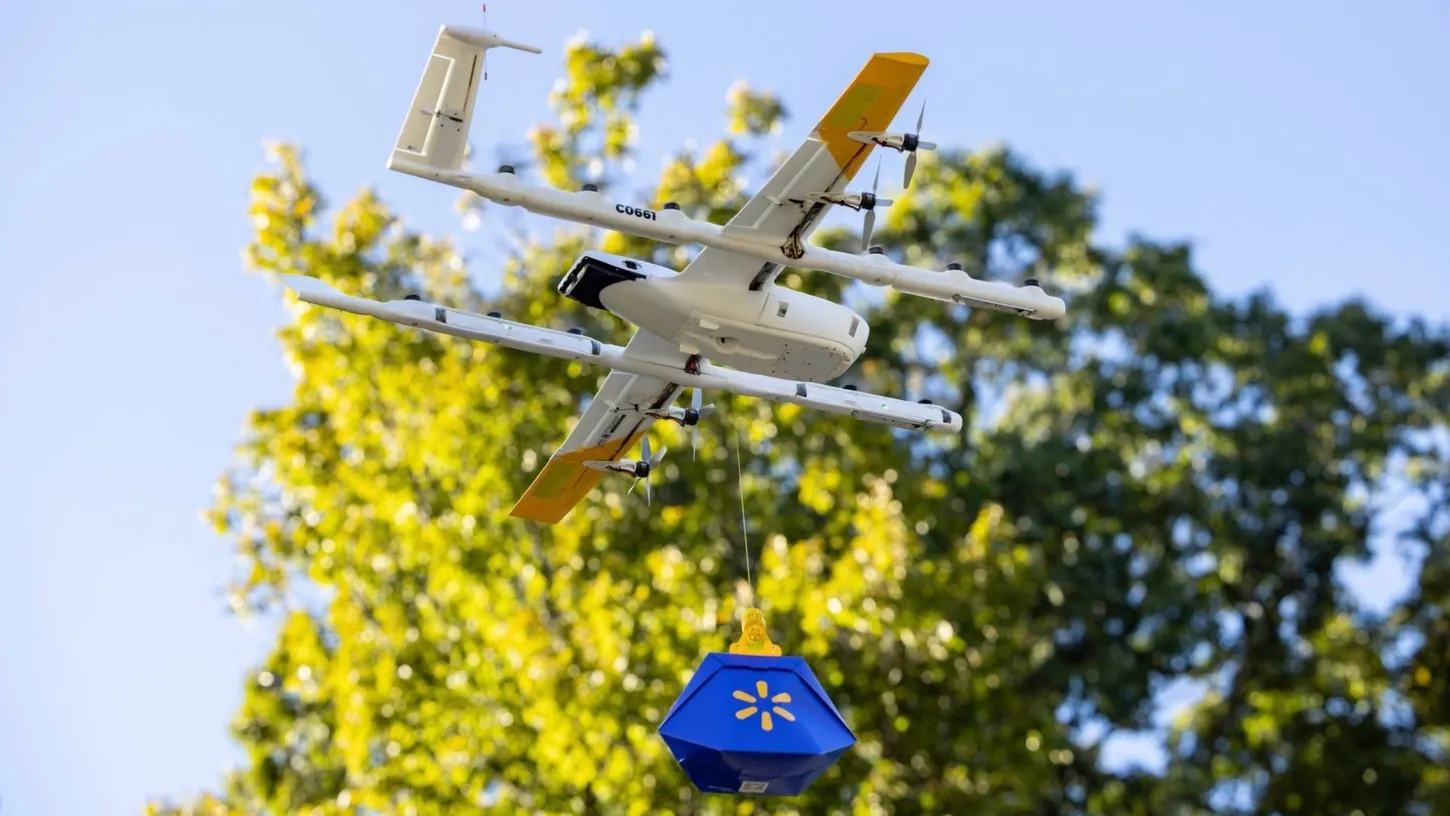
Wing and Walmart drone delivery now covers 10 Charlotte-area towns from seven Supercenters, with a 2.5-pound order cap and two more stores due.
Amazon has listed drones on 52 straight federal lobbying reports. Its Part 108 comment asks for a path past the 110-pound cap and never says parachute.

Apian rendered two years of blood-sample drone flights between Guy's and St Thomas' as Matternet added Great Ormond Street to London's NHS drone network.
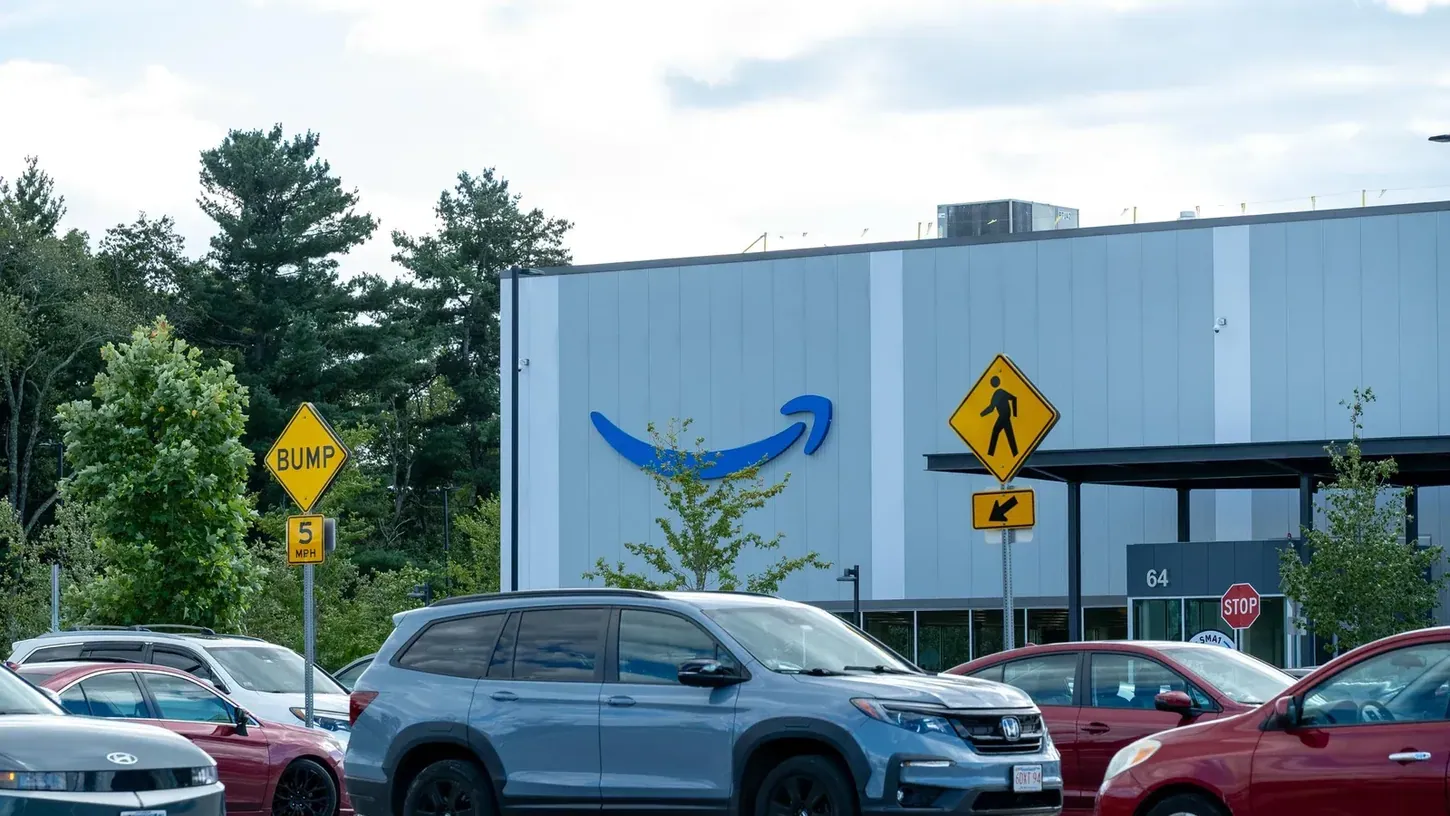
Westborough voted 510-13 for a bylaw banning commercial drone launch pads and drop zones, aimed at Amazon Prime Air. The attorney general gets 90 days.
In the US it is real but concentrated. Walmart runs drone delivery from 66 stores across four states and five metro markets, with Dallas-Fort Worth the densest and Houston, Orlando, and Tampa Bay added through 2026. Zipline also serves Cleveland Clinic patients in Beachwood, Ohio. Outside those footprints, most Americans still cannot order a drone delivery at any price.
Between 2.5 and 8 pounds on the aircraft flying commercially today. Wing carries up to 2.5 pounds, Amazon's MK30 up to 5 pounds, and Zipline's Platform 2 up to 8 pounds. Amazon has long argued the 5-pound limit still covers about 85% of the items it ships, which is the honest answer to why such small payloads matter.
Walmart's average across its first million deliveries was 23 minutes from order to drop, and its fastest logged delivery was 4 minutes 44 seconds. Wing's pitch is that a 30-minute drive becomes an under-five-minute flight for small items. The delay is mostly on the ground, in picking and loading, not in the air.
Part 108 is the FAA rule that would make Beyond Visual Line of Sight flight routine instead of something each operator earns waiver by waiver. Without it, every delivery network scales at the speed of individual approvals. Executive Order 14307 gave the FAA 240 days to publish it, a clock that ran out on February 1, 2026. The final text went to the White House regulations office on July 10, 2026, and DOT has said the delay was deliberate.
Zipline is the largest by volume and runs the Walmart and health-system networks. Wing, the Alphabet spinout, is Walmart's nationwide build partner. Amazon Prime Air flies its MK30 in Arizona, Texas, and Darlington, England. Flytrex operates across Dallas-Fort Worth, Matternet and Valqari work the medical and locker side, and Everdrone and Manna run European operations.
The record is strong on volume and imperfect on incidents, and we cover both. Zipline has flown well over 120 million autonomous miles without a serious injury. Amazon suspended US deliveries in January 2025 after multiple crashes, and in October 2025 two MK30s struck the same active construction crane in Tolleson, Arizona, one ejecting a battery that caught fire, drawing FAA and NTSB investigations. A Zipline aircraft parachuted onto a Greenville, Texas street in July 2026 after an in-flight fault, which is what its last-resort protocol is designed to do.
In Zipline's Texas network the published fee has been $0.99 plus a 20% service fee capped at $6. Cleveland Clinic's prescription program adds no cost for patients. Zipline CEO Keller Rinaudo Cliffton has argued a drone flight can cost about $1 at scale against roughly $9 to $11 for traditional ground delivery, which is the economic claim the entire category rests on.
One email with the drone news that matters — DJI, FAA, public safety, and everything in between, straight from the newsroom. No spam, no fluff.