JBER warns Alaska drone pilots: fly here and you risk an F-22 collision

Check out the Best Deals on Amazon for DJI Drones today!
Joint Base Elmendorf-Richardson in Anchorage, Alaska, is home to F-22 Raptors and C-17 Globemaster III cargo aircraft. It is also surrounded by some of the most photogenic terrain on the planet. That combination creates a problem the base’s counter-drone team deals with regularly.
JBER has published a public advisory reminding everyone that flying any drone over or near the installation is both dangerous and illegal under federal law. The base is asking all personnel to act as “human sensors” and report drone sightings immediately.
Here is what you need to know.
The threat is real, even from hobbyist drones
U.S. Air Force Staff Sgt. Taylor Davis, the counter-small unmanned aerial systems (C-sUAS) noncommissioned officer in charge with the 673d Security Forces Squadron, said the base primarily encounters what he calls “clueless and careless” operators. The scenario he describes is straightforward: a recreational pilot launches a drone hundreds of feet into the air near the flightline, and suddenly that aircraft is in the path of a fighter jet or heavy transport plane.
“The damage a drone can do to an F-22 or C-17 is significant and unpredictable,” Davis said.
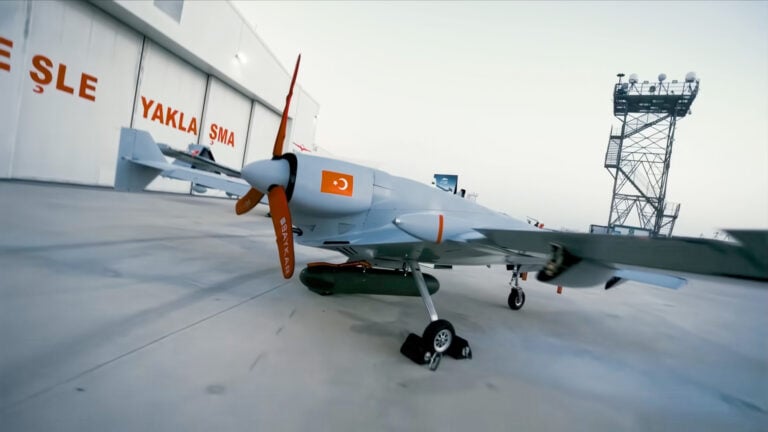
That is not speculation. The military has been testing attack drones at Fort Wainwright, just a few hundred miles north. Alaska’s airspace is busy with military traffic, and JBER sits right next to Ted Stevens Anchorage International Airport, one of the busiest cargo hubs in the world.

JBER’s counter-drone team relies on base-wide reporting
The 673d Security Forces Squadron’s counter-sUAS mission involves identifying, intercepting, and investigating every drone detected in JBER airspace. But the team cannot do this alone. Detection technology has limits, and the base covers a large area of mixed terrain in southcentral Alaska.
“We can’t respond to a drone if we don’t know it’s there,” Davis explained. “We rely greatly on what we call ‘human sensors’ to help track these systems. Everyone on base shares responsibility for identifying and reporting drone use.”
This “human sensor” approach mirrors what military installations across the country have adopted in recent years. When drone swarms appeared over Langley Air Force Base for 17 consecutive nights in late 2023, the Pentagon discovered how difficult it was to detect, track, and identify small UAS even with dedicated resources. Hill Air Force Base similarly asked the public to report any suspicious drone activity near the installation.
The adversary scenario JBER is preparing for
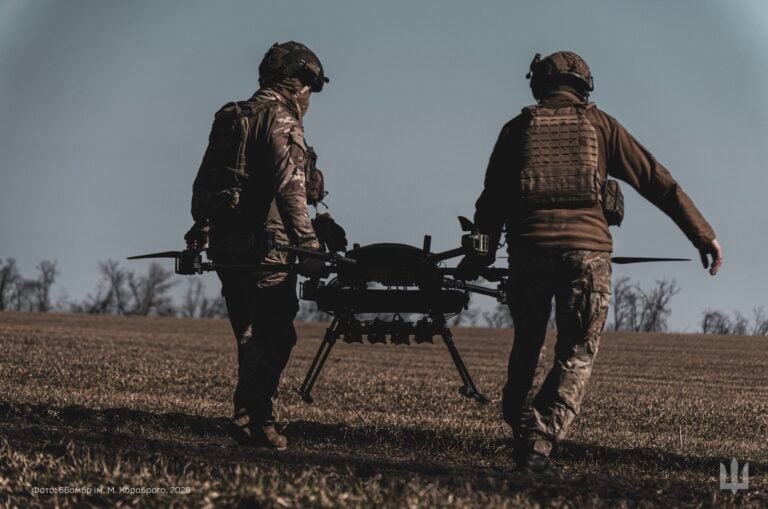
Accidental incursions are the most common problem, but they are not the only concern. JBER officials specifically referenced the use of camera-equipped drones for reconnaissance over sensitive areas of the installation. A more extreme scenario would mirror what has played out in Ukraine, where drones loaded with explosives have been turned into weapons.
The pattern of unidentified drones surveilling NATO military infrastructure across Europe over the past year makes this concern concrete. Drones have overflown French ammunition factories, Belgian nuclear storage facilities, and German supply routes. The Denmark drone ban last September was a direct response to similar unauthorized flights over military bases and airports.
“It’s impossible to tell the motivations of a drone operator from initial observations,” Davis said. “We have to locate the operator and then make that determination.”
How to report a drone sighting at JBER
The two most important pieces of information when reporting a drone sighting are location and timing. The more precise the location, the better the C-sUAS response team can act before the drone disappears. If you have a street address, intersection, or landmark, report that. In more remote parts of the base, your phone’s GPS coordinates work.
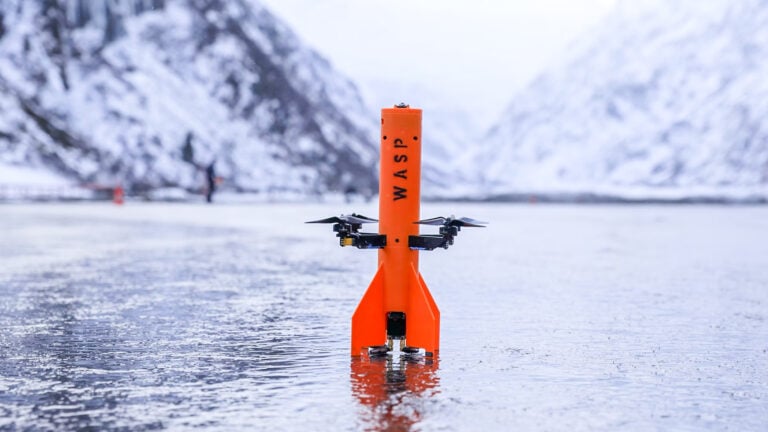
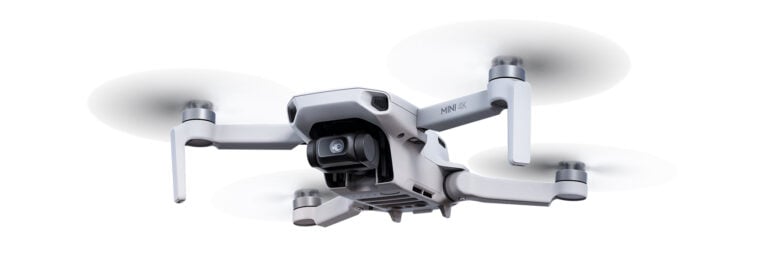
Additional details that help investigators include the drone’s design (quadcopter, fixed-wing, or hybrid), its color, engine type, direction of travel, whether it appears to carry a payload, and any description of the operator or their vehicle.
Davis noted that gasoline-powered drones tend to be loud, while electric models produce a distinctive high-pitched whirring sound. Quadcopters can hover in place. Fixed-wing drones fly more like traditional airplanes. Some newer designs combine elements of both.
If you see a drone at JBER, call the Law Enforcement Desk immediately at 907-552-8550. The JBER Connect app also has a visual guide with vocabulary and reference images to help you gather and communicate relevant details.
The bigger picture: counter-drone investment is surging
JBER’s advisory comes during a period of massive investment in counter-drone capabilities across the U.S. military. The Pentagon has redirected roughly $50 billion from legacy programs toward drone and counter-drone technology. The FBI launched a National Counter UAS Training Center at Redstone Arsenal in December 2025. And the Air Force Research Lab in Rome, New York, secured $5 million specifically for counter-drone detection systems.
The Department of Defense released a classified counter-drone strategy in late 2024, acknowledging that traditional defense systems are not built to handle cheap, small UAS. The foiled ISIS-inspired attack on a Michigan military base in May 2025, where a drone was used for reconnaissance, showed the threat is not theoretical.
For recreational and commercial drone pilots in Alaska, the message is clear. JBER airspace is restricted. DJI Geo Zones should flag the base in your flight app, but geofencing is not a substitute for knowing the rules. If you are flying anywhere near Anchorage, check your airspace authorization before takeoff.
DroneXL’s Take
JBER’s public advisory is straightforward, and that is exactly what makes it notable. Most military installations do not go out of their way to educate the public about their counter-drone operations. They just enforce. The fact that the 673d Security Forces Squadron is actively asking for help from everyone on base tells you something about the current state of detection technology: it is not good enough to work alone.
We have covered the Langley drone swarms, the European military overflights, the New Jersey mystery drones, and the FBI’s new training center. The common thread in every single one of these stories is that detecting small drones remains the hard part. Shooting them down or jamming them is technically possible. Knowing they are there in the first place is where the system breaks down. JBER is acknowledging that openly, which is more honest than most of what we have heard from the Pentagon on this topic.
Alaska is a unique case because the terrain is spectacular and the military presence is heavy. Anchorage already has its own police drone program operating across the city. The Alaska DOT flies Skydio X10s for disaster response. Drones are everywhere in the state, used for legitimate, valuable work. That makes it even more important for pilots to know exactly where they can and cannot fly.
Expect more advisories like this from military installations in 2026, especially as the FBI’s counter-drone training program graduates its first classes and pushes detection protocols down to local law enforcement. The “see something, say something” model is not going away. It is expanding.
Photo credits: Jake Sloan.
Editorial Note: AI tools were used to assist with research and archive retrieval for this article. All reporting, analysis, and editorial perspectives are by Haye Kesteloo.
Discover more from DroneXL.co
Subscribe to get the latest posts sent to your email.
Check out our Classic Line of T-Shirts, Polos, Hoodies and more in our new store today!

MAKE YOUR VOICE HEARD
Proposed legislation threatens your ability to use drones for fun, work, and safety. The Drone Advocacy Alliance is fighting to ensure your voice is heard in these critical policy discussions.Join us and tell your elected officials to protect your right to fly.

Get your Part 107 Certificate
Pass the Part 107 test and take to the skies with the Pilot Institute. We have helped thousands of people become airplane and commercial drone pilots. Our courses are designed by industry experts to help you pass FAA tests and achieve your dreams.

Copyright © DroneXL.co 2026. All rights reserved. The content, images, and intellectual property on this website are protected by copyright law. Reproduction or distribution of any material without prior written permission from DroneXL.co is strictly prohibited. For permissions and inquiries, please contact us first. DroneXL.co is a proud partner of the Drone Advocacy Alliance. Be sure to check out DroneXL's sister site, EVXL.co, for all the latest news on electric vehicles.
FTC: DroneXL.co is an Amazon Associate and uses affiliate links that can generate income from qualifying purchases. We do not sell, share, rent out, or spam your email.