
Drone Drops Knives, Drugs, and a Cell Phone Into New York State Prison, Fueling Push for Hochul’s Anti-Drone Law
Check out the Best Deals on Amazon for DJI Drones today!
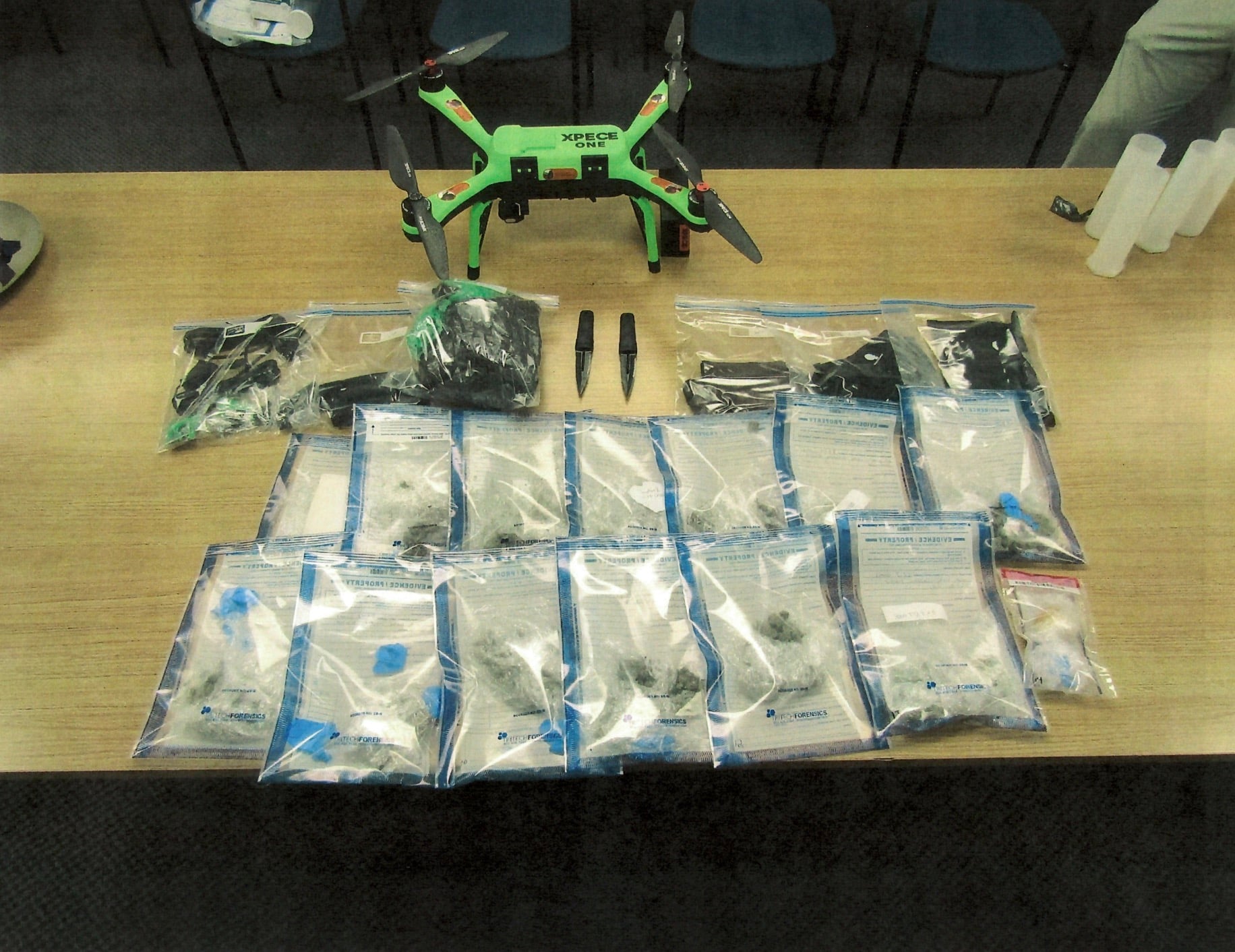
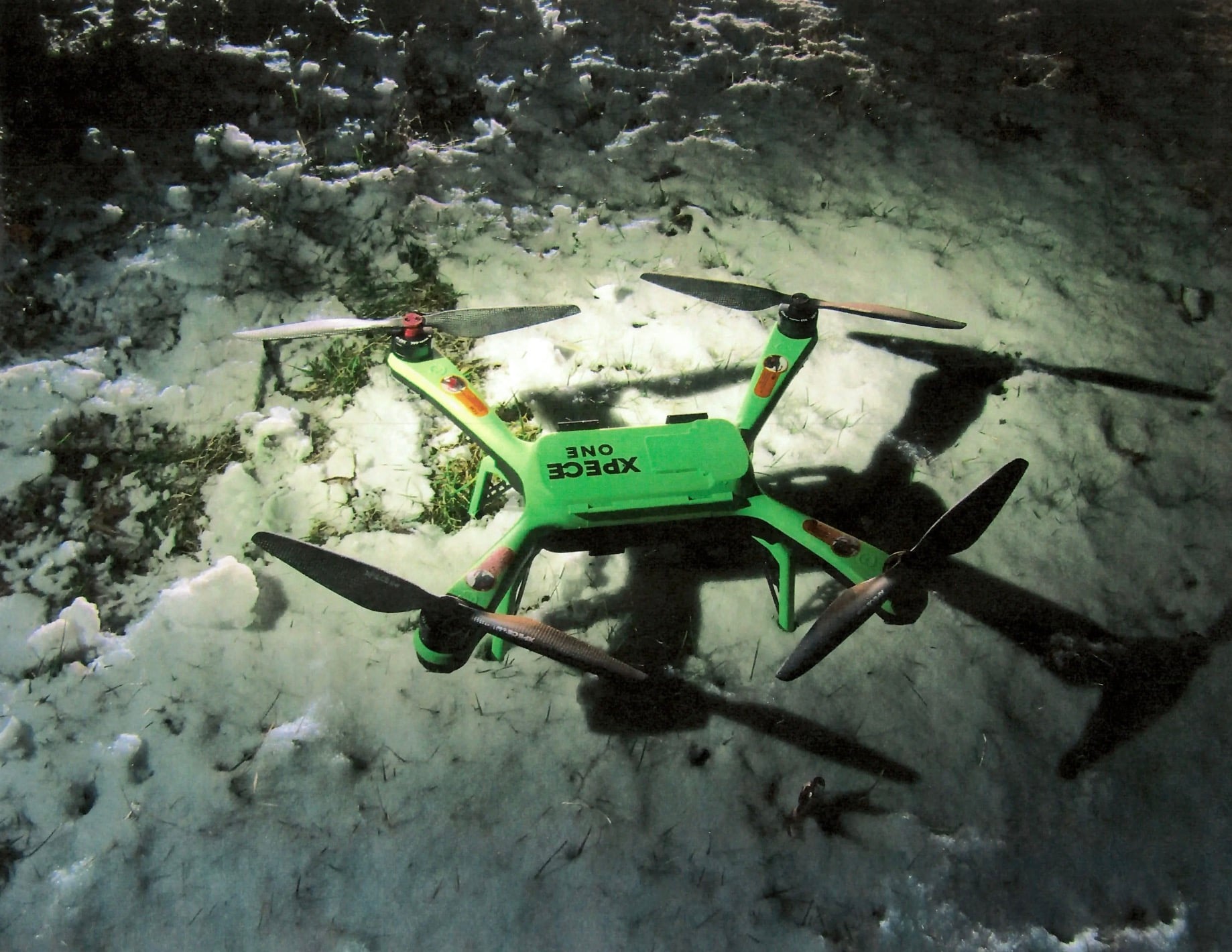
At 1 a.m. on a Saturday, a drone flew into the secured grounds of Marcy Correctional Facility in upstate New York and released a package between two dormitory buildings. Guards found it before any inmate did. The wires sticking out of the bundle looked suspicious enough that the State Police Bomb Squad was called in. Once cleared, officers opened it and found two eight-inch double-edged knives, 530 grams of what appeared to be marijuana, five pieces of paper saturated in intoxicating chemicals, a cell phone, hair clippers, and four bandanas. Investigators recovered the drone outside the facility’s fence line.
- The Incident: A drone airdropped a contraband package inside Marcy Correctional Facility in New York State at approximately 1 a.m. last Saturday.
- What Was Inside: Two eight-inch double-edged knives, 530 grams of suspected marijuana, five chemically saturated pieces of paper, a cell phone, hair clippers, and four bandanas.
- The Legislative Hook: New York corrections officials are using the incident to press the state legislature to pass Gov. Kathy Hochul‘s proposed anti-drone legislation.
- The Source: The New York Post first reported the incident on Tuesday, citing the New York State Department of Corrections and Community Supervision.
The Marcy Drop Is Another Entry in a Long National Pattern
Drone contraband runs at U.S. correctional facilities are no longer rare incidents that make local news. They are a documented, recurring security problem from coast to coast. As DroneXL reported in December 2025, drones have effectively become the most reliable logistics network that prisons never wanted, moving phones, drugs, and weapons over fence lines that corrections departments spent years hardening against ground-level smuggling. The Marcy incident follows the same playbook: a nighttime run, a drop between buildings, and a package designed to blend in until an inmate collected it.
What made Marcy different was the weapon payload. Two eight-inch double-edged knives inside a prison are not a quality-of-life concern. They are a direct threat to staff and incarcerated people alike. Georgia authorities arrested three people last November after a similar nighttime drone run at Washington State Prison, and Oklahoma prisons seized roughly 6,000 illegal phones in a single year, many delivered by drone, before the state started investing in countermeasures. New York is now in that same conversation.
DOCCS Commissioner Calls It an Escalating Threat
New York State Department of Corrections and Community Supervision Commissioner Daniel Martuscello III stated that drone contraband delivery is not a fringe problem but a growing one. “The use of drones to deliver weapons, drugs, and cell phones is an evolving but imminent threat that our correctional system is facing as we continue to close off other means of introducing contraband into our facilities,” Martuscello said in a statement following the Marcy incident.


That framing is accurate. As corrections departments have tightened phone detection, mail screening, and visitor protocols, smugglers have shifted the problem overhead. Canada’s dedicated anti-drone prison task force cut contraband drops by 50% in nine months at four Kingston-area federal facilities by combining airspace monitoring with ground response teams. That kind of result requires investment in detection technology first — something New York currently lacks at scale.
Hochul’s Proposed Legislation: What It Would Actually Do
Gov. Hochul’s draft proposal would address drone-based contraband through four distinct mechanisms: a new criminal offense for unlawful drone activity, restrictions on drone flights over sensitive locations including correctional facilities, expanded law enforcement training for drone tracking, and a state-approved list of drones and drone mitigation technology eligible for government purchase.
That last element matters. Right now, the legal and procurement path for deploying counter-drone technology at state facilities in New York is unclear. Federal law governs airspace, and only certain federal agencies have explicit authority to disable or intercept drones. A state-approved tech list would at least give corrections departments a framework for buying detection equipment — the passive kind, like RF sensors and acoustic monitors — without running into federal preemption issues. Michigan’s 15-bill drone package, introduced earlier this year, drew preemption warnings from Michigan’s own Aeronautics Commission despite its authors’ claims to the contrary.
Tennessee requested $1.7 million in drone detection technology from state lawmakers earlier this year, with corrections officials framing it as a non-negotiable public safety line item. New York’s approach appears to go further by trying to create a legal architecture around the technology spending, not just fund the purchases.
The Drone Was Recovered. The Operator Was Not.
Investigators recovered the drone outside the facility perimeter. That is useful evidence, but it does not mean an arrest is imminent. The operator almost certainly flew from a distance and left the area before the package was found. A California case from October 2024 showed how difficult drone drug trafficking prosecutions can be even when law enforcement has video, flight data, and a recovered aircraft. The DOCCS investigation is ongoing, and officials said anyone involved in the delivery will face prosecution.
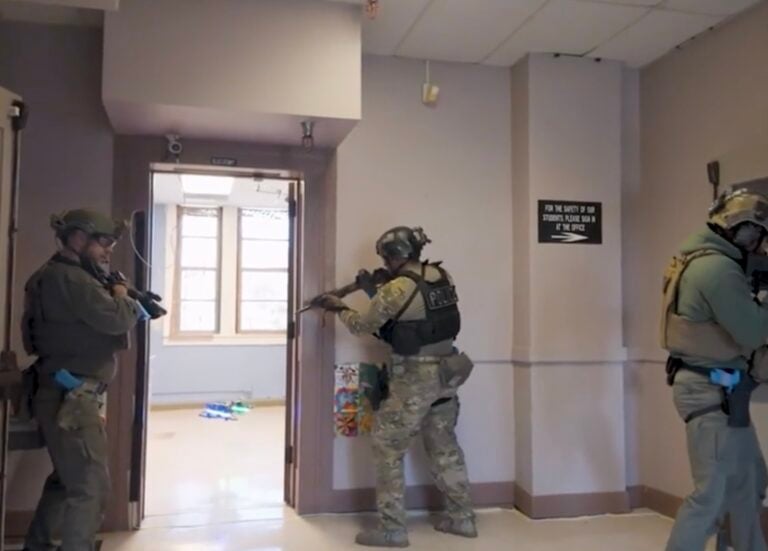
The State Police Bomb Squad response to what turned out to be contraband, not a device, also illustrates how these incidents tax law enforcement resources. Every unidentified drone drop requires a protocol response. At 1 a.m., that means calling in specialized personnel for what may be a bag of bandanas and a burner phone.
DroneXL’s Take
The Marcy drop is clean, well-documented evidence of exactly the threat corrections officials have been describing for two years. Knives, drugs, a phone, dropped between dormitory buildings in the middle of the night. The drone was recovered. Nobody was arrested at the scene. That gap between incident and accountability is the actual problem Hochul’s legislation is trying to close.
The legislation’s strength is in the approved-technology list. Detection is where states can legally act right now without federal conflicts. Interdiction — physically stopping or taking down a drone — remains a federal authority issue that no state bill has cleanly solved yet. If New York focuses its rollout on detection infrastructure and prosecution tools rather than interdiction claims, it has a better chance of surviving legal challenge than Michigan’s package did.
New York is not ahead of this curve. It’s catching up. Expect the Marcy incident to appear in legislative testimony within the month, and expect the approved-tech list provision to be the one that actually moves procurement budgets in facilities across the state within the next six months.
The harder truth is that detection alone won’t stop determined operators. It will raise the cost and risk of getting caught. For now, that’s the realistic goal.
Editorial Note: AI tools were used to assist with research and archive retrieval for this article. All reporting, analysis, and editorial perspectives are by Haye Kesteloo.
Discover more from DroneXL.co
Subscribe to get the latest posts sent to your email.
Check out our Classic Line of T-Shirts, Polos, Hoodies and more in our new store today!

MAKE YOUR VOICE HEARD
Proposed legislation threatens your ability to use drones for fun, work, and safety. The Drone Advocacy Alliance is fighting to ensure your voice is heard in these critical policy discussions.Join us and tell your elected officials to protect your right to fly.

Get your Part 107 Certificate
Pass the Part 107 test and take to the skies with the Pilot Institute. We have helped thousands of people become airplane and commercial drone pilots. Our courses are designed by industry experts to help you pass FAA tests and achieve your dreams.

Copyright © DroneXL.co 2026. All rights reserved. The content, images, and intellectual property on this website are protected by copyright law. Reproduction or distribution of any material without prior written permission from DroneXL.co is strictly prohibited. For permissions and inquiries, please contact us first. DroneXL.co is a proud partner of the Drone Advocacy Alliance. Be sure to check out DroneXL's sister site, EVXL.co, for all the latest news on electric vehicles.
FTC: DroneXL.co is an Amazon Associate and uses affiliate links that can generate income from qualifying purchases. We do not sell, share, rent out, or spam your email.






The problem with drone intrusion is only going to get worse with DJI out of the picture. The majority of DJI machines come remote ID built in and it can’t be turned off. Which the explosion of FPV drones most do not have remote ID on them and it is the operators obligation to put an aftermarket module on their machines. FPVs are fast, cheap and almost untraceable. FPVs are the new equivalent of burner phones for drug deals. And the NDAA just created a market for them.