Welcome to your weekly UAS news update. We have three stories for you this week. Zipline rolls out software that’s going to make its drone deliveries a lot quieter. Then we have a judge handing Alibaba a win over a Pentagon lobbying law. And finally, Michigan is funding some drone organ flights. That’s very interesting. Let’s get to it.
Zipline Claims 68% Less Noise per Flight, From Its Own Modeling
First up this week, Zipline says its delivery drones are now flying quieter. The company calls it sound-optimized dynamic flying, and it’s now running across the entire fleet. Zipline claims a 68% drop in overall sound exposure per flight, which is really impressive, and peak volume is down 24%.
Both of these numbers compare against the 2025 fleet and include other hardware and software changes, so Zipline hasn’t said how much comes from the new flight profile alone. Of course, they come from Zipline’s own modeling, not from independent testing. So take them with a grain of salt, but I’m sure there will be additional studies done on that.
Here’s how it works. The drone reads real-time wind data and then uses an acoustic model to adjust its speed and altitude in order to cut the noise. It might dip the nose a little bit to pick up some speed, for example, like a cyclist coasting downhill. The aircraft is also a fixed wing, if you haven’t seen it before, so it can shut down all of the motors except one when it’s cruising, which reduces the noise as well.
Zipline actually says that its flights are 53 seconds shorter and use 21% less energy. So it sounds like a win-win all the way around, which is kind of nice.
You might say, why do we even care? Well, noise complaints have been growing quite a bit. Residents in Richardson, Texas, for example, have complained about the Amazon drones flying over their community. I think community acceptance is going to decide how fast the drone delivery space grows, or doesn’t grow, because of all of the pushback.
A Judge Shields Alibaba From the Pentagon’s Lobbying Law; DJI Has No Such Ruling
A judge in San Jose has blocked the Pentagon from enforcing a lobbying law against Alibaba. Judge Eumi Lee found the law likely violates the First Amendment. It bars Pentagon contracts with any company whose lobbying firm also lobbies for a company on the Pentagon’s list of “Chinese military companies.”
That law took effect on June 30, and the list is what they call the Section 1260H list. Now, why do we care about this? Well, DJI has been on that list since October 2022.
Alibaba says that it lost all of its lobbyists. DJI, meanwhile, still had two outside firms lobbying for its U.S. arm after the law took effect, according to July-to-September lobbying reports. CLS Strategies reported $170,000 in DJI income for the quarter, and Liberty Government Affairs reported $27,500. That breaks no rule: the law doesn’t stop a firm from keeping a listed client, it stops the Pentagon from contracting with that firm’s other clients.
Now, keep in mind that the ruling only protects Alibaba. Any company that shares a lobbyist with DJI gets no such shield. A DroneXL search of federal court dockets on CourtListener on October 27 found no DJI challenge to this law, so watch whether that changes. Also remember that a separate rule, Section 805 of the 2024 defense act, already bars the Pentagon from buying from listed companies directly, and its ban on indirect purchases through suppliers starts June 30, 2027.
Michigan Puts $245,000 Behind Drone Organ Flights to Michigan Medicine
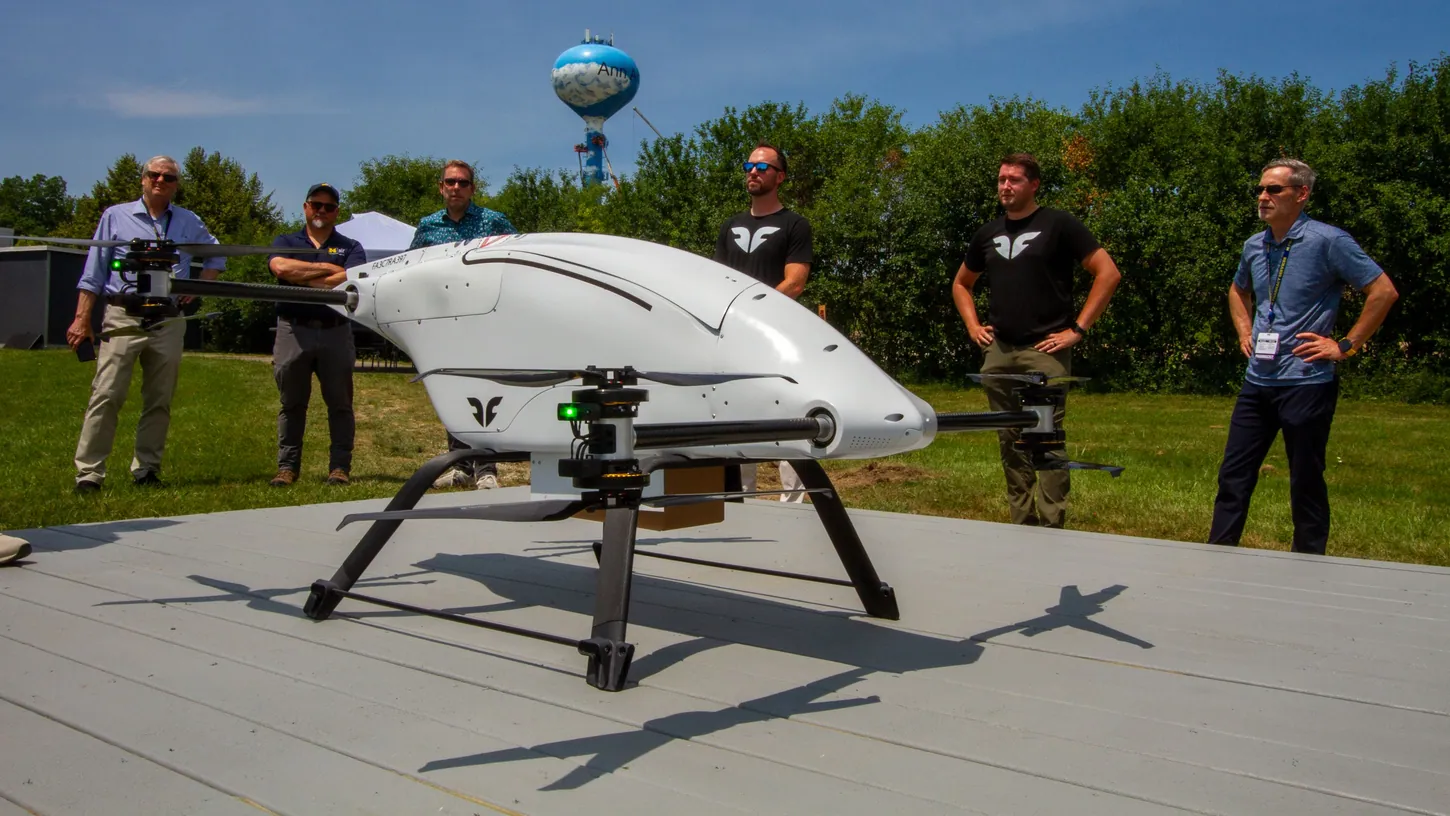
And then finally, Michigan is putting real money into drone projects, which is kind of cool. The state announced 12 grants worth about $1.7 million on October 21. The biggest one is $245,000, and it’s going to blueflite, which is going to test flying donor organs to Michigan Medicine.
Michigan Medicine is in Ann Arbor, and the testing starts at the Mcity Test Facility.
The partners set public targets. The goal is at least 20 demonstration missions. They want to cut last-mile transport time by 30%, which is kind of the big goal here, and they also want 95% mission reliability, which surprisingly is actually, I think, a pretty low number. Remember, those are goals, not results.
Eight of the 12 projects are in Detroit, and they total $990,000, so almost a million just for Detroit. Another grant gives the Battle Creek Police a drone as first responder program.
They set clear targets here, and hopefully we’ll see the results later, as I personally think this is a great use of drone tech. I’ve mentioned this before. As far as drone delivery goes, this is what makes the most sense to me: something that’s going to save people’s lives and hopefully help get people back on their feet through organ transport. This is very time critical, as you can imagine. Minutes lost in traffic can really hurt the outcome.
The conversation is going to continue on Post Flight, where we’re going to talk about all these stories uncensored in the premium community. There’s a link in the description if you want to participate. We’ll see you for the live Q&A on Monday. Have a great weekend, and thank you for watching.
This article is based on a video from our YouTube partner Greg Reverdiau. Watch the full weekly UAS news update on the Pilot Institute YouTube channel, and find more of Greg’s work on his DroneXL author page.