We’ve covered the Chinese drone dilemma facing U.S. police departments for years, but now Canada’s national police force just exposed the same uncomfortable truth: security concerns are easy to voice, but the bill to address them is another matter entirely.
The Royal Canadian Mounted Police (RCMP) has officially restricted 973 Chinese-made drones to non-sensitive operations, acknowledging that 80% of its entire drone fleet presents “high security risks, primarily due to their country of origin,” according to a new CBC News report published today, December 2, 2025.
The catch? Replacing those drones would cost Canadian taxpayers over $30 million CAD (approximately $21.4 million USD), roughly $35,000 per device. That’s nearly double the cost of comparable Chinese alternatives.
RCMP Drone Fleet Breakdown
Quantity
Total Drone Fleet
1,230
Chinese-Made (Restricted)
973 (80%)
French Drones
112
U.S. Drones
96
Belgian Drones
24
Canadian Drones
0
RCMP drone fleet composition as of December 2025. Source: CBC News / Conservative Sen. Claude Carignan.
What the RCMP Can and Cannot Do With Its Chinese Drones
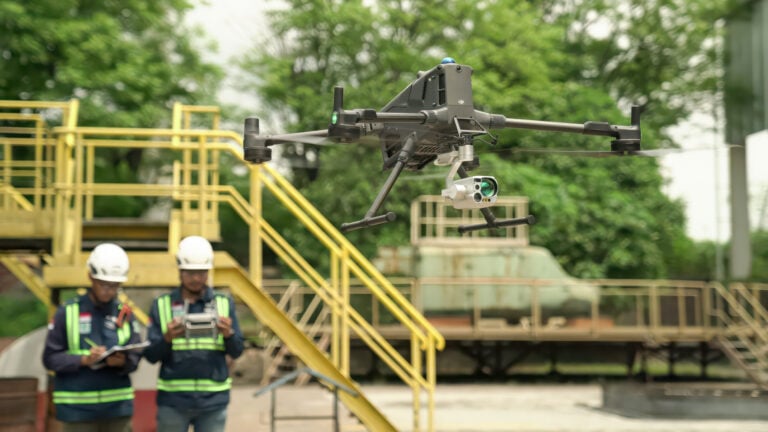
Under the new restrictions, the RCMP says it restricts Chinese drones to “non-sensitive operations” such as locating missing persons, investigating car thefts, and community policing.
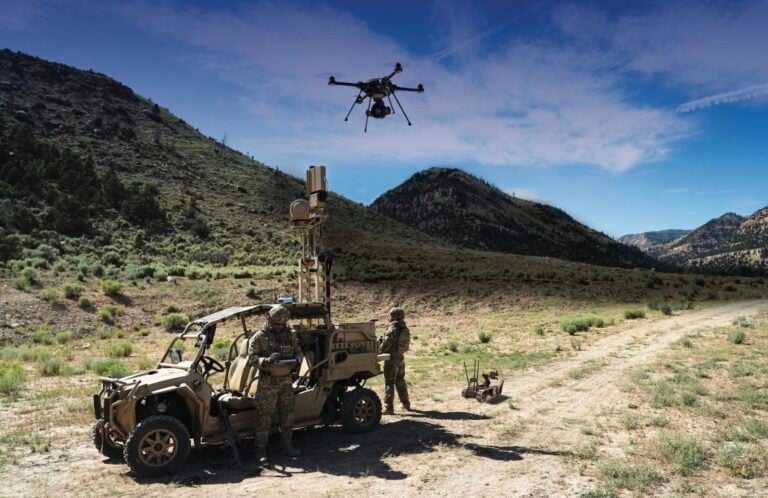
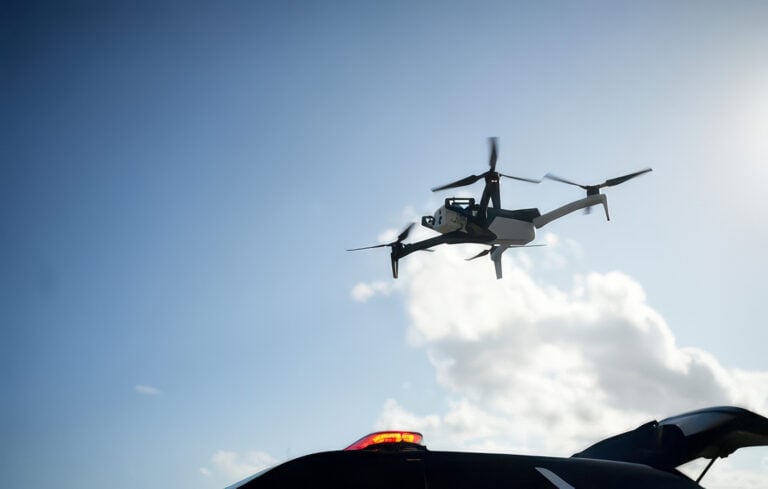
For anything classified as sensitive, including VIP protection for ministers and foreign dignitaries, border integrity operations, and investigations involving U.S. authorities, the RCMP relies exclusively on its fleet of Western-made drones: 112 from France, 96 from the United States, and 24 from Belgium.
Notably absent from that list? Canadian-made drones. According to Conservative Sen. Claude Carignan, the RCMP does not use any Canadian drones for these operations, a striking detail given the security concerns driving the restrictions.
The RCMP says the Chinese drones were purchased before restrictions began in 2023. They’ve proven cost-effective for day-to-day operations.
“The use of RPAS is a cost-effective alternative to deploying a helicopter or fixed-wing aircraft for investigative operations, and they can access difficult locations, saving time and money by directing police resources to the right locations,” the RCMP stated in a written response to the Senate’s national security committee.
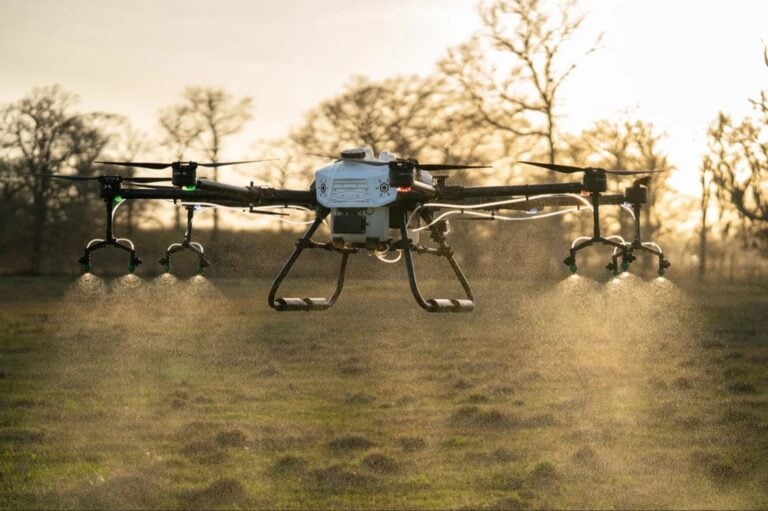
Photo credit: DroneXL
The “Mitigation After the Fact” Problem
Security experts aren’t letting the RCMP off the hook for how it got into this position.
“Any connected device raises questions about security vulnerabilities,” said Ygal Bendavid, a professor specializing in operations management at Université du Québec à Montréal, highlighting concerns about the drones’ communication and data-transmission systems.
“The concern is legitimate and as a precautionary measure, they have to be careful,” Bendavid added.
Wesley Wark of the Centre for International Governance Innovation offered a sharper critique, telling CBC that the RCMP appears to have purchased the drones “without much thought to strategic needs or security issues.”
Wark’s assessment cuts to the heart of the problem: the RCMP now finds itself implementing security restrictions on equipment it already owns, a pattern we’ve seen repeated across North American law enforcement agencies.
The Cost Gap Is Global
The RCMP’s $30 million replacement estimate aligns with what DroneXL has documented across U.S. agencies for years. According to an internal Department of Interior memo we reported on in 2021, so-called “Blue sUAS” alternatives approved by the Pentagon are 8 to 14 times more expensive than comparable DJI systems.
That same memo noted that switching to Blue sUAS reduced the Department of Interior’s sensor capacity by 95%, with the military-focused alternatives suitable for only 20% of civilian applications.
More recently, we covered Carbon County Sheriff’s Office in Utah, where officials explicitly chose Chinese-made DJI and Autel drones because American alternatives would have cost 8 to 14 times more per unit, not including maintenance and training.
And in Florida, the state destroyed $200 million worth of functional public safety drones citing Chinese espionage threats, provided only $25 million for replacements, and never published the security analysis that was supposed to justify the ban.
Canada’s Broader Drone Security Push
This RCMP disclosure comes as Canada plans to significantly expand drone surveillance capabilities along the U.S.-Canada border, as we reported in December 2024. The initiative is part of broader negotiations with the incoming U.S. administration over border security measures.
Whether that expansion will rely on expensive Western alternatives or create yet another Chinese drone dilemma remains to be seen.
DroneXL’s Take
The RCMP’s situation is a textbook case of what happens when security concerns collide with fiscal reality, and it’s playing out the same way from Florida to Ottawa.
The pattern is predictable by now: government agencies buy Chinese drones because they work well and cost a fraction of alternatives. Years later, security concerns emerge. And then everyone discovers that “just replace them” means millions in taxpayer dollars for equipment that often performs worse.
The most telling detail here isn’t the $30 million price tag. It’s that the RCMP uses drones from France, Belgium, and the United States for sensitive operations, but not a single Canadian-made drone. If the concern is really about data security and national sovereignty, why isn’t Canada investing in domestic alternatives?
The RCMP’s admission that non-Chinese drones cost nearly twice as much confirms what U.S. police chiefs have been saying for years: the technology gap is real, and so is the price gap. Until Western manufacturers can compete on both fronts, agencies will keep finding themselves stuck between security concerns they can voice and replacement costs they can’t afford.
What do you think about the RCMP’s drone restrictions? Should agencies prioritize security concerns over operational costs? Share your thoughts in the comments below.
Subscribe to get the latest posts sent to your email.
Check out our Classic Line of T-Shirts, Polos, Hoodies and more in our new store today!
MAKE YOUR VOICE HEARD
Proposed legislation threatens your ability to use drones for fun, work, and safety. The Drone Advocacy Alliance is fighting to ensure your voice is heard in these critical policy discussions.Join us and tell your elected officials to protect your right to fly.
Pass the Part 107 test and take to the skies with the Pilot Institute. We have helped thousands of people become airplane and commercial drone pilots. Our courses are designed by industry experts to help you pass FAA tests and achieve your dreams.
FTC: DroneXL.co is an Amazon Associate and uses affiliate links that can generate income from qualifying purchases. We do not sell, share, rent out, or spam your email.
Haye Kesteloo
Haye Kesteloo is a leading drone industry expert and Editor in Chief of DroneXL.co and EVXL.co, where he covers drone technology, industry developments, and electric mobility trends. With over nine years of specialized coverage in unmanned aerial systems, his insights have been featured in The New York Times, The Financial Times, and cited by The Brookings Institute, Foreign Policy, Politico and others.
Before founding DroneXL.co, Kesteloo built his expertise at DroneDJ. He currently co-hosts the PiXL Drone Show on YouTube and podcast platforms, sharing industry insights with a global audience. His reporting has influenced policy discussions and been referenced in federal documents, establishing him as an authoritative voice in drone technology and regulation. He can be reached at haye @ dronexl.co or @hayekesteloo.