Amazon Prime Air MK30 at XPONENTIAL Europe Düsseldorf: A Heavy Drone With a Crash Problem
Check out the Best Deals on Amazon for DJI Drones today!
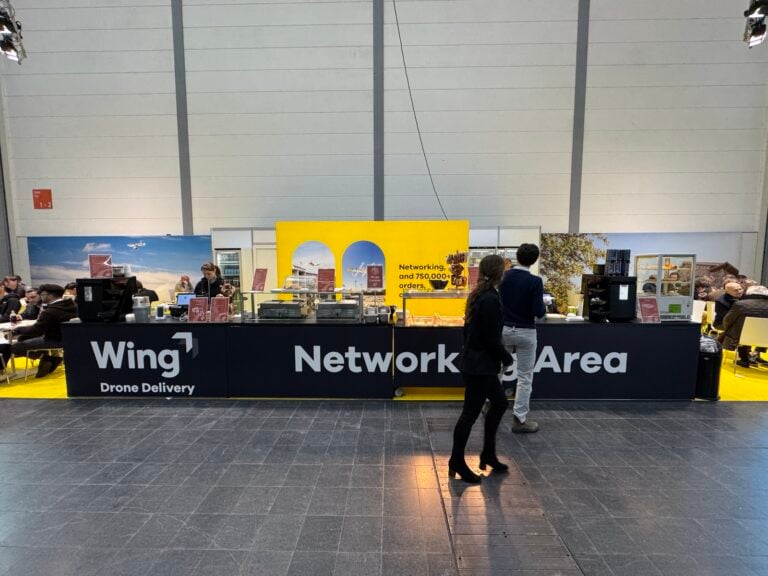
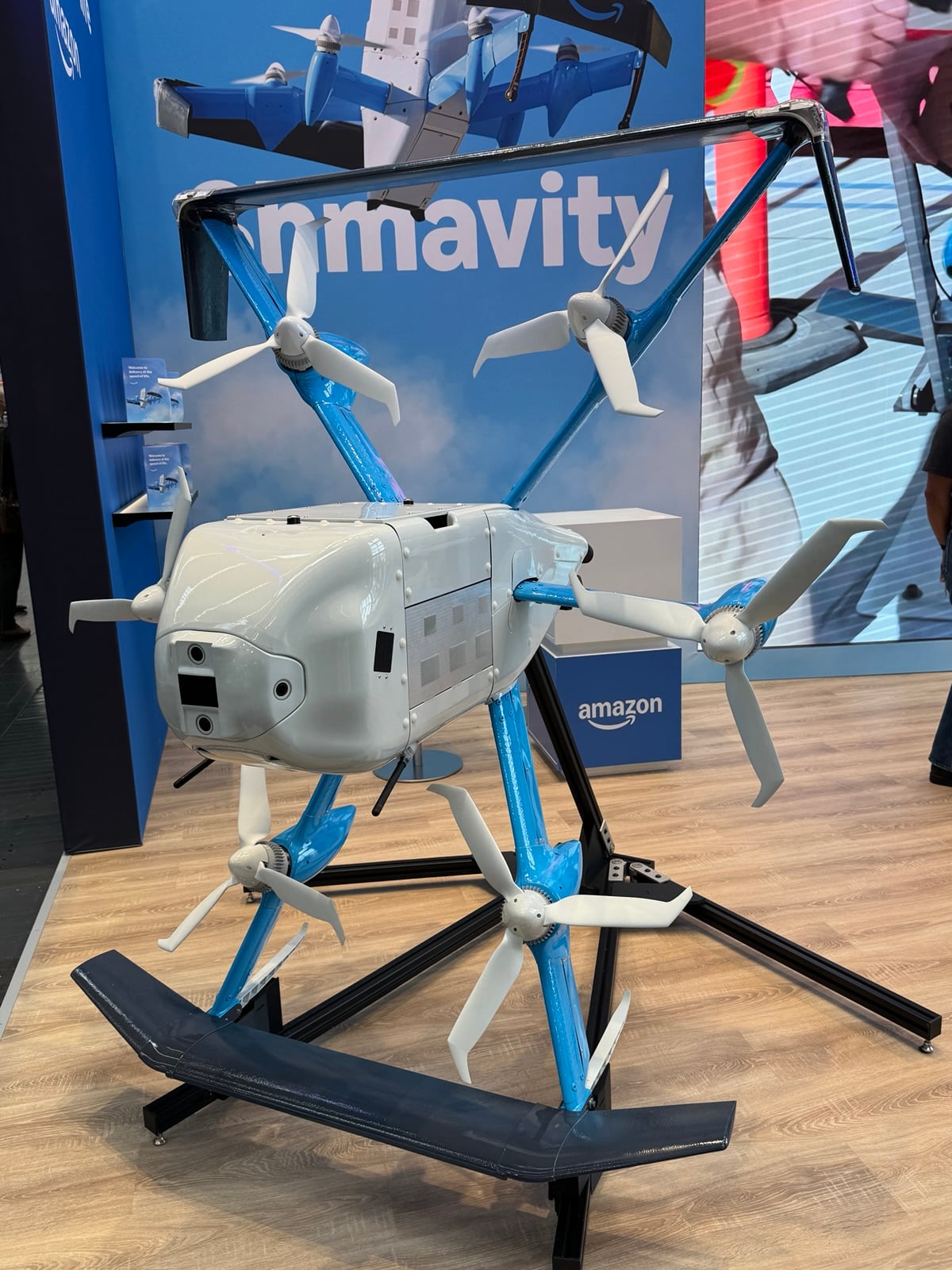
Amazon Prime Air brought its MK30 delivery drone to XPONENTIAL Europe in Düsseldorf, Germany last week, where I spent considerable time with a company representative discussing the aircraft’s design. I came away with more questions than answers. The MK30 stands roughly five feet tall with a wingspan of about five and a half feet, weighs 83 pounds at maximum takeoff weight, and carries up to five pounds of cargo. That means 78 pounds of aircraft for five pounds of payload. Compared to competitors like Wing, Wingcopter, and Zipline, this is a very large, very heavy machine. Its crash record reflects that.
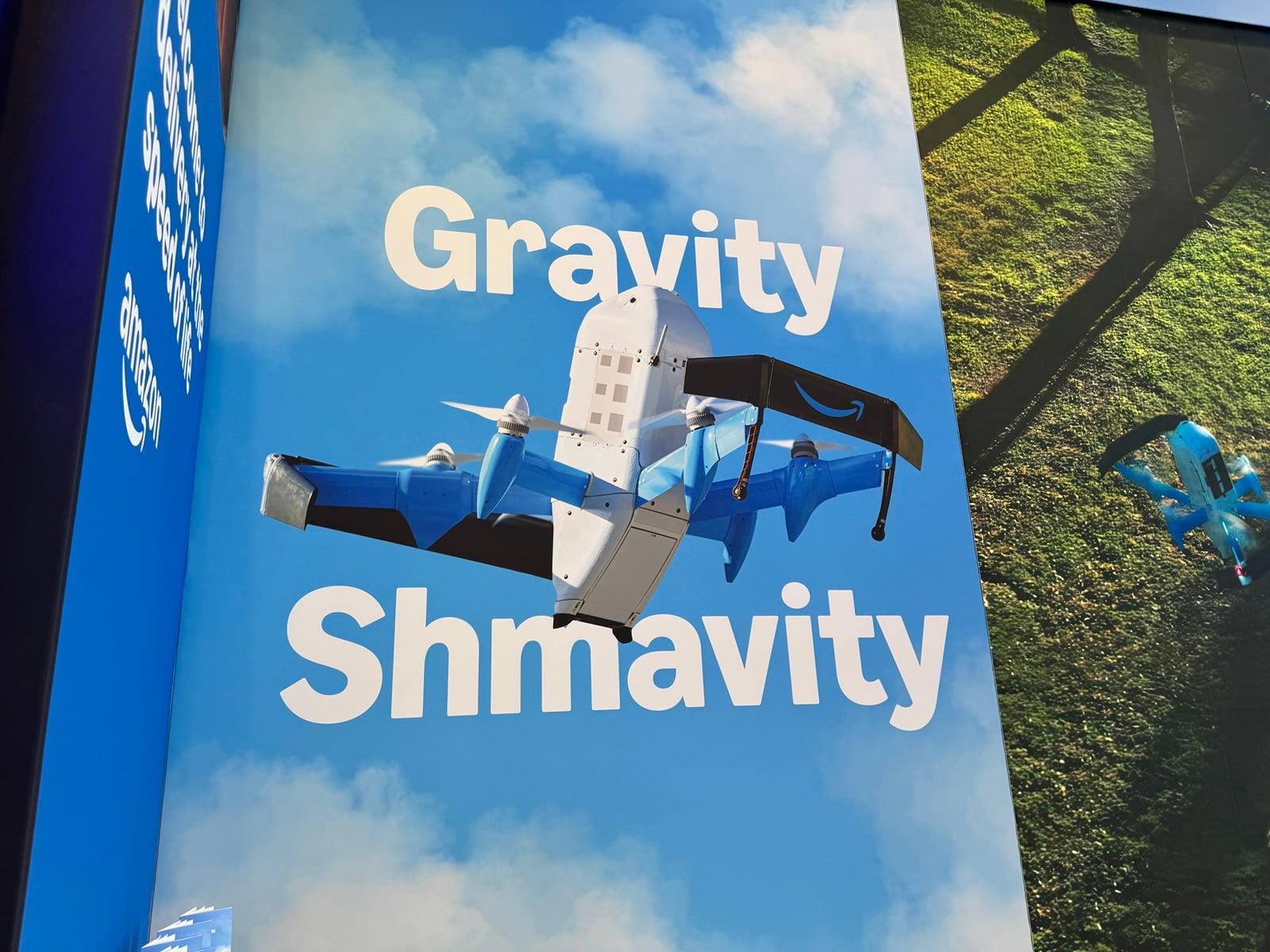
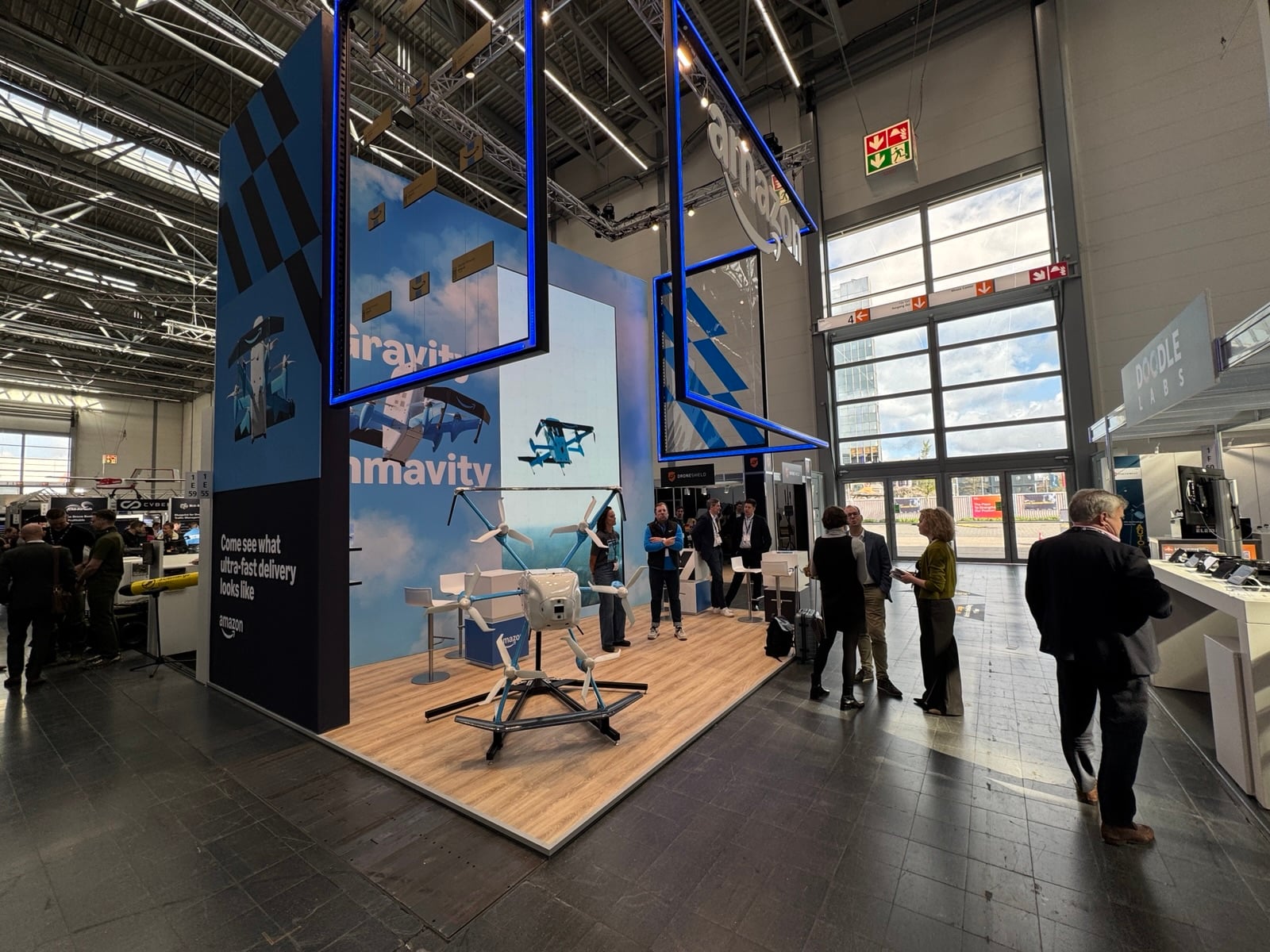
Amazon’s booth ran with the slogan “Gravity Shmavity.” The aircraft in person is hard to miss. Up close, it’s a serious piece of machinery, and the question of whether it’s the right piece of machinery for suburban delivery has become harder to ignore. According to Amazon’s own published specifications, the MK30 is fully electric, FAA-certified for Beyond Visual Line of Sight (BVLOS) operations, and designed to deliver within 60 minutes of ordering.
What the MK30 Actually Is
The MK30 is a hybrid multicopter fixed-wing drone, classified in FAA environmental assessment documents as a “tail-sitter” eVTOL (electric Vertical Takeoff and Landing) aircraft. Its airframe uses staggered tandem wings for stable wing-borne flight, with six propulsors handling both vertical takeoff and horizontal cruise. It can fly up to 400 feet above ground level at a maximum cruise speed of 73 mph and has a maximum operating range of 7.5 miles.
That combination of rotors for vertical flight and fixed wings for efficient cruising is the same general concept used by Wing, Zipline, and Wingcopter. The difference is size. According to our previous DroneXL reporting, Zipline’s P2 and Wing’s delivery drones together weigh between 10 and 40 pounds. Amazon’s MK30 weighs 83 pounds at maximum takeoff weight. That’s not a design footnote. It’s the central tension of the entire program.
During delivery, the MK30 descends from its en-route altitude to about 140 feet, then drops vertically to roughly 12 feet above the delivery point, where it hovers and releases the package. Amazon packages the item in a cushioned box. The box hits your driveway. That’s the system.
Amazon Built This Drone From Scratch
The representative I spoke with at XPONENTIAL Europe confirmed what Amazon has said publicly: the company went back to first principles and designed the MK30 from scratch, rather than adapting an existing platform. Amazon’s chief project engineer Stephen Wells described it as “the first drone we have developed from the ground up using a requirements-based process.” The engineering team spent nearly two years on development before the MK30 flew commercially.
That approach produced a capable aircraft by technical standards. The MK30 went through over 1,070 flight hours across more than 6,300 flights during development, culminating in 360 hours of FAA certification flights at Amazon’s Pendleton, Oregon test site. The Amazon representative at the booth expressed strong confidence in the platform’s safety architecture and ongoing improvements. The problem isn’t that Amazon didn’t test it. The problem is what happened after it deployed.
Amazon’s MK30 Crash Record Is Getting Long
The MK30’s incident log reads as a pattern, not a series of isolated events. Amazon’s drone program across all models crashed at least eight times in a 13-month period around 2021 during development, including one incident that caused an acres-wide brush fire. Things didn’t improve cleanly with the MK30’s commercial launch.
In December 2024, two MK30s crashed at Amazon’s Oregon testing facility after faulty LiDAR sensors mistakenly read rain as the ground, cutting motor power mid-flight. Amazon paused all U.S. operations in January 2025 while the FAA reviewed software fixes. Then in October 2025, two MK30 drones struck the same construction crane in Tolleson, Arizona within minutes of each other, crashing into nearby parking lots and prompting FAA and NTSB investigations. As DroneXL reported at the time in Amazon Drone Disaster: Two Prime Air Drones Slam Into Crane, Operations Halted Again, Amazon voluntarily paused operations before later resuming flights.

In November 2025, an MK30 clipped an internet cable in Waco, Texas, just 13 days after Amazon launched service there. Then in February 2026, a Prime Air MK30 collided with the side of an apartment building in Richardson, Texas, crashing to the ground as a bystander recorded propellers still spinning and smelled smoke. As we detailed in our coverage of the Waco cable incident and the Richardson crash, no serious injuries have occurred, but the margin has been uncomfortably thin on multiple occasions.

The Aircraft Owners and Pilots Association (AOPA) has cited the Arizona crane collision as evidence the FAA is moving too quickly on its proposed Part 108 rule, which would expand commercial drone operations by allowing detect-and-avoid systems to replace human visual observers.

Competitors Have a Very Different Record
The gap between Amazon’s safety record and its competitors’ is not subtle. Zipline has logged over 125 million autonomous miles with no serious injuries reported. Zipline’s Platform 2 drone stays at 300 feet altitude throughout delivery and lowers packages on a tether, never exposing its airframe to rooftop level. Each drone is equipped with a parachute as a backup system.
Wing, Alphabet’s drone delivery unit, has completed hundreds of thousands of deliveries across the U.S. and internationally with no comparable pattern of crashes into buildings, cranes, or infrastructure. The physics of lighter aircraft help: when a 15-pound drone malfunctions, it’s a manageable event. When an 83-pound drone hits an apartment building at speed, people start smelling smoke and watching propeller fragments land on the sidewalk below. The FAA has given Wing and Zipline broader operating exemptions precisely because those aircraft carry significantly lower kinetic energy in a failure scenario. It is worth noting that Zipline accumulated much of its flight record in rural Africa delivering medical supplies — a very different operating environment from the suburban U.S. corridors Amazon must navigate around cranes, power lines, and apartment buildings.
Wingcopter, the German VTOL drone manufacturer uses a similar smaller-is-safer philosophy: aircraft that transition cleanly between vertical and horizontal flight without the bulk that makes the MK30 such an outlier. As we covered in our earlier piece on the Amazon Prime Air MK30 reveal, the hexacopter-plus-fixed-wing approach was already a departure from the direction competitors were taking.
The Economics Make the Design Question Sharper
As of February 2026, Prime Air had made roughly 16,000 deliveries across operations in Texas, Michigan, Arizona, Florida, and Kansas. Amazon’s stated goal is 500 million drone deliveries per year by the end of the decade. The gap between those two numbers is enormous. Internal projections reported in 2022 showed delivery costs around $63 per package against customer pricing of $4.99 to $9.99. Amazon can absorb that loss. The question is whether scale ever closes it, and whether the MK30’s design can get there without accumulating a more serious incident along the way.
As we analyzed in Amazon’s Prime Air: Progress Meets Reality In Drone Delivery, the company has consistently prioritized in-house development over the partnership model that Walmart used to build a more reliable early record with Wing and Zipline. That stubbornness is costing Amazon in reputational terms, even if its capital reserves make it financially survivable.
DroneXL’s Take
Standing next to the MK30 at XPONENTIAL Europe in Düsseldorf last week, the scale of this aircraft is genuinely striking. I’m 6 feet 5 inches tall, and this drone approaches my shoulder height. It’s an impressive piece of engineering, beautiful in its own industrial way, and the Amazon team clearly believes in it. But I kept coming back to the same thought: if one of these machines fails over a neighborhood, the debris field is not small.
I’ve covered Amazon’s drone delivery program since the MK27 days. The pattern I’ve seen (crash, pause, fix, expand) has repeated itself so many times it’s become the program’s actual operating rhythm. I don’t doubt the engineers are working hard on each fix. What I doubt is whether a drone that weighs 83 pounds was ever the right answer for delivering a five-pound package to a suburban backyard, when competitors solved the same problem with aircraft a fraction of the size.
The “Gravity Shmavity” branding at the booth was charming. The crash record isn’t. The FAA is likely to impose stricter operating restrictions on the MK30 before the end of 2026, particularly if ongoing investigations into the Richardson and Waco incidents surface additional systemic sensor or obstacle-avoidance failures. Amazon will keep expanding; the capital and the determination are both there. But regulators are paying closer attention each time an 83-pound drone hits something it wasn’t supposed to.
DroneXL uses automated tools to support research and source retrieval. All reporting and editorial perspectives are by Haye Kesteloo.
Discover more from DroneXL.co
Subscribe to get the latest posts sent to your email.
Check out our Classic Line of T-Shirts, Polos, Hoodies and more in our new store today!

MAKE YOUR VOICE HEARD
Proposed legislation threatens your ability to use drones for fun, work, and safety. The Drone Advocacy Alliance is fighting to ensure your voice is heard in these critical policy discussions.Join us and tell your elected officials to protect your right to fly.

Get your Part 107 Certificate
Pass the Part 107 test and take to the skies with the Pilot Institute. We have helped thousands of people become airplane and commercial drone pilots. Our courses are designed by industry experts to help you pass FAA tests and achieve your dreams.

Copyright © DroneXL.co 2026. All rights reserved. The content, images, and intellectual property on this website are protected by copyright law. Reproduction or distribution of any material without prior written permission from DroneXL.co is strictly prohibited. For permissions and inquiries, please contact us first. DroneXL.co is a proud partner of the Drone Advocacy Alliance. Be sure to check out DroneXL's sister site, EVXL.co, for all the latest news on electric vehicles.
FTC: DroneXL.co is an Amazon Associate and uses affiliate links that can generate income from qualifying purchases. We do not sell, share, rent out, or spam your email.