
The FBI will field roughly 60 specially trained state and local police officers across FIFA World Cup 2026 venues to detect and electronically disable hostile drones, according to a Bloomberg report published May 15. The bureau takes direct command of counter-drone operations in three U.S. host cities. Department of Homeland Security components cover the other eight.
The 60-officer figure tracks closely with what the bureau told Congress in April, when officials said 45 state and local officers had already been certified for counter-drone work and 61 were projected as the total trained pool before the tournament’s June 11 opening in Mexico City. What is new this week is the operational shape behind the number, including the command split between the bureau and DHS and a live training demonstration at Joe Davis Stadium in Huntsville, Alabama.
I have been tracking this counter-drone buildout for DroneXL since the Trump administration’s $500 million domestic initiative landed last October. The structure was built piece by piece across the fall and winter. The Bloomberg report is the first time the public sees how many badges will actually be authorized to press a button in a stadium next month, and which federal agency holds the radio in each host city.
The Huntsville drill set the tone for what fans will not see
At Joe Davis Stadium in Huntsville, a drone rose from a parking lot and headed toward the soccer field, according to Bloomberg’s reporting. FBI operators positioned roughly 1.6 km (a mile) away detected it electronically, tracked its path, and seized control without firing a shot. Reporters were on hand to watch.
Michael Torphy, the FBI agent leading the bureau’s counter-drone training program, told observers: “That was probably kind of boring. We want this to be boring.”
Devin Kowalski, the FBI assistant director overseeing the Critical Incident Response Group, framed the broader stakes: “Every major public gathering, from a World Cup match to an America 250 celebration, is now a drone environment. The public expects and deserves those skies to be watched.”
The defenses are electronic, not kinetic. Operators use radar and radio-frequency sensors to detect drones entering restricted airspace, then disrupt or override the aircraft’s controls instead of firing nets, guns, or missiles. Local officers participating in the World Cup program are not authorized to use kinetic options that exist elsewhere in the federal arsenal. A follow-up scenario in a nearby park showed a drone hovering overhead as a loudspeaker announced: “This is the FBI. You have violated a no-fly zone. Land your drone immediately and await contact by law enforcement.” The drone drifted off moments later.
FBI takes direct command in three host cities, DHS covers the rest
The bureau will directly oversee counter-drone operations in Los Angeles, Miami, and New York. The remaining eight U.S. host cities run through DHS components, with state and local officers feeding into the program from agencies that include the New York and New Jersey state police, the NYPD, the LAPD, and the Miami-Dade Sheriff’s Office.
The legal authority for those officers to operate counter-drone equipment came late. The Safer Skies Act, passed as part of the 2026 National Defense Authorization Act in December, extended drone mitigation authority to state, local, tribal, and territorial agencies for the first time. Before that, only the Justice Department and DHS could disable a drone federally.
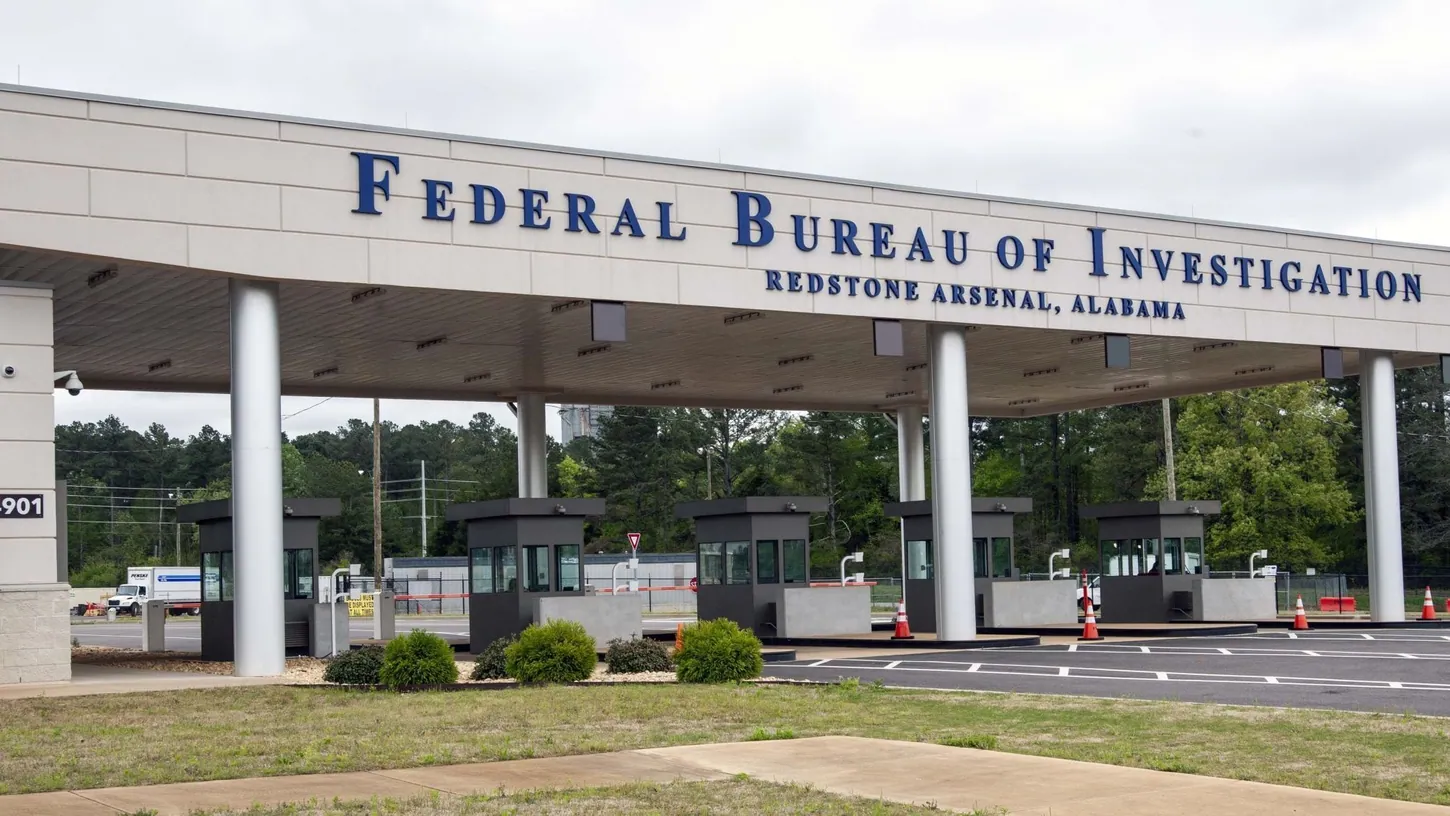
The training pipeline runs through the FBI’s National Counter-UAS Training Center (NCUTC) at Redstone Arsenal in Alabama, which graduated its first class in late December. The flagship course runs two weeks. Without that certificate, an officer cannot operate mitigation equipment funded under the $250 million FEMA counter-UAS grant program announced for World Cup host states in January.
North Texas police are still building mitigation capability four weeks out
NBC 5 Dallas-Fort Worth reported the day before Bloomberg’s piece that Arlington Police, who cover AT&T Stadium and nine World Cup matches, do not yet have the infrastructure to carry out drone mitigation independently. One Arlington operator has completed FBI training. The department will lean on state and federal partners for any real response during the tournament.
Dallas Police, the regional anchor for fan travel and team practice facilities, told NBC 5 its agreement with the federal government is “pending approval.” The department declined to say how many of its officers have completed FBI counter-drone training, citing operational security.
The math is tight elsewhere too. Sixty trained mitigation operators across 11 host cities works out to roughly five or six per city, layered over 104 matches and 39 days of competition. Federal agents and contracted detection vendors expand the footprint, but the certified-officer pool that the Bloomberg report describes is thin coverage on its own.
The threat case rests on stadium incidents and Ukraine’s June 2025 Russia raid
Bloomberg’s reporting walked through the cases the FBI uses to justify the buildup. A Maryland man flew an unregistered DJI Mavic 3 Pro over M&T Bank Stadium during the January 2025 Ravens-Steelers wild-card playoff game, forcing officials to suspend play. He later pleaded guilty to violating national defense airspace restrictions and was sentenced to one year of probation, 100 hours of community service, and a $500 fine.
The bureau also cited a Tennessee man arrested in November 2024 for preparing to launch an explosives-laden drone at a Nashville electrical substation in a plot motivated by white supremacist ideology. Skyler Philippi, 24, pleaded guilty in September 2025 to attempted use of a weapon of mass destruction. Thomas Matthew Crooks, who attempted to assassinate Donald Trump at the Butler, Pennsylvania rally in July 2024, flew a drone over the site before the attack.
The newest reference is the one that changed how federal agencies think about the threat. In June 2025, Ukrainian operatives smuggled first-person-view drones deep into Russian territory and used them to strike strategic bombers parked thousands of miles from the front. American officials concluded similar tactics could theoretically be replicated inside the U.S., according to Bloomberg’s source familiar with the program.
DroneXL’s Take
The Bloomberg piece is the first time the public sees the operational shape of the FBI’s counter-drone buildup, and the headcount is smaller than the political framing has suggested. Sixty trained mitigation operators is not nothing. It is also not a force that can blanket 11 metro areas across a 39-day tournament without heavy reliance on federal agents and contracted detection vendors.
I covered the NCUTC launch on December 31. I covered the Safer Skies Act House passage on December 13. I covered the $500 million domestic counter-drone initiative when it landed in October, and the FAA No Drone Zone push two weeks ago. Every piece of the structure has run through DroneXL. What we now know that we did not know two weeks ago is roughly how many certified badges will be on the floor, and which agency owns the airspace in each host city.
Watch the week of June 6 to June 11. That is when the FAA’s normal Temporary Flight Restriction NOTAM publication window opens for the opening U.S. matches. The first concrete test is whether fan festival airspace boundaries get published with enough lead time for legitimate Part 107 commercial operators to plan around them. The second is whether the North Texas departments that NBC 5 documented as still building infrastructure get those gaps closed by kickoff. NFL data already shows more than 2,000 drone incursions per season at league stadiums in recent years, almost all from recreational pilots who never checked a NOTAM. A 60-officer mitigation pool, however well trained, is going to spend most of its time on careless and clueless cases, not on the Operation Spider’s Web scenario the bureau uses to justify the buildup.
One question the Bloomberg piece raised and did not answer is what happens when a mitigation operation under DHS command intersects with a legitimate Part 107 operator outside a stadium TFR but inside the wider area DHS or FBI considers protected airspace. Local officers are not authorized to use kinetic options. The boundary between detect-and-track and disrupt-or-override is exactly where Part 107 fleets will be exposed during the tournament. Whether that boundary gets clarified in writing before June 11 is worth watching, not predicting.
Source: Bloomberg, NBC 5 Dallas-Fort Worth.
DroneXL uses automated tools to support research and source retrieval. All reporting and editorial perspectives are by Haye Kesteloo.