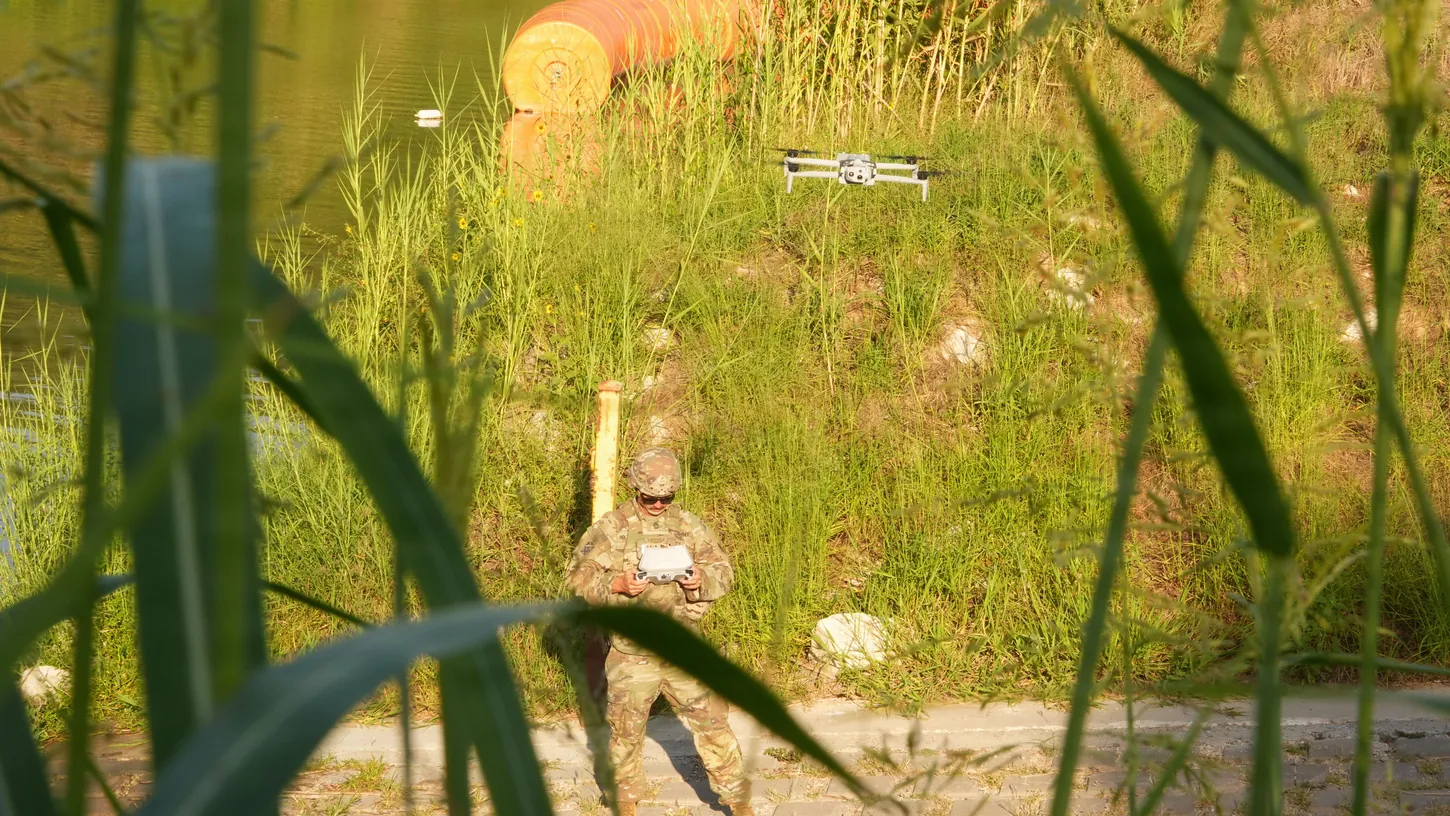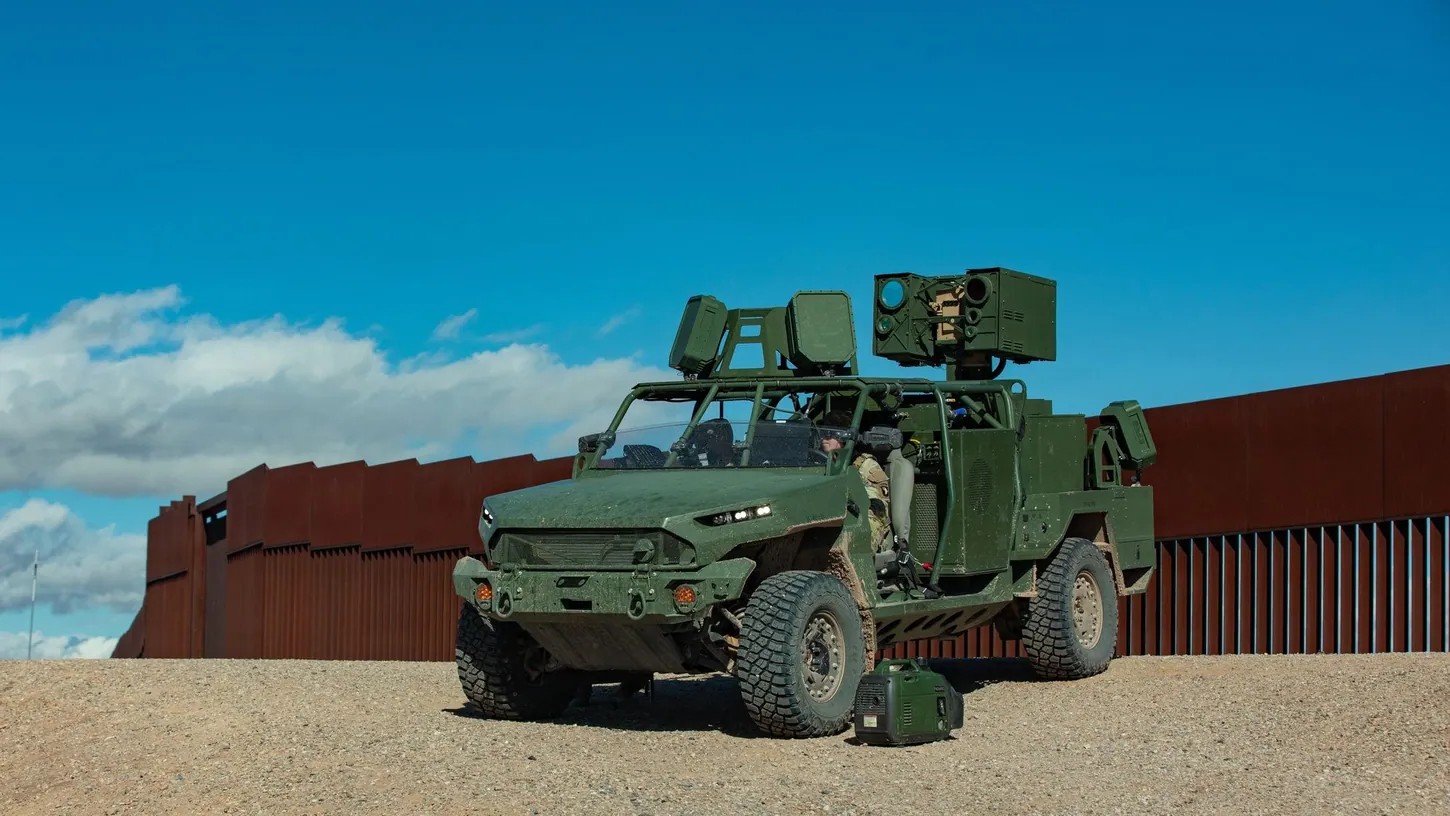
Soldiers from the 101st Airborne Division trained with the Army’s 20-kilowatt counter-drone laser near Fort Hancock, Texas, on November 2, in photos the Department of War posted the next day. Fort Hancock is where a military laser destroyed a U.S. Customs and Border Protection drone on February 26, after CBP, by the Pentagon’s preliminary account, had not told the military it was flying. Joint Task Force-Southern Border said in September it had defeated more than 300 drones along the US-Mexico border this year, 11 of them with the AMP-HEL, the laser in the new photos.
Since February, the targets of only two engagements have been identified in public, and neither came from an on-the-record agency statement. One was a set of Mylar party balloons over El Paso. The other was the CBP drone.
The Laser Is Training At Fort Hancock Eight Months After The CBP Shootdown
Soldiers of 2nd Battalion, 327th Infantry Regiment, 101st Airborne Division, operated an Army Multi-Purpose High Energy Laser mounted on an Infantry Squad Vehicle near Fort Hancock on November 2, according to the captions on four Department of War photos by Sgt. Michael Graf, posted to DVIDS on November 3.
The captions say the system is now in use for counter-UAS operations, and that U.S. Northern Command works with DHS and CBP “within narrowly defined authorities” to protect the border.
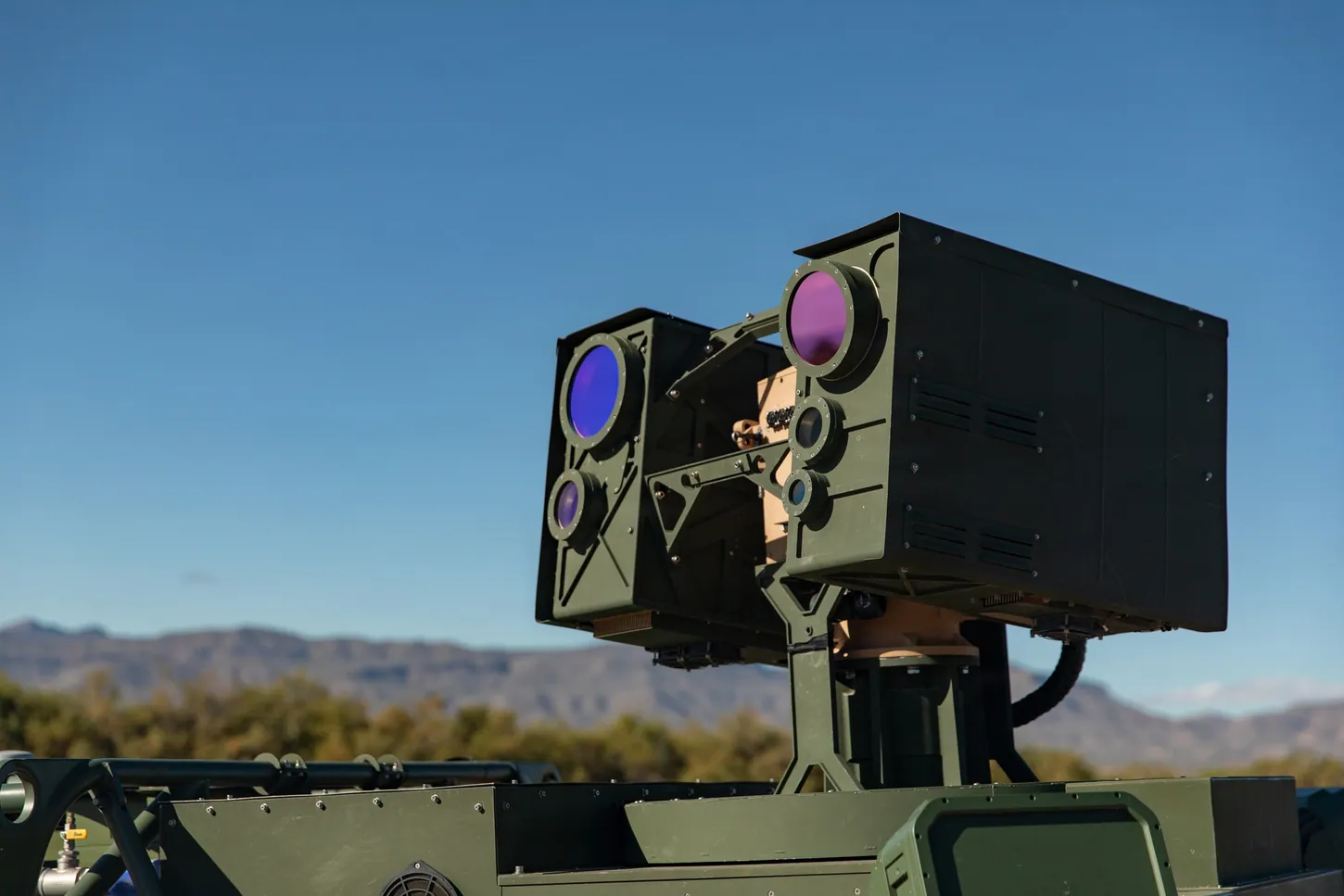
The AMP-HEL is the Army’s vehicle-mounted version of AeroVironment’s LOCUST laser, the same weapon family that fired in February. Northern Command dates the AMP-HEL’s first border employment to August 24, so the February shots fall outside its 11 laser kills. Whether they sit inside the 300 calendar-year count, the release does not say. The February 10 shot came from a LOCUST the Army had lent to CBP, and the joint statement attributes the February 26 shot to the Department of War without naming a unit. The FAA’s flight restriction over Fort Hancock, imposed after the shootdown, ran through June 24, and the FAA’s TFR list on Sunday had no Fort Hancock entry. The only Texas border entries now are the three NOTAMs that ban civilian drones along the whole line.
NORTHCOM’s 300 Defeats Come With No Targets And No Baseline
U.S. Northern Command said on September 4 that Joint Task Force-Southern Border had defeated more than 300 unmanned aircraft in 2026, more than 100 of them in August, and 11 with the AMP-HEL laser. The release does not define a defeat and names no drone type or location.
The defeats came from kinetic and non-kinetic systems, and the aircraft “were assessed to be associated with illicit activity,” the release says. Gen. Gregory Guillot, who commands NORAD and Northern Command, said that “frontline troops have the right authorities.” When the task force announced its first three laser kills on August 27, it said the drones were declared hostile because of “their use in direct support of activities posing a physical threat” to troops and CBP agents, and it would not say which side of the border they fell on. On September 7, military officials told CBS News that drone flights over the Rio Grande Valley had dropped about 75% since the laser arrived, without disclosing a before or after count, and they allowed that cartels may simply have moved.
Maj. Gen. Curtis Taylor, the task force commander, gave DefenseScoop the most detailed accounting on September 29: at least 378 drones detected between August 22 and September 22, of which 75 were turned back, 15 were engaged and one was captured. He also said “we have not, to date, seen any lethal drones along the southern border.” Taylor attributed 95% to 98% of the activity to reconnaissance for human smuggling. His deputy, Air Force Brig. Gen. Brian Filler, credited an intelligence process for that characterization without explaining how a given drone gets tied to trafficking, and said the drones are “largely commercial off-the-shelf.” One target in Army photos from its Yuma counter-drone trials was a DJI Mavic 3 Classic. Five days earlier at the same range, task force officials told DefenseScoop they were not permitted to discuss drone types, ranges, routes or payloads, citing operational security.
The Two Engagements On The Public Record Hit Balloons And A Government Drone
On the night of February 10, CBP fired a Pentagon-owned LOCUST laser at objects near Fort Bliss that were Mylar balloons. The FAA shut El Paso’s airspace for eight hours. On February 26, the military destroyed a CBP drone over Fort Hancock that CBP had not told it was flying.
The El Paso closure canceled 14 flights and diverted medevacs 45 miles to Las Cruces. The balloons surfaced through officials speaking to NBC News and other outlets, and the CBP drone through congressional aides and officials speaking to Reuters, The New York Times and The War Zone. The joint statement from the Pentagon, CBP and the FAA described the February 26 target only as “a seemingly threatening unmanned aerial system” in military airspace. It still has not named the aircraft. Congressional aides told Reuters the drone cost about $30 million, a figure DroneXL carried in February. The War Zone reported it was small. In my reading those two facts do not describe the same aircraft, and no public statement DroneXL has found reconciles them. Nor has any other engagement’s target been identified: DroneXL found none in NORTHCOM and JTF-SB releases, DVIDS posts or press coverage through November 8.
The response in Washington split along the question of whose permission the shooters needed. Pentagon nominee Mark Ditlevson told the Senate Armed Services Committee the day of the shootdown that the law requires DoD to coordinate with the FAA, not to get its approval. The FAA ended the standoff on April 10, when it cleared military lasers for use in US airspace after White Sands tests of the beam against aircraft materials and of its automatic cutoff when an airliner crossed the tracking angle. That clearance answers whether a laser can safely miss a passenger jet, and it is silent on how the crew decides what to hit.
Duckworth’s Inspector General Request Has Produced Nothing Public
Senator Tammy Duckworth asked the Defense, Transportation and Homeland Security inspectors general on March 13 to jointly investigate the two laser incidents and whether any federal law was broken. Nearly eight months later, DroneXL found no report or project announcement from any of the three that names those incidents.
Duckworth’s letter also asked the watchdogs to assess the risk the systems pose to civilian, commercial and medical aircraft, The Hill reported. DroneXL searched the three inspectors general’s websites and eight months of news coverage on Sunday. The closest match is a DoD inspector general evaluation announced April 20 and retitled June 8 to study gaps in the interoperability of the department’s counter-drone systems. Its announcement mentions neither the border nor the February shots. Representatives Rick Larsen, Bennie Thompson and André Carson, the top Democrats on the House Transportation, Homeland Security and aviation panels, said in February that “our heads are exploding over the news” and blamed the administration for sidestepping a bipartisan counter-drone coordination bill. Democrats won both chambers on November 3, which puts those panels under Democratic chairs when the new Congress is seated on January 3.
The one structural change that did ship landed on civilians. Three FAA NOTAMs ban every drone within one nautical mile of the border from October 20 through October 19, 2027, from the surface to 400 feet (122 meters), taking in downtown El Paso and Laredo. Permission runs through a CBP mailbox with 48 hours’ notice, the FAA’s Domestic Notice says, and each request must carry the drone’s Remote ID and serial number. There is no category for routine commercial or recreational flying. The agency that, by the Pentagon’s account, did not file its own flight notice in February now receives everyone else’s.
CBP’s aircraft are not the only government drones in that band. Texas DPS more than doubled its drone fleet under Operation Lone Star, and the El Paso County Sheriff runs a drone first responder program one county west of Fort Hancock.
DroneXL’s Take
The border drone war is being scored by the people doing the shooting, and the two times outsiders learned what a shot hit, it was party balloons and a US government aircraft. That is my problem with the 300 figure. I don’t doubt soldiers engaged 300 aircraft, and I don’t doubt most were cartel spotters. Taylor’s own detection count, 378 in a month, says the cartels fly plenty. But “assessed to be associated with illicit activity” is the shooter grading the shooter, and the two February shots that did get checked turned out to be balloons and a CBP drone, with the public learning both from leaks.
The Fort Hancock crew fired on an aircraft it could not identify, by the Pentagon’s own account, and what that crew needed was a shared air picture, not a safety clearance. April delivered the clearance. Neither the September 4 release nor the CBS and DefenseScoop interviews says whether CBP’s drones, Texas DPS’s drones and the El Paso County Sheriff’s drones now show up on the same screen as the laser crew’s tracking display, and in my judgment that is the question that mattered on February 26.
My read is that the agencies’ silence on the February incidents has done what secrecy usually does: the explaining stopped and the counts kept growing. The House Democrats who demanded answers in February will hold subpoena power in January. Until then, a Part 107 pilot in El Paso emails CBP two days ahead to fly over their own downtown, while the targets of 300 military engagements along the same border stay a secret.
Sources: U.S. Northern Command, DVIDS, Joint Task Force-Southern Border, DefenseScoop, CBS News, The Hill, The War Zone, Reuters via CNBC, FAA Domestic Notice.
DroneXL uses automated tools to support research and source retrieval. All reporting and editorial perspectives are by Haye Kesteloo. Read our editorial standards.